Updated · NextMigrate Team
Third Culture Kids: What Growing Up Between Countries Actually Does to You
Imagine you moved your family from Lagos to Toronto. You did it for the usual reasons: a better school, a safer street, a hospital that answers. Your daughter was small when you left. Now she is ten, and she speaks with a Canadian accent you never taught her.
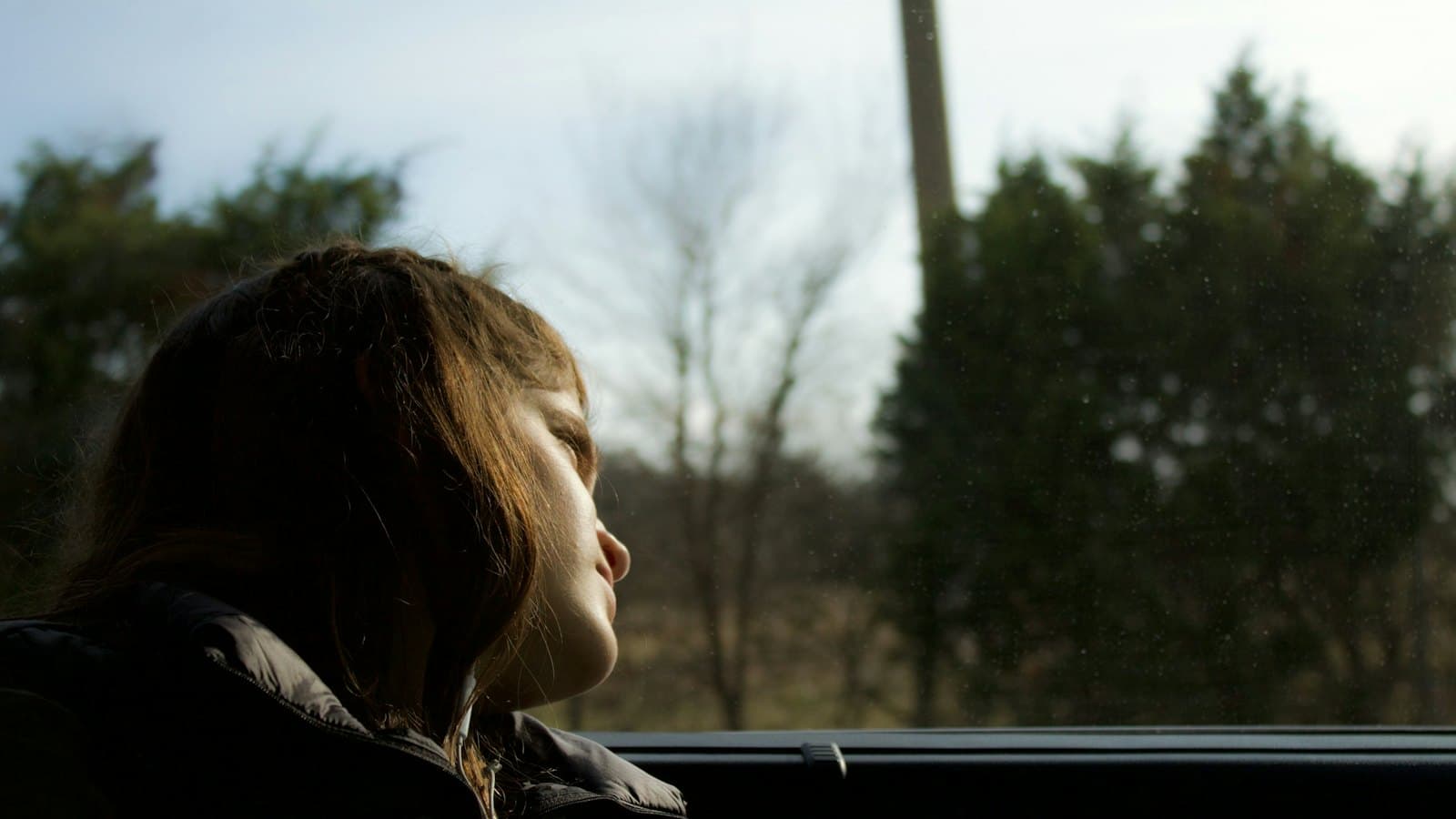
One summer you take her home for a cousin's wedding. The aunties praise her, then laugh at how she says her own name. On the flight back, she goes quiet. Then she says, "I'm not really Nigerian there, and I'm not really Canadian here. So what am I?"
You gave her so much. Why does it feel like you also took something?
The short answer: Children who grow up between cultures are called Third Culture Kids (TCKs), a term in use since the 1950s. Research links the experience to real gains, such as cultural empathy, flexible thinking and international careers. It also links it to real costs: rootlessness, delayed grief and identity confusion. Research consistently finds that how parents handle the move matters more than the move itself.
If you plan to migrate from Nigeria, India, the Philippines, Egypt or Pakistan with children, this will shape your family in ways no visa form prepares you for.
What the research says
Sociologists Ruth Hill Useem and John Useem coined "Third Culture Kid" in the 1950s while studying American families in India. The "third culture" is neither the passport country nor the host country. It is the in-between space the child builds, borrowing from both.
Think of it like a tree grown across a fence. Its roots sit in one garden, its branches spread over another, and the trunk belongs to the fence line itself.
By 2026, the research covers children of diplomats, missionaries, corporate expats and, more and more, ordinary economic migrants from the global South. The best-known work is David C. Pollock and Ruth Van Reken's Third Culture Kids: Growing Up Among Worlds, built on decades of interviews with adult TCKs. Later research from Michigan State University, the University of Hong Kong and Leiden University adds detail.
Key findings
A widely cited study in the Journal of Cross-Cultural Psychology surveyed over 1,800 adult TCKs:
- 90% felt "out of sync" with peers who grew up in one country during adolescence
- 83% said they could relate to people from many cultures as adults
- 76% felt they belonged "everywhere and nowhere" at the same time
- 72% reported more cultural empathy than mono-cultural peers
A longitudinal study by the Families in Global Transition consortium followed 450 TCK families over 15 years. The move itself was rarely the deciding factor. The parenting around the move was.
The thinking advantages
Research from the University of Luxembourg found measurable benefits in children raised across two or more cultures:
- Stronger executive function. Switching between cultural rules trains the brain like bilingualism does. TCKs scored roughly 15 to 20% higher on cognitive flexibility tasks.
- Better perspective-taking. They scored higher on seeing a situation from several viewpoints, called "cognitive empathy."
- More comfort with ambiguity. They handle complexity and contradiction more easily.
The child who switches between the playground and the family dinner table is training for a job managing a team across three continents. If your children are also growing up between languages, read our guide to raising bilingual children between two countries.
The career advantage
Tanya Crossman's research in Misunderstood: The Impact of Growing Up Overseas in the 21st Century found adult TCKs are several times more likely to earn a graduate degree than the general population. They are overrepresented in international relations, diplomacy, translation, global business and the nonprofit sector.
An analysis of professional profiles by the Denizen global network found people who spent their formative years in several countries were:
- 3.2x more likely to hold roles with "global" or "international" in the title
- 2.7x more likely to speak three or more languages fluently
- 2.1x more likely to have worked in three or more countries by age 35
Why employers value these skills
Cultural code-switching. A child raised partly in Lagos, partly in Toronto and partly in Dubai learns when directness is valued and when it offends. They learn that hierarchy means different things in different rooms. They learn to read any room.
An ear for nuance. Even with two languages, TCKs notice that words weigh differently in different places. That makes natural negotiators and mediators.
Comfort with uncertainty. Most people find not-knowing stressful. TCKs have practised it. In an economy reshaped by automation and remote work, that is rare.
One caveat. These are group tendencies, not promises for your child. A TCK who never resolves the identity confusion below may carry the costs without the benefits. The gains are earned.
Patterns by origin country
These are observed patterns from diaspora research, not destinies:
| Origin Country | Common Destination | Notable TCK Career Patterns |
|---|---|---|
| Nigeria | UK, Canada | High representation in law, finance, media, and entrepreneurship. Nigerian-British TCKs are notably overrepresented in UK creative industries. |
| India | Canada, Australia, US | Strong representation in technology, medicine, and academia. Indian-Canadian TCKs disproportionately enter STEM graduate programmes. |
| Philippines | UAE, Canada, Australia | High rates of healthcare careers (following parental patterns) but also strong representation in hospitality management and international business. |
| Egypt | UAE, Germany, UK | Concentration in engineering, architecture, and international development. Egyptian TCKs in Germany show high rates of bilingual professional success. |
| Pakistan | UK, Canada, UAE | Strong representation in medicine, law, and technology. Pakistani-British TCKs show some of the highest rates of professional degree attainment. |
The country you pick shapes the culture your children absorb, so compare routes such as Canada versus Australia for immigrants. It also sets the job market they enter at 22, and youth unemployment rates and time-to-first-job by country differ by an order of magnitude.
The emotional cost
The career numbers are only half the story. As a parent, you need the other half.
Rootlessness
The most consistent finding is rootlessness. It is not homesickness, because homesickness needs a clear home to miss. It is not having a simple answer to "Where are you from?"
Dr Lois Bushong, a therapist who specialises in TCK mental health, calls it "homeless mind syndrome." TCKs often feel like visitors everywhere. A child of Nigerian parents in London can be "too British" for Lagos and "too Nigerian" for London. An Indian child in Toronto can be "too Western" for Delhi and "too Indian" for classmates.
It does not simply fade with age. Leiden University research found roughly two-thirds of adult TCKs in its sample said rootlessness still affected their daily emotional life past age 30.
Delayed grief
Psychologist David Pollock wrote about "unresolved grief." Each move, or each trip between countries, brings small losses. Friends left behind. A bedroom given up. A grandmother's house that becomes a place you visit, not live in.
Picture a backpack. Adults take each loss out and look at it. Children often just carry it. Years later, sometimes decades later, the weight shows up as:
- Trouble forming deep attachments, to avoid future loss
- Restlessness, a need to keep moving because staying still feels wrong
- Sudden sadness triggered by a food, a song, or rain on a certain kind of roof
- Anger at parents that the adult TCK may not understand
Surveys by cross-cultural counselling networks consistently find adult TCKs seek therapy more often than the general population. Identity confusion, relationship problems and unresolved grief are common reasons. The emotional load is real, and unnamed, it surfaces later.
Race and identity
For TCKs from developing countries, researchers describe a "racialised third culture experience." A white American child in Singapore faces cultural displacement. A Nigerian child in London faces cultural displacement plus racial identity plus postcolonial history plus immigrant family pressure.
Research from the University of Birmingham found TCKs of colour reported:
- More identity confusion in adolescence than white TCKs
- A stronger cultural identity in adulthood, once they worked through the confusion
- More sensitivity to racial dynamics at work, which can be both a skill and a stress
Your destination matters here. A child of colour faces different dynamics in Toronto, Dubai or Berlin. Our post on raising children abroad: Africa versus Europe compares them.
What you can actually do
Children who thrive as TCKs almost always have parents who did these things.
1. Name the experience
The most protective factor is having words for it. When a child says, "I belong to two places and neither," and you respond with understanding, their resilience rises sharply.
Do not say: "You are Nigerian. That is where you are from." It denies half their life.
Do not say: "You are Canadian now. Forget all that." It denies their heritage.
Instead: "You carry two worlds inside you. That is a gift, and sometimes it is hard."
2. Keep rituals, gently
Research on the Filipino diaspora in the UAE found children did better when culture came through regular but non-coercive rituals: cooking together, celebrating Philippine Independence Day, speaking Tagalog at home. Children did worse when parents either forced strict rules or dropped the culture entirely.
Guilt turns ritual into resentment. A weekly home-style meal lands better than a lecture on heritage.
3. Find other TCKs
A peer group of other in-between kids is one of the strongest predictors of wellbeing. They do not need the same origin country.
In Toronto, diaspora and community associations run youth programmes. In Dubai, international schools run multicultural youth groups. In London, community centres in Peckham, Brixton and Woolwich offer after-school programmes where children of African and South Asian families find each other. Learn how diaspora communities actually work so you can join one on purpose. If none exist nearby, three or four families in the same situation can make an enormous difference.
4. Allow grief
When your child cries for a grandmother in Lagos or a best friend in Manila, resist saying, "But look at everything we have here." It is true, and it still hurts to hear. Sit with them. The grief does not mean the move was wrong. It means your child loves people across an ocean.
You carry your own version: the guilt of leaving your home country. Children read that guilt, even unspoken. When you talk about your feelings, at a level they can handle, they find it easier to talk about theirs.
5. Visit home, and prepare for it
Physical visits support identity. But a child who left Lagos at 5 and returns at 10 may find cousins treat them differently. They may feel like a tourist in "home." Warn them first. Tell them feeling like an outsider there is normal. It is the childhood version of reverse culture shock, and naming it early takes out most of the sting.
Not sure which country you’d qualify for?
6 quick questions about your age, skills and English. Free, 2 minutes, results on screen. No sign-up.
Free eligibility check →Screens: a window, not a door
Your child can video-call a grandmother in Lagos daily, stream Nollywood and follow home-country pop culture live. In 2026 this is daily life, not a treat. It keeps language and family ties far stronger than for TCKs of the 1990s or 2000s.
But a screen is a window, not a door. University of Hong Kong research found TCKs with very high home-country digital use had a stronger home identity but weaker host-country integration than those with moderate use. Some families use a simple rule: the screen keeps relationships warm. It does not replace the friends on your child's doorstep.
What adult TCKs say looking back
Families in Global Transition surveys ask adult TCKs: "Knowing what you know now, would you choose to have been raised across cultures?"
- Around nine in ten say yes
- A small minority are unsure
- A very small minority say no
Those who say yes often explain: "I understand the world in a way that most people do not. I can sit with anyone, anywhere, and find common ground. That is worth the pain." Those who say no most often mention estrangement from extended family and parents who never acknowledged the cost of the move.
What they wish their parents had done
- Talked more openly about the emotional challenges
- Kept stronger ties to home-country family
- Not used "we did this for you" to end a conversation
- Let them say negative things about the move without guilt
- Helped them find other TCK peers earlier
None of these are about money, housing or school. They are about honesty and connection. They cost nothing but attention.
The gift, honestly
The child who grows up between Lagos and London, Manila and Dubai, or Karachi and Toronto carries something no university can teach: lived cultural fluency, and the knowledge that there is no single right way to be human. There is a practical side too. These children often hold, or can claim, more than one nationality. Our piece on passport power for your children covers it.
None of this erases the night your daughter cries for her grandmother, or your son asks why he does not look like his classmates. Those moments matter. But when parents are honest, warm and present, and neither shrink the losses nor deny the gains, children grow a self bigger than any one culture. Most who have lived it would not trade it.
Frequently asked questions
At what age does migration affect children most?
Research points to roughly 8 to 18, when children are working out who they are. Children under 5 often adapt easily but may carry unnamed grief later. Teenagers feel it most, because a move can cut peer ties when they matter most. No age is "too late" or "too early", but older children need more open talk.
Should we keep our home culture strong or fully assimilate?
Neither extreme. Children pushed to assimilate fully often lose language and family ties and regret it later. Children held rigidly to home culture often struggle locally. The best outcome is an integrated bicultural identity. Aim for "and," not "or."
Will my child lose our home language?
Very possibly, unless you are deliberate. Use it daily at home, keep in touch with relatives and join community groups. Our guide to raising bilingual children between two countries covers how.
My child seems happy. Do I still need to worry about grief?
A happy child is a good sign. But TCK grief often stays hidden and appears years later. You are not hunting for problems. You are keeping the door open, so when feelings arrive, your child already has the words and the permission.
Do the benefits really outweigh the costs?
For most adult TCKs looking back, yes. But it is not automatic. It tips positive when parents are emotionally available and honest about the losses. Much of the outcome is in your hands.
Further reading
- Third Culture Kids: Growing Up Among Worlds by David C. Pollock, Ruth Van Reken and Michael V. Pollock (latest edition), the foundational text
- Misunderstood: The Impact of Growing Up Overseas in the 21st Century by Tanya Crossman, on the digital-age TCK
- Between Worlds: Essays on Cultures in Transition by Marilyn R. Gardner, essays from an adult TCK
- Families in Global Transition (FIGT), the main gathering for TCK researchers and families
- Cross-cultural counselling networks, several with directories of therapists who are TCKs themselves
Still planning? Our moving abroad with family checklist handles the logistics, so you have more energy for the conversations that matter.
