Country guide
Migrate to Germany
Europe's biggest economy is hiring from abroad. The 2024 Skilled Immigration Act made the routes in much simpler.
21 months
Blue Card to permanent residence (with B1 German)
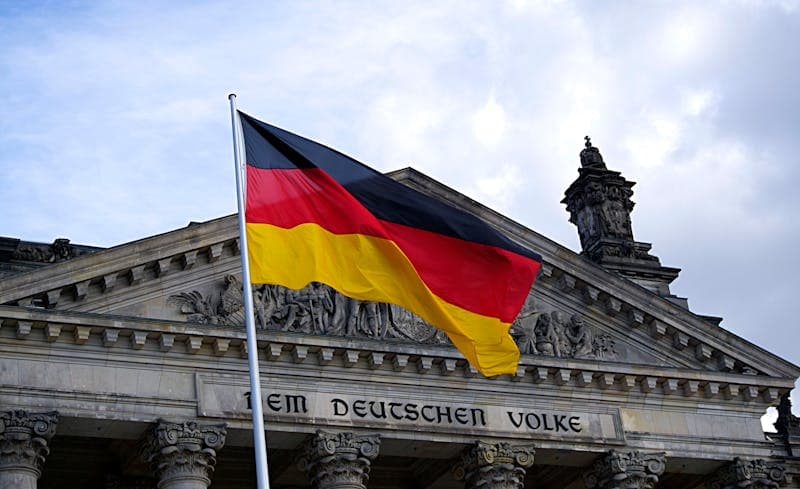
Why Germany?
- The EU's biggest economy
- Deutschlandticket: EUR 63 a month for local and regional transport nationwide
- Free or low-cost public universities
- A strong safety net: unemployment insurance and pension
- Easy travel across the Schengen area
- Blue Card to permanent residence in as little as 21 months
Key facts
| Detail | Info |
|---|---|
| Population | 84.5 million (2025) |
| Official language | German |
| Currency | Euro (EUR) |
| National minimum wage | EUR 13.90 / hour (2026) |
| Healthcare | Universal statutory insurance (Gesetzliche Krankenversicherung) |
| Main routes | EU Blue Card, Opportunity Card, Skilled Immigration Act |
Visa routes
EU Blue Card
For graduates with a job offer paying at least EUR 50,700 a year in 2026. Shortage jobs, such as engineering and medicine, and recent graduates need EUR 45,934.20. Permanent residence after 21-27 months.
Opportunity Card (Chancenkarte)
Launched in 2024. A points-based visa to come and look for work for up to a year. Points for qualifications, language, age and experience.
Skilled worker visa (Fachkräfteeinwanderung)
For people with a recognised vocational qualification and a job offer in a related field. Covers trades, nursing and technical jobs.
Intra-company transfer (ICT)
Lets multinationals move managers, specialists and trainees to Germany for up to 3 years. You need at least 6 months with the company first.
Cost of living
Typical monthly costs in Berlin, Munich and Frankfurt.
| Expense | Typical cost |
|---|---|
| 1-bed rent (city centre) | EUR 800 to 1,500 / month |
| Groceries (one person) | EUR 250 to 350 / month |
| Public transport pass | EUR 63 / month (Deutschlandticket, 2026) |
| Internet (100 Mbps+) | EUR 30 to 50 / month |
| Health insurance (statutory) | EUR 350 to 500 / month (employee share) |
Jobs in demand
- Software engineers & IT specialists
- Mechanical & electrical engineers
- Nurses & elderly care workers
- Doctors & dentists
- Electricians & HVAC technicians
- Data scientists & AI researchers
- Logistics & supply chain managers
- Researchers & university lecturers
FAQs
Do I need to speak German to work in Germany?
It depends on the job. Many tech firms, start-ups and multinationals work in English. Healthcare, trades and public-sector jobs usually need B1-B2 German. Either way, German makes daily life much easier.
How long does it take to get an EU Blue Card?
With a job offer, the embassy visa takes 4-8 weeks. After you arrive, the local foreigners office (Ausländerbehörde) issues the card in 2-4 weeks. Allow 2-3 months from offer to card.
Can I bring my family to Germany?
Yes. Blue Card and skilled worker visa holders can bring their spouse and minor children. Spouses can work. Family members of Blue Card holders don't need to prove German first.
How fast can I get permanent residency in Germany?
Blue Card holders can get a settlement permit (Niederlassungserlaubnis) after 21 months with B1 German, or 27 months with A1. Most other skilled workers can apply after 3 years.
This guide is general information, not legal advice, and rules change often. Always confirm the current requirements on the official government website for your destination. How we research & source our guides.
What is changing in Germany, and when
- Tightened
EU temporary protection for Ukrainians ends (extended to 2028)
Temporary protection now runs until 4 March 2028, so use the time to move onto a national work or residence permit. Source (Council of the EU)
Could Germany work for you?
Most refusals come from the wrong route or a weak document. Check yours before you spend.
Free eligibility check →
2 minutes. Results on screen, no sign-up.
Talk it through with a person →
60-minute plan check. $99 to book, $499 in total.
Already there? Read the arrival guide for Germany →
