Updated · NextMigrate Team
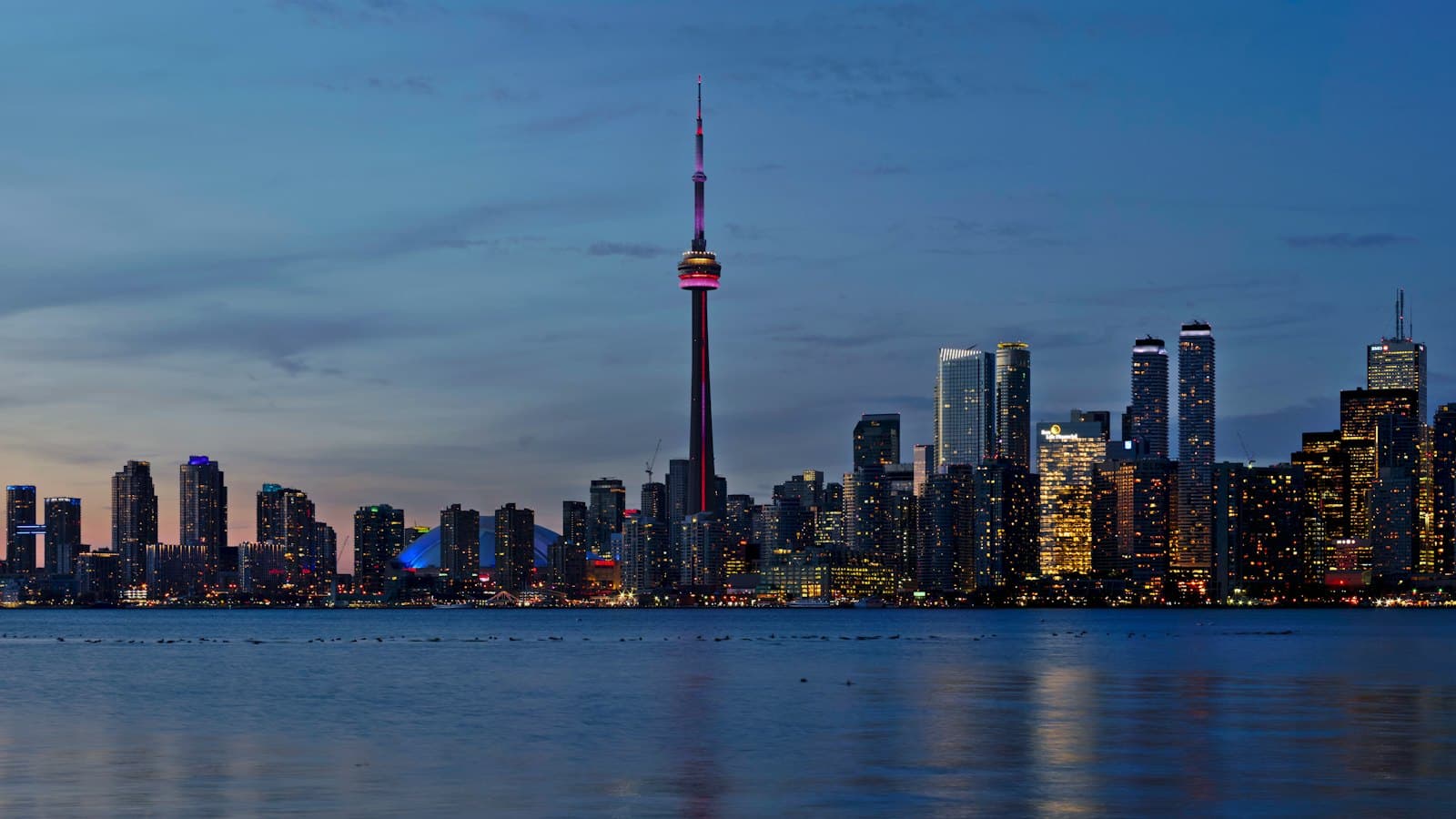
How Long It Takes to Save $100K in Lagos vs. Toronto vs. Dubai vs. Sydney
Picture yourself in Lagos at 11 pm. You are an engineer with seven years of experience and a good salary, better than most of your friends earn. The grid has gone off again, so the generator is roaring outside your window. You do the sum in your head: diesel this month, school fees next month, something for your mother.
At the end of the month, the account is lower than it was at the start. Again.
You are not careless. You are not lazy. So why does saving feel like walking up a down escalator?
The short answer: On our model, a mid-level professional in Lagos earning a top-decile salary cannot save $100,000 at all while living a basic middle-class life. They run a monthly deficit. The same professional would reach $100K in about 3.2 years in Dubai, 5.2 years in Sydney and 8.0 years in Toronto. The gap is not about effort. It is about the currency you earn in, the tax you pay and the cost of broken infrastructure.
Why $100K, and why these four cities?
One hundred thousand US dollars is a round number, but it means real things. A deposit on a home in many cities. A business. A master's degree. A cushion that lets you breathe for the first time in years.
This is not "skip your morning coffee" maths. It is real salaries, tax and living costs in four cities:
Lagos, home to millions of ambitious West African professionals. Toronto, the top Canadian destination for skilled immigrants. Dubai, with its tax-free pay. And Sydney, the Australian dream that pulls talent from India, the Philippines and beyond.
Who we are comparing
- Role: mid-level professional (5-8 years' experience) in tech, finance or engineering
- Education: bachelor's degree, maybe a master's
- Status: single, or married with one child
- Spending: moderate, not lavish, not extreme
Everything is in USD. Exchange rates are as of early 2026: about NGN 1,370 to the dollar, the Canadian dollar near 0.72, the UAE dirham pegged at 0.272, and the Australian dollar near 0.65.
Step 1: What do you earn?
| City | Local Currency Salary | USD Equivalent |
|---|---|---|
| Lagos (Nigeria) | NGN 15,000,000 | ~$10,900 |
| Toronto (Canada) | CAD 88,000 | ~$63,400 |
| Dubai (UAE) | AED 270,000 (AED 22,500/month) | ~$73,500 |
| Sydney (Australia) | AUD 115,000 | ~$74,800 |
NGN 15 million puts you in the upper tier of mid-level professionals in Nigeria, above roughly 90% of Nigerian professionals. The other three are solid but ordinary pay for 5-8 years in a skilled field. No big tech packages here.
Already the gap is a 6-7x difference before tax or rent. The cause is mostly currency, not job title.
Step 2: What does tax take?
| City | Gross (USD) | Income Tax + Social Contributions | Net After Tax (USD) | Effective Rate |
|---|---|---|---|---|
| Lagos | $10,900 | ~$820 (PAYE, low band) | $10,080 | ~7.5% |
| Toronto | $63,400 | ~$15,600 (federal + Ontario + CPP/EI) | $47,800 | ~24.6% |
| Dubai | $73,500 | $0 (no personal income tax) | $73,500 | 0% |
| Sydney | $74,800 | ~$18,200 (income tax + 2% Medicare levy) | $56,600 | ~24.3% |
Imagine being handed the whole pizza before anyone takes a slice. That is Dubai. The full AED 22,500 a month lands in your account. The UAE's 9% corporate tax, introduced in 2023, applies to business profits, not to salaried staff.
Nigeria's PAYE is progressive and low at this salary. The 2026 reforms tidied up the bands but did not really change the burden at this income. Toronto and Sydney both land near 24% once you add compulsory contributions (Canada Pension Plan and Employment Insurance, or Australia's Medicare levy). That is moderate for a rich country.
| City | Monthly Net Income (USD) |
|---|---|
| Lagos | $840 |
| Toronto | $3,983 |
| Dubai | $6,125 |
| Sydney | $4,717 |
Step 3: What does a decent life cost?
We price the same thing everywhere: a safe, comfortable, middle-class life that 5-8 years of experience should pay for.
Monthly living costs (USD), single professional
| Expense | Lagos | Toronto | Dubai | Sydney |
|---|---|---|---|---|
| Rent (1-bed, decent area) | $280 | $1,800 | $1,900 | $1,850 |
| Utilities (electricity, water, internet) | $160 | $160 | $175 | $185 |
| Generator/diesel (Lagos reality) | $130 | $0 | $0 | $0 |
| Groceries | $130 | $380 | $420 | $400 |
| Transportation | $90 | $135 | $320 (car-dependent) | $175 |
| Health insurance/medical | $65 | $0 (public) | $190 | $0 (Medicare) |
| Dining/entertainment | $55 | $220 | $270 | $240 |
| Phone plan | $15 | $50 | $55 | $50 |
| Clothing/personal | $35 | $85 | $85 | $85 |
| Security/compound fees | $45 | $0 | $0 | $0 |
| Miscellaneous | $45 | $110 | $130 | $110 |
| Total | $1,050 | $2,940 | $3,545 | $3,095 |
Lagos is not as cheap as outsiders think. You pay to make up for failed infrastructure. Generator diesel often costs NGN 90,000 to 200,000 a month, after the end of the fuel subsidy pushed pump prices up. In effect, you run a private power station because the grid cannot keep the lights on.
Dubai looks expensive, but remember the zero tax. Higher rent and a car are partly paid for by keeping every dirham. Rents have climbed sharply since 2022 as the population grew, so that line is real and rising.
Toronto and Sydney rents bite hard. But that rent buys working infrastructure and public healthcare. Both markets are still tight in 2026.
Step 4: What can you save each month?
| City | Monthly Net Income | Monthly Expenses | Monthly Savings (USD) | Savings Rate |
|---|---|---|---|---|
| Lagos | $840 | $1,050 | -$210 | Negative |
| Toronto | $3,983 | $2,940 | $1,043 | 26.2% |
| Dubai | $6,125 | $3,545 | $2,580 | 42.1% |
| Sydney | $4,717 | $3,095 | $1,622 | 34.4% |
Read the Lagos line again. A top-decile salary of NGN 15 million a year, and still a monthly deficit.
Yes, you could live more cheaply. Skip the generator and sweat through 30-degree nights. Move to a less safe area. But the professional in Toronto is not sleeping without heating in January. The Lagos figure is the cost of a dignified life, not a stripped-back one.
Step 5: How long to $100K?
| City | Monthly Savings | Months to $100K | Years to $100K |
|---|---|---|---|
| Lagos | -$210 | Never | Never |
| Toronto | $1,043 | ~96 months | ~8.0 years |
| Dubai | $2,580 | ~39 months | ~3.2 years |
| Sydney | $1,622 | ~62 months | ~5.2 years |
Weighing these options seriously? See Migrate to Canada, Migrate to the UAE and Migrate to Australia.
Is $100K worth the same everywhere?
For daily shopping, no. But $100K in a hard currency is $100K anywhere. For property abroad, global investing, overseas study or protection from a currency shock, the dollar amount is what counts.
Naira savings face a second problem: they shrink. Saving in a falling currency is like filling a bucket with a hole in the bottom. The naira lost the large majority of its value in the 2023-2024 float and devaluation, sliding from around NGN 460 to well over NGN 1,600 at the worst point, before settling near NGN 1,370 through 2026. A policy change can still revalue savings overnight, and inflation still runs near 16% in 2026. Dollars avoid both risks.
What if you are more senior?
Here is the same maths for a senior professional (10+ years, management level).
| City | Annual Gross (Local) | Annual Gross (USD) | Monthly Net (USD) | Monthly Expenses (USD) | Monthly Savings (USD) | Years to $100K |
|---|---|---|---|---|---|---|
| Lagos | NGN 30,000,000 | ~$21,900 | $1,600 | $1,250 | $350 | ~23.8 years |
| Toronto | CAD 135,000 | ~$97,200 | $5,700 | $3,450 | $2,250 | ~3.7 years |
| Dubai | AED 430,000 | ~$117,000 | $9,750 | $4,400 | $5,350 | ~1.6 years |
| Sydney | AUD 165,000 | ~$107,300 | $6,450 | $3,650 | $2,800 | ~3.0 years |
Even as a senior manager, Lagos needs almost a quarter of a century, and only if the naira holds its value. Saving roughly NGN 480,000 a month ($350) while inflation eats it is exhausting. In Dubai, a senior professional can bank $100K in under two years.
Not sure which country you’d qualify for?
6 quick questions about your age, skills and English. Free, 2 minutes, results on screen. No sign-up.
Free eligibility check →The ten-year picture
Savings work like a snowball. The earlier it starts rolling, the bigger it gets. This table assumes mid-level professionals, modest yearly pay rises of 5% in local currency, and steady exchange rates.
| Year | Lagos (USD) | Toronto (USD) | Dubai (USD) | Sydney (USD) |
|---|---|---|---|---|
| Year 1 | -$2,520 | $12,516 | $30,960 | $19,464 |
| Year 2 | -$4,730 | $25,660 | $63,470 | $39,930 |
| Year 3 | -$6,590 | $39,470 | $97,570 | $61,440 |
| Year 4 | -$8,050 | $53,980 | $133,360 | $84,060 |
| Year 5 | -$9,050 | $69,220 | $170,940 | $107,830 |
| Year 6 | -$9,520 | $85,230 | $210,430 | $132,830 |
| Year 7 | -$9,390 | $102,040 | $251,940 | $159,110 |
| Year 8 | -$8,580 | $119,700 | $295,600 | $186,740 |
| Year 9 | -$7,010 | $138,250 | $341,540 | $215,800 |
| Year 10 | -$4,590 | $157,730 | $389,900 | $246,370 |
After ten years: close to $390,000 in Dubai, around $246,000 in Sydney, roughly $158,000 in Toronto, and still below zero in Lagos.
This is not about talent. Nigerian professionals are among the hardest-working and best-educated in the world. Currency, tax and infrastructure shape your future far more than discipline.
The costs we left out
The model is actually kind to Lagos.
In Lagos
- Family support ("black tax"): supporting wider family can take 10-30% of a professional's salary in Nigeria. It is rarely optional.
- Private school: NGN 500,000 to NGN 3,000,000 a year per child (roughly $365 to $2,190 at 2026 rates). For most middle-class families, public school is not a real option.
- Inflation spikes: Nigeria has often seen inflation above 25% a year during recent crises. Even the cooler ~16% of 2026 compounds fast against savings.
- Conversion losses: changing naira to dollars can still cost several percent in the gap between official and street rates.
In Toronto, Dubai and Sydney
- Childcare: $1,000 to $2,500 a month in Toronto and Sydney before subsidies. Canada's national child-care programme and Australia's Child Care Subsidy cut this a lot for eligible families. Dubai is usually $500 to $1,500 a month, with no equivalent subsidy.
- Student loans: some Canadian and Australian graduates pay $300 to $800 a month.
- RRSP / superannuation: these reduce take-home pay but build retirement wealth. In Australia, employer super is 12% of salary in 2026, on top of the savings above.
Even so, professionals in the three destination cities build wealth. In Lagos, they tread water.
It is not only Lagos
Are you in Mumbai, Manila, Cairo or Karachi asking the same question? The honest answer may be: longer than your working life. Not because you are doing anything wrong. Because the maths is broken.
Years to $100K: staying home vs. moving (mid-level)
| Origin Country | Salary at Home (USD) | Years to $100K at Home | Years to $100K in Canada | Years to $100K in Dubai |
|---|---|---|---|---|
| Nigeria | ~$10,900 | Never | ~8.0 | ~3.2 |
| India | ~$16,000 | 22+ | ~7.0 | ~3.0 |
| Philippines | ~$11,500 | Never | ~7.5 | ~3.5 |
| Egypt | ~$7,800 | Never | ~8.0 | ~3.8 |
| Pakistan | ~$8,900 | Never | ~8.2 | ~3.5 |
The pattern holds everywhere: currency weakness, inflation, infrastructure costs and tax beat individual effort. Our guides to migrating to Canada and the Canada arrival guide walk through the steps in order.
What about investment returns?
So far, no investment growth. Add 7% a year from a diversified global portfolio, and the timelines shorten:
| City | Monthly Savings | Years to $100K (No Returns) | Years to $100K (7% Returns) |
|---|---|---|---|
| Lagos | -$210 | Never | Never |
| Toronto | $1,043 | ~8.0 | ~6.3 |
| Dubai | $2,580 | ~3.2 | ~2.9 |
| Sydney | $1,622 | ~5.2 | ~4.4 |
No return fixes a negative savings rate. Even saving $100 a month by cutting to the bone, reaching $100K at 7% would take around 40 years: a whole career. And a naira portfolio would struggle to earn 7% in real dollar terms.
How to change the maths
The lever is the currency you earn in and the tax system you sit under. There are three broad routes:
- Skilled migration to a high-income country. Canada's Express Entry and Australia's points-based visas reward a degree, several years' experience and strong English. They take longer, but lead to permanent residence and citizenship. See the countries rolling out the red carpet for skilled workers.
- Tax-free hubs. Dubai and the Gulf offer fast savings through zero income tax, but most workers get no easy path to permanent residence. They suit people saving hard for a set period.
- Remote work for foreign employers. Earning in dollars, euros or pounds while living somewhere cheaper can capture much of the currency advantage, if you handle tax and visas properly.
What would you do if your account went up each month, not down? Whichever route fits, the idea is the same: change what you earn in, not just how much you cut back.
Frequently asked questions
Is $100K a meaningful target or just a round number?
Partly round, but it maps onto real milestones. It can be a property deposit in many markets, seed money for a small business, a funded postgraduate degree, or one to two years of living costs as a safety net. What it really buys is choice.
Why measure in US dollars instead of local currency?
A dollar target is comparable across countries, and most global assets and overseas study are priced in it. Measuring in a currency that lost most of its value in three years would hide the real loss.
Doesn't the lower cost of living in Lagos cancel out the lower salary?
Only partly. Lagos is cheaper for rent and food, but the salary is lower by a far bigger multiple. Hidden costs like generator fuel, private school and security close much of the rest. The result is a negative savings rate, not a slower one.
Is Dubai always best because of zero tax?
For fast saving over a set period, Dubai is hard to beat. But most workers get limited long-term settlement rights, and rents have risen sharply. Canada and Australia save more slowly but offer permanent residence, public healthcare and citizenship, which many people value more.
Will my own numbers be different?
Yes. Your salary, district, family and habits will change the figures. Treat these as illustrations of a structural gap, not a forecast. The direction holds across many assumptions.
The real question
$100K is really about freedom: handling emergencies, giving your children chances, retiring with dignity. For millions of skilled people, that depends less on how hard they work than on where they work. A mid-level professional on a top-decile Lagos salary runs a deficit. In Dubai, the same person gets there in roughly 3.2 years. Canada (~8 years) and Australia (~5 years) are slower but add permanent residence and public healthcare. The pattern holds across Nigeria, India, the Philippines, Egypt and Pakistan.
Once you see the maths, you cannot unsee it. The question is no longer whether you can save. It is where you save from.
