· NextMigrate Team
Student Work Limits and Wage Theft: How Bosses Use Your Visa
Since you are here, you already know your student visa limits how many hours you can work, and some employers know it too. This page is for students who want fair pay without putting their visa at risk.
Student visas limit your work hours during term: 20 hours a week in the UK for degree students, 24 hours a week off campus in Canada, and 48 hours a fortnight in Australia. Some employers use those limits against you. They offer extra hours "off the books", pay below the legal minimum in cash, and rely on your fear that complaining will cost you your visa. In Australia, a large survey found that "a quarter of all international students earn $12 per hour or less" in their lowest paid job (UNSW, 21 November 2017).
The law in these countries protects your pay whatever your visa. But breaking your hours limit is still a risk to your visa. That is the short answer. Below are the limits, the documented cases, and how to get paid fairly without walking into the trap.
Imagine you work at a café. The owner says you can work 35 hours a week, more than your visa allows, if you take cash at a lower rate. Later, when you ask for the pay you are owed, the owner reminds you that you broke your visa rules. This is a hypothetical, but it describes the trap that researchers and regulators keep finding.
Key facts
| UK limit | "20 hours per week during term-time" for full-time degree-level study (Home Office) |
| Canada limit | "Up to 24 hours per week off campus while their classes are in session" (IRCC, November 2024) |
| Australia limit | "No more than 48 hours a fortnight while studying", from 1 July 2023 (Home Affairs) |
| United States | On-campus work "must not exceed 20 hours a week while school is in session" (8 CFR 214.2(f)(9)(i)) |
| 7-Eleven, Australia | About A$173 million repaid to 4,043 workers (Guardian, 30 October 2020) |
| Australian survey | A quarter of international students earned $12 an hour or less; 44% were paid in cash (UNSW, 2017) |
Why the work limit becomes a trap
The limit itself is fair: you are there to study. But it creates a power gap.
- You need money, for rent, food and often fees.
- You can only work a few hours legally, so every extra hour is tempting.
- An employer who pays you for illegal hours now has something on you. If you complain about your pay, they can threaten to report you.
That is why researchers keep finding the same pattern. In 2015, ABC's Four Corners said: "Students are only permitted to work 20 hours a week without breaching their visa conditions, which makes them easy targets for exploitation" (ABC Four Corners, 31 August 2015).
What breaking the limit can cost you
- UK: Permission "may be cancelled where the person has failed to comply with the conditions of their permission", and a breach can count against future applications (Home Office). GOV.UK warns: "If you break the conditions of your visa you may not be able to come to the UK again" (GOV.UK).
- Canada: Working more than 24 hours a week off campus during classes "is a violation". You "can lose your student status", "may not be approved for a study or work permit in the future" and "may also have to leave the country" (IRCC).
- Australia: Working more than the limit breaches your visa conditions and can lead to cancellation, although new protections exist if you report exploitation (see below).
A bad employer does not carry this risk. You do.
The 7-Eleven scandal
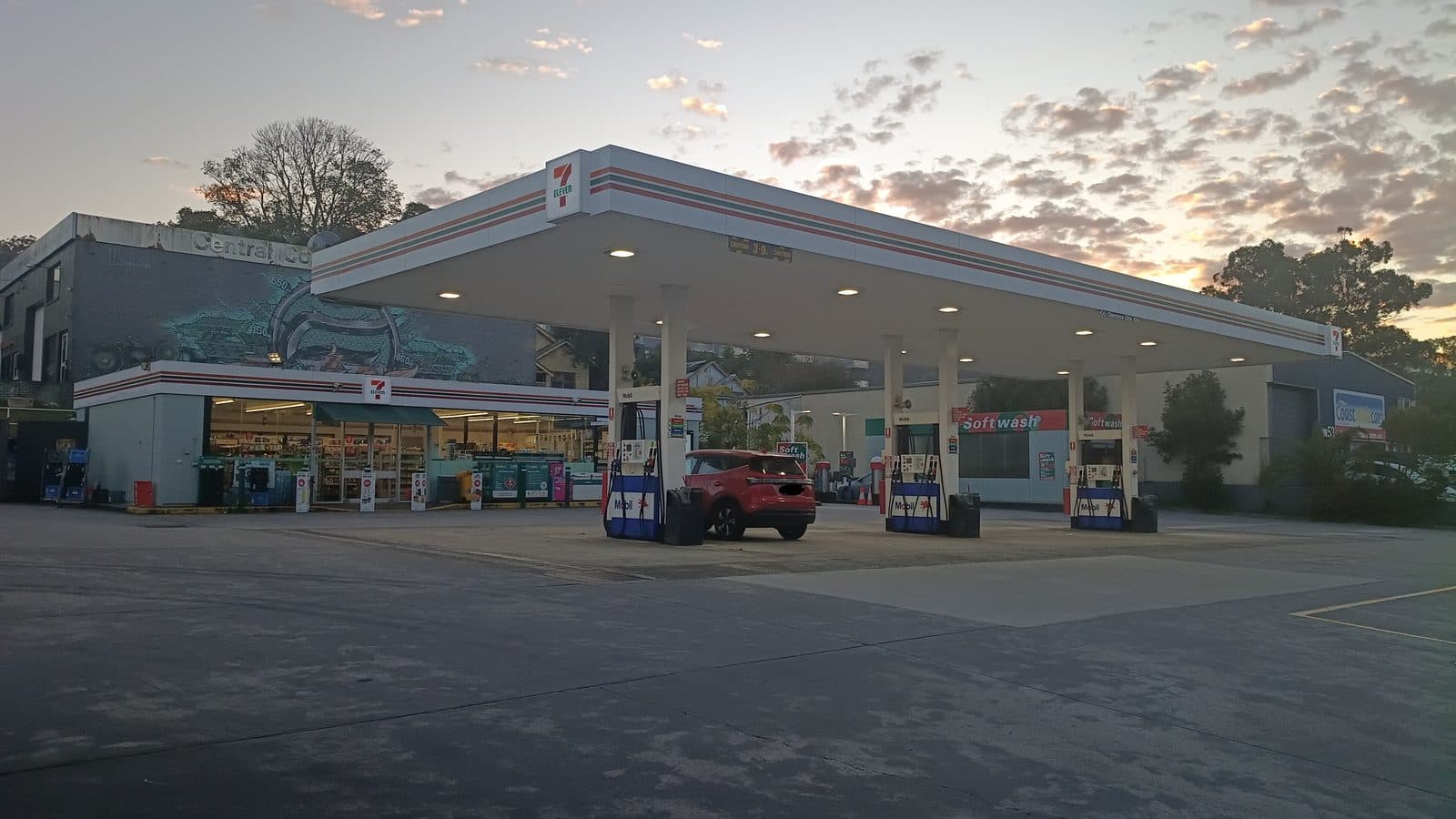
In 2015, ABC's Four Corners and Fairfax Media showed that many 7-Eleven franchisees in Australia were paying workers, many of them international students, about half the legal wage. Some workers described a "half pay" scheme where records showed legal hours but the real hours were much longer.
The Fair Work Ombudsman (FWO) later found that franchisees had "deliberately falsified records to disguise the underpayment of wages". Between September 2015 and February 2020, 7-Eleven paid back $144.5 million in wages, $19.5 million in interest and $9.6 million in retirement savings: about A$173 million to 4,043 workers, an average of nearly $22,000 each (Guardian, 30 October 2020).
What the surveys and regulators found
- Australia, 2017. In a survey of 4,322 temporary migrants, "a quarter of all international students earn $12 per hour or less and 43% earn $15 or less in their lowest paid job". 44% were paid in cash, 91 people had their passports taken, and 173 paid a "deposit" of up to $1,000 to get a job (UNSW, 2017).
- Australia, court action. The FWO took "171 litigations against employers involving visa holder workers" and won "$39 million in penalties" in the eight financial years to June 2025 (FWO, 5 August 2026). In 2024-25 the FWO recovered $358 million for more than 249,000 workers (FWO, 29 October 2025).
- Canada. A student in Brampton who was paid in cash at a restaurant complained to Ontario's labour ministry. It found her complaint valid, and she was repaid $16,495.29 (CBC, 26 February 2022). In 2025, Ontario labour rulings found about $250,000 owed to 13 former workers of a Toronto restaurant chain. Labour advocates said most were refugee claimants or international students (Toronto Star, 31 October 2025).
- UK. The BBC found that some students were charged "up to £17,000 each for sponsorship certificates that should have been free" to switch into care work (BBC, 1 September 2024). Our guide to UK care visa sponsorship scams covers this.
Ask yourself: if your employer is willing to break the rules on your hours, why would they keep the rules on your pay?
Free eligibility check · 2 minutes
Which country would you qualify for?
6 quick questions on your age, skills and English. You get a score out of 100 and a read on each country you pick, on screen. No sign-up.
1 of 6 · When are you planning to move?
Your pay is protected, whatever your visa
In these countries, minimum wage and workplace laws apply to international students in the same way as to local workers. The Fair Work Ombudsman puts it this way: "Visa holders and migrant workers have the same workplace entitlements and protections as all other employees in Australia, regardless of their migration status" (FWO).
Australia also has two pilots that started in July 2024. Under the Strengthening Reporting Protections Pilot, the FWO says Home Affairs will not cancel a person's visa for breaching a work-related condition if certain criteria are met, including that the person is pursuing a workplace exploitation claim. The Workplace Justice Visa Pilot lets some people stay longer to pursue a claim. Both need a certificate from the FWO or an accredited third party. The FWO also says your employer cannot cancel your visa.
Other countries do not have the same visa protection. In the UK and Canada, report unpaid wages, but get advice on your visa position first if you have worked over your limit.
How to protect yourself
- Know your exact limit and when it applies. Limits are higher or removed in official holidays in some countries. Check your own visa conditions.
- Keep your own record of every shift: date, start, finish and breaks. Photos of the roster help.
- Insist on payslips and payment into your bank account. Cash with no payslip makes underpayment easy to hide.
- Check the minimum wage on the government website for your country and age.
- Never pay for a job. A "deposit" to start work is a red flag.
- Never give your passport to an employer. They may look at it and copy it. They should not keep it.
- Say no to hours over your limit. It feels like help. It is leverage.
Where to report wage theft
- Australia: Fair Work Ombudsman, 13 13 94 (free interpreter on 13 14 50 first). You can also report anonymously.
- United Kingdom: Acas, 0300 123 1100. Minimum wage complaints go to HM Revenue and Customs (HMRC) (GOV.UK).
- Canada: The employment standards office in your province. In Ontario, the information line is 1-800-531-5551, and you generally have two years to file a claim (Ontario).
- United States: The US Department of Labor's Wage and Hour Division or your state labour department. Speak to your school's international office first about your status.
Your university's student union or international office can also help. For a wider view of exploitation at work, see our guide to migrant labour exploitation and your rights. This page is general information, not legal advice on your case.
Frequently asked questions
How many hours can international students work?
During term, the UK allows 20 hours a week for full-time degree students, Canada allows 24 hours a week off campus, and Australia allows 48 hours a fortnight. In the US, F-1 students can usually work on campus for up to 20 hours a week. Check your own visa conditions, because there are exceptions.
What happens if I work more hours than my student visa allows?
You may lose your status, have your visa cancelled or be refused visas in the future. In Canada, IRCC says you may have to leave the country. In Australia, a pilot may protect your visa if you are reporting workplace exploitation and meet the conditions.
Is it legal to pay international students below minimum wage?
No. In the UK, Canada, Australia and the US, minimum wage laws apply to international students the same way as to everyone else. Being paid in cash does not change that.
Can my employer cancel my visa if I complain?
No. In Australia, the Fair Work Ombudsman says your employer cannot cancel your visa. Only the government can grant or cancel visas. Some employers threaten this to keep workers quiet.
What was the 7-Eleven wage scandal?
In 2015, an ABC and Fairfax investigation showed that many 7-Eleven franchisees in Australia were underpaying workers, many of them international students. By 2020, 7-Eleven had paid back about A$173 million to 4,043 workers.
How do I get back unpaid wages as a student?
Gather your records of hours and pay. Ask your employer in writing for the money. If they refuse, contact the workplace regulator in your country, such as the Fair Work Ombudsman in Australia, Acas or HMRC in the UK, or your provincial employment standards office in Canada.
Related guides
- International Student Scams: How Students Get Duped Abroad
- Day 1 CPT and Fake OPT Employers: How Students Lose Status
- Study Now, PR Later: The Promise That Broke When Rules Changed
- Migrant Labor Exploitation: Warning Signs and Your Rights
- UK Care Visa Sponsorship Scams: Inside the £20,000 CoS Trade
- Human Trafficking Warning Signs Every Migrant Should Know
