· NextMigrate Team
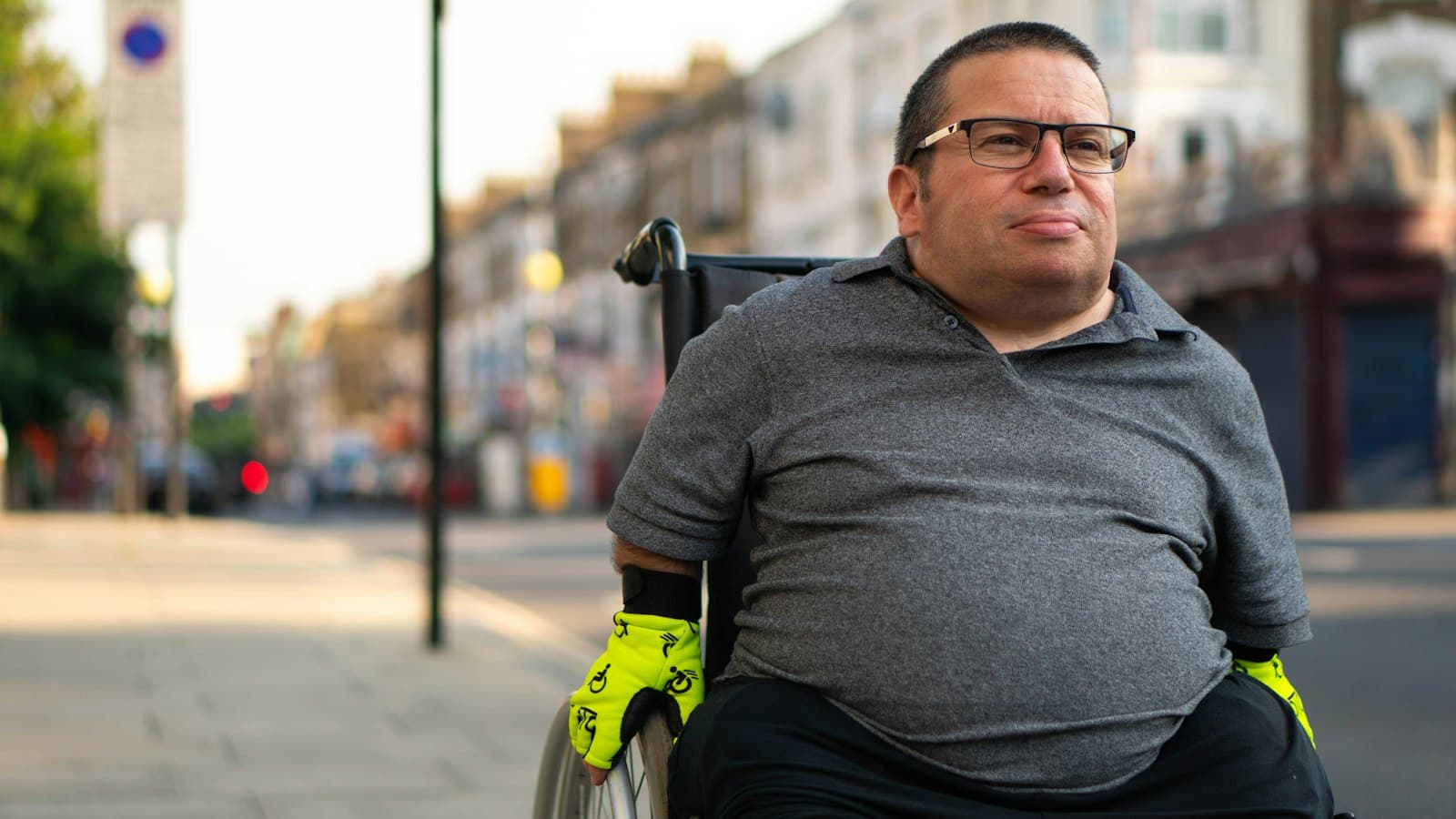
Migrating With a Disability: How Visa Health Rules Treat You in 2026
Canada does not count a child's speech therapy or classroom assistant when it decides whether a family costs too much. Australia counts NDIS support and early intervention. Same child, same diagnosis, two different answers.
That is the real story of disability and visas. It is rarely about your condition. It is about which country, which visa, and what that country chooses to add up.
The short answer: As of October 2026, a disability alone does not ban you from moving abroad. Canada, Australia and New Zealand run a cost test on many visas. Canada refuses only if your expected public health and social service costs pass CA$28,878 a year (CA$144,390 over 5 years). Refugees and sponsored spouses, partners and dependent children are exempt (IRCC, 2026). Australia's limit is A$86,000 (Home Affairs, 2026). New Zealand's is NZ$81,000 (Immigration New Zealand, 2022). The UK has no general cost test for most visas, only a TB test for some people. The US looks at health inside its "public charge" test, under new rules since 18 September 2026.
Five countries, five approaches
Each rule can change, so check the official page before you apply.
| Country | What applies (as of October 2026) | Source |
|---|---|---|
| Canada | Refused if costs likely pass CA$28,878 a year. Refugees and some sponsored family are exempt | IRCC, 2026 |
| Australia | Significant Cost Threshold of A$86,000. Health waivers for some visas | Home Affairs, 2026 |
| New Zealand | May decline if health costs are likely to pass NZ$81,000 | Immigration New Zealand, 2026 |
| United Kingdom | No general cost test for most visas. TB test for some long stays | GOV.UK, 2026 |
| United States | Public charge test. Benefits received from 18 September 2026 may count | USCIS, 2026 |
The first question is not "Am I disabled?" It is "Which country, which visa, and who in my family is applying?"
Costs, not labels
You are far from alone. About 1.3 billion people live with a significant disability. That is 16% of the world, or 1 in 6 of us (WHO, 2023). Even US law says that "disability is a natural part of the human experience" (29 U.S.C. 701, quoted in the Federal Register, July 2026).
Countries with big public health systems check because they want to protect the budget for people already there. The key point: Officers look at expected costs, not the name of your condition. Canada says "there is no specific health condition that automatically leads to inadmissibility" (IRCC Help Centre, 2026). Two people with the same diagnosis can get different results.
Canada: the excessive demand rule
Canada calls its test "excessive demand". Since 2018, it has been much fairer to disabled people.
What changed in 2018
On 1 June 2018, Canada raised the threshold to three times the average Canadian's yearly health and social service costs. It also stopped counting several services that many disabled people use. The goal was to match "Canadian values on supporting the participation of persons with disabilities in society" (IRCC, archived policy, 2018).
Medical officers must not count these costs (IRCC operational guidance, 2025):
- Special education, including educational assistants
- Social and vocational rehabilitation, such as occupational, behavioural and speech therapy
- Personal support with daily activities
This matters a lot for families of children with autism, Down syndrome or a learning disability. Many of their main costs are now outside the sum.
The 2026 figure and who is exempt
For 2026, the threshold is CA$144,390 over 5 years, or CA$28,878 a year. In 2025 it was CA$27,162 a year, so it rises most years. The rule does not apply to refugees and their dependants, protected persons, and "certain people being sponsored by their family, such as dependant children, spouses and common-law partners" (IRCC, 2026).
If an officer thinks you may pass the threshold, you first get a procedural fairness letter. You have 90 days to reply. Some people are invited to send a mitigation plan showing how they will cover the costs. See our Canada migration guide for the main routes.
Not sure which country you’d qualify for?
6 quick questions about your age, skills and English. Free, 2 minutes, results on screen. No sign-up.
Free eligibility check →Australia: the significant cost threshold
Australia's test is stricter in one big way: it counts disability services.
The Significant Cost Threshold is A$86,000. It was last updated on 1 July 2024 and is reviewed every two years (Home Affairs, 2026).
What Australia counts
Unlike Canada, Australia includes these costs (Home Affairs, 2026):
- Disability services funded by the National Disability Insurance Scheme (NDIS)
- Early intervention support for children with disability
- Cash payments such as the Disability Support Pension and carer payments
- Hospital care, GP visits, specialists and medicines
For permanent and provisional visas, costs are usually assessed over 5 years (3 years if you are 75 or older). For a permanent condition with a predictable course, the officer looks at your life expectancy, up to 10 years. For temporary visas, the period is your planned stay. Organ transplants and dialysis count as services "in short supply".
Health waivers and the law
Some visa types allow a health waiver. The officer then looks at your personal situation and whether costs can be reduced. Not every visa has one, so check your subclass first.
One hard fact: Australia's Disability Discrimination Act 1992 lists "Migration" as an exemption in section 52 (Federal Register of Legislation, 2026). Read more in our Australia migration guide.
New Zealand: the acceptable standard of health
New Zealand may decline your visa if a medical assessor thinks your health costs are likely to be more than NZ$81,000 (Immigration New Zealand, 2026). The figure nearly doubled, from NZ$41,000, on 4 September 2022. It covers 5 years, or the expected course of your condition (Immigration New Zealand, 2022).
New Zealand also checks if a condition would stop you working or studying as planned. Students who would need Ongoing Resourcing Scheme funding for special education are assessed too.
What surprises many families: the assessor cannot consider private health insurance, private care, or "the ability of family, friends or an organisation to care for you". A medical waiver may still be considered for some visas. See our New Zealand guide.
United Kingdom: no general cost test
For most UK visas, nobody adds up the cost of your disability. The main health check is a TB test. You need one only if you are coming for 6 months or more and have recently lived in a listed country for 6 months or more (GOV.UK, 2026).
Instead, most visa holders pay an Immigration Health Surcharge. It is £1,035 a year for most people and £776 a year for students, Youth Mobility visa holders and children under 18 (GOV.UK, 2026). It gives you access to the NHS.
A rule that helps disabled sponsors
A partner visa usually needs a combined income of £29,000 a year. But you do not need that figure if your UK partner receives certain disability or carer benefits. These include Personal Independence Payment, Disability Living Allowance, Attendance Allowance and Carer's Allowance. Instead, you must show you can support your family "without relying on additional public funds" (GOV.UK, 2026).
United States: public charge after September 2026
The US has no published cost threshold. Instead, a green card applicant can be refused if they are likely to become a "public charge".
A new rule took effect on 18 September 2026. Officers look at "the totality of the alien's circumstance" using five factors: age, health, family status, assets and financial status, and education and skills. For benefits received from that date, USCIS may "consider any and all benefits". Before it, only cash income support and long-term care at government expense counted (USCIS, 2026).
The rule removed a written line saying disability alone is not enough. But DHS also wrote that it "will not, under this final rule, deny admission or adjustment of status to an alien solely because of a disability" (Federal Register, July 2026).
Refugees, asylees, VAWA self-petitioners, T and U visa holders and many other humanitarian groups are exempt. A sponsor's Affidavit of Support (Form I-864) can also be considered. Officers now have wide discretion, so legal advice is important here.
Your rights after you arrive
Getting the visa is one step. Living well is another.
| Country or region | Main law | What it does | Source |
|---|---|---|---|
| United States | Americans with Disabilities Act 1990 | Bans discrimination in work, public services, shops and transport | ADA.gov, 2026 |
| United Kingdom | Equality Act 2010 | Protects people whose impairment has a "substantial and long-term adverse effect" on daily life | legislation.gov.uk, 2026 |
| Canada | Accessible Canada Act 2019 | Aims for "a Canada without barriers, on or before January 1, 2040" | Justice Laws, 2026 |
| Australia | Disability Discrimination Act 1992 | Bans discrimination in many areas, but migration is exempt | Federal Register of Legislation, 2026 |
| European Union | European Accessibility Act | Access rules for products and services such as banking, e-commerce and transport, placed on the market or provided after 28 June 2025 | EUR-Lex, 2019 |
The UN Convention on the Rights of Persons with Disabilities now has more than 190 parties. Australia declared that it does not affect its health rules for non-citizens (UN Treaty Collection, 2026).
Accessible cities
Laws are one thing. Pavements, buses and lifts are another. The EU's Access City Award is a good starting list. Recent winners are Zaragoza, Spain (2026), Vienna, Austria (2025), San Cristóbal de La Laguna, Spain (2024) and Skellefteå, Sweden (2023) (European Commission, 2026). An award is not a promise for your street. Visit if you can.
Can you take your disability benefits with you?
Many people plan to rely on a benefit from home. Often it does not travel.
| Benefit | What happens abroad | Source |
|---|---|---|
| UK PIP, DLA, Attendance Allowance | Kept for up to 13 weeks abroad (26 for medical treatment). A move to the EEA or Switzerland may keep the daily living or care part. Mobility parts cannot be claimed abroad | GOV.UK, 2026 |
| Australia Disability Support Pension | Stops when you leave to live abroad, unless an exception applies, such as a permanent and severe disability confirmed at a medical assessment before you leave, or a social security agreement. Trips: 28 days in a rolling 12 months | Services Australia, 2026 |
| US Social Security Disability | May continue, stop after 6 calendar months in a row, or face country limits | SSA, 2026 |
| US Supplemental Security Income | Not paid for any full calendar month outside the US | SSA, 20 CFR 416.1327, 2026 |
If your benefit stops the day you leave, does your budget still work?
Seven steps before you apply
- Pick the visa before the country. A sponsored spouse in Canada and a skilled worker in Australia face very different rules.
- Read the official cost page. Note the threshold, the period and what is counted.
- Get a clear doctor's letter. It should cover diagnosis, current treatment, real costs and expected changes.
- Estimate costs yourself. List medicines, therapy, equipment and support. Remove what the country does not count.
- Check every family member. One person's result can affect the whole application. See our guide to medical inadmissibility for family members.
- Prepare waiver or mitigation evidence. Proof of work, savings or private care can help where the rules allow it.
- Plan healthcare after arrival. Our guide to migrating with a pre-existing health condition covers insurance gaps.
Being turned into a number
It hurts to see your life, or your child's, reduced to a cost estimate, especially after years of proving you need support. Anger is a fair response. Shame is not deserved.
Hold on to two facts. The test is about money, not your worth. And you bring far more than a number: skills, work, family and a way of seeing the world. If one country's test is against you, another may have no test at all. Having a second-choice country you would genuinely enjoy takes a lot of the fear out.
If the stress gets heavy, talk to someone. Our guide to mental health support by country can help.
Seven mistakes to avoid
- Hiding a condition. Medical exams are thorough. A false answer on a visa form can cause bigger problems than the condition.
- Thinking a diagnosis means refusal. Costs decide, not labels.
- Using old numbers. Thresholds change. A forum post from 2023 is likely out of date.
- Relying on private insurance everywhere. New Zealand cannot take it into account.
- Forgetting family members. One dependant's costs can affect everyone.
- Counting on benefits that stop at the border. Check before you resign or sell your home.
- Missing Canada's 90-day reply window. Mark the date on day one.
When to get regulated help
You can handle many simple applications yourself. Get regulated help if:
- You receive a procedural fairness letter or a notice that you do not meet the health requirement.
- Your estimated costs are close to the threshold.
- You need a health waiver or mitigation plan.
- You want a US green card and have used public benefits.
- Several family members have serious health needs.
Use a lawyer or an adviser registered in that country. Our guide on whether you need a migration agent explains how to check.
Frequently asked questions
Can I immigrate to Canada with a disability?
Yes. Canada refuses on cost only if expected public costs pass CA$28,878 a year in 2026. Special education and many therapy and support services are not counted. Refugees and sponsored spouses, partners and dependent children are exempt.
What is Australia's significant cost threshold in 2026?
It is A$86,000, last updated on 1 July 2024. Costs are usually assessed over 5 years for permanent visas, or up to 10 years for permanent conditions. NDIS services and disability payments count.
Is a disability a reason to be refused a US green card?
Not by itself. DHS says it will not deny someone solely because of a disability. But health is one of five factors, and benefits received from 18 September 2026 may count.
Can my child with autism migrate with us?
Often, yes, but it depends on the country. Canada does not count special education or behavioural therapy. Australia counts early intervention and NDIS costs, so the same child can get different results.
Will my disability benefit continue if I move abroad?
Usually not in full. UK mobility payments cannot be claimed abroad, and Australia's Disability Support Pension usually stops when you move. US SSI stops for any full month abroad, while Social Security Disability depends on the country.
Choose the rules that fit your family
Some countries do not price your condition at all. Others have a clear number, a clear list of what counts and a way to respond. Pick the country whose rules fit your family, prepare honest evidence, and ask for help early. Your health is part of your story, not your value.
To see which countries fit you, take our free migration assessment. It takes about 2 minutes.
This article is general information, not legal advice. Rules and figures change often. Always confirm with the official government source and a licensed adviser before you act.
