Updated · NextMigrate Team
Countries Whose Populations Are Shrinking, and What They Changed
Imagine you are a qualified electrician in Manila. You are good at your job. But every opening near you draws dozens of applicants, and the pay barely moves from year to year. Your rent does.
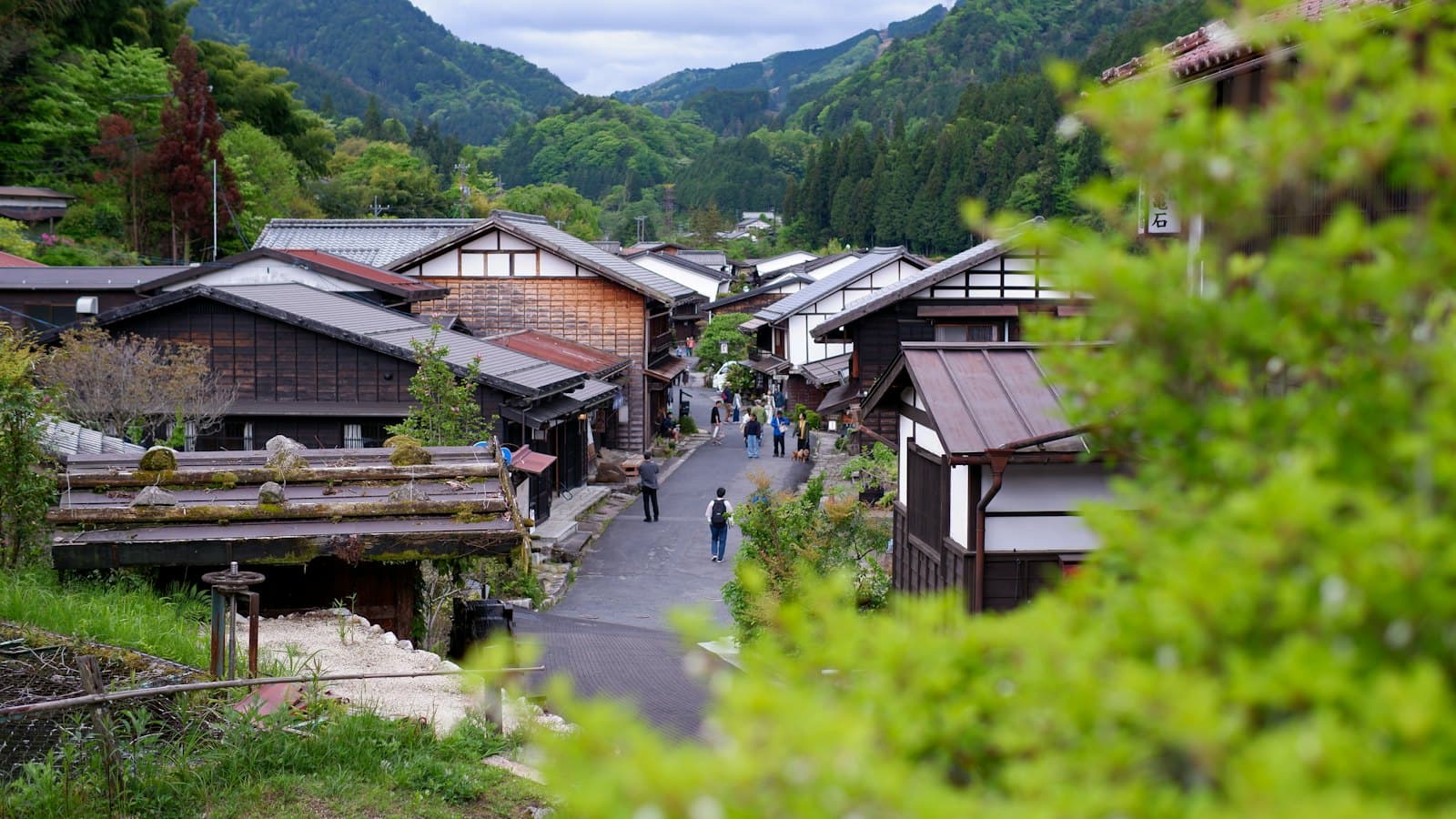
Now picture a factory manager in a small Japanese town. She has the opposite problem. Her best technicians are retiring, and no young people are applying. The machines sit idle on the night shift.
You two have never met, but you are part of the same story. One country has more skilled workers than jobs. Another has more jobs than workers. The question is whether a legal door connects you.
The short answer: Several rich countries now record more deaths than births, and their working-age populations are falling. Japan, South Korea, Italy, Germany, Spain, Taiwan and much of central and eastern Europe are the clearest cases. Some opened or widened work routes: Japan's Specified Skilled Worker status, Germany's points-based job search permit, Spain's quarterly shortage list, Taiwan's self-sponsored permit, and Italy's multi-year quotas. Others went the other way. Hungary, Sweden and Poland tightened, and Canada cut planned admissions. A shrinking population creates the need for workers. Politics decides whether the door opens.
Every route below is as published at the time of writing. Reconfirm with the issuing authority, and have a licensed adviser confirm your case.
Who this applies to
A shrinking country can use you if your occupation is in a sector it has named, and if you can prove your qualification or experience in the format it accepts. That group is narrower than "anyone with a degree", and wider than "senior specialists only". Several of these countries have opened at the technician, trade, care and hospitality level, because that is where their own workforce is thinning fastest.
If the queue for your job at home grows every year, you are seeing the other half of the same picture. See our hub piece on overpopulation and migration and why the queue keeps lengthening for engineers. The practical question is simple: does your occupation reach an open route?
How the pressure builds
Think of a country's workforce like a bathtub. Young workers flow in from the tap. Retirees drain out. For decades the tap ran fast, so the tub stayed full.
When births fall below replacement level, the tap slows. But for two or three decades the total population keeps rising, because the big generations born earlier are still alive and working. Then those big generations retire at the same time as smaller ones enter work. The drain speeds up while the tap is weak, and the working-age population falls.
Employers feel it first in jobs that take years to train for: nursing and aged care, construction trades, heavy vehicle driving, food production, machine maintenance, and clinical and technical roles.
Governments have four tools, and most use several:
- Raise the retirement age.
- Pay people to have children. Even when it works, it changes nothing for twenty years.
- Automate. This helps in factories, much less in care.
- Admit foreign workers. The fastest tool, and the most politically costly. That is why responses differ so much.
For the demographic detail, see ageing populations and the reason skilled visa routes exist. For where employers report unfilled jobs, see countries with labour shortages.
What each country changed
Japan
Japan's Immigration Services Agency, under the Ministry of Justice, runs the Specified Skilled Worker status. It was introduced under a law that took effect in 2019. It admits workers into industrial fields the government designates. Entry is based on a skills test and a Japanese language test, or on completing the technical intern training route. Fields have been added since, and the second, longer-term category was expanded to more fields in 2023.
The field list changes, so read it on the agency's site before you sit any test. The two categories also differ in length of stay and whether family can join. Japan also has a points route for highly skilled professionals, covered in Japan's highly skilled professional points fast track.
South Korea
South Korea's population decline is among the steepest in any developed economy, according to Statistics Korea. Policy runs on two tracks. An employment permit system for non-professional workers has an annual quota set by government, run by the Ministry of Employment and Labor. Professional categories in the E-7 family are run by the Korea Immigration Service under the Ministry of Justice.
E-7 categories are tied to your employer. Each sub-category has conditions, such as salary levels and how many foreign staff a firm may hold, and these are revised. If you are considering Korea, understand the employer dependency first. See South Korea's E-7 route and the path to residency.
Germany
Germany reformed its Skilled Immigration Act in stages through late 2023 and 2024. The changes lowered EU Blue Card salary thresholds, widened access for people with vocational qualifications, and added a points-based permit that lets a qualified person enter and look for work without a job offer. The Federal Ministry of the Interior and the Federal Foreign Office publish the conditions. The Federal Employment Agency publishes the shortage analysis. The ANABIN database shows whether a foreign degree is recognised.
Germany is where trade qualifications matter most. A recognised trade carries weight there that it does not in a purely academic points system. Read trade recognition in Germany before you assume yours transfers.
Italy
Italy sets work entry quotas by decree, the decreto flussi, run through the Ministry of the Interior. Applications are filed in set windows. The government moved to quotas planned several years at once, split by sector and sometimes by nationality under bilateral deals. The quota is the real limit. Think of it like concert tickets: being a fan does not help once the tickets are gone. Check the publication date and the application window first.
Spain
Spain's public employment service publishes a catalogue of hard-to-fill occupations, by occupation and province. It is one of Europe's most detailed shortage signals. The work and residence regulation was reworked in a reform published in 2025, run by the Ministry of Inclusion, Social Security and Migration. Read the current issue, not a summary.
Taiwan
Taiwan's National Development Council and Ministry of Labor offer a combined work and residence permit for people who meet published criteria in named professional categories, with no employer needed first. Births have fallen sharply, and policy has widened professional entry while keeping other categories controlled. The rules have changed more than once, so check them directly.
Denmark
Denmark's Agency for International Recruitment and Integration (SIRI) publishes a positive list of shortage occupations, plus a pay limit scheme based on salary. The positive list is revised on a published cycle. Denmark shows two logics side by side: one route asks what you do, the other asks what you are paid.
Central and eastern Europe
Many countries here are shrinking through emigration as well as low birth rates. Their usual response is work permits with annual quotas, often with simpler steps for named nationalities. Romania, Bulgaria, Poland and the Czech Republic have all used these. The numbers move each year, and several have tightened. Check with the interior or labour ministry of the specific country.
Not sure which country you’d qualify for?
6 quick questions about your age, skills and English. Free, 2 minutes, results on screen. No sign-up.
Free eligibility check →Where decline led to restriction
Here is the uncomfortable half. Population pressure and political openness are separate things.
Hungary's population has fallen for years, and its government prefers family policy to immigration. A law passed in 2023 and in force from 2024 turned foreign labour into a guest worker category: limited time, tied to an employer, and open only to some nationalities. It supplies labour without settlement.
Sweden has an ageing workforce and real shortages in health and care. Yet it raised the maintenance requirement for labour migrants in late 2023, through the Swedish Migration Agency, with more tightening discussed since. Poland published a migration strategy in 2024 focused on control. The Netherlands has moved towards restriction while its shortages stay high.
Canada is the clearest recent example. It relied on immigration for population growth, then cut it. Immigration, Refugees and Citizenship Canada (IRCC) publishes an annual Immigration Levels Plan. The plan published in late 2024 lowered planned permanent resident admissions and set targets for temporary residents for the first time. Canada still admits large numbers, but the direction changed. Read the current plan on IRCC's site.
So need creates demand, and politics shapes the door. It can be a front door to permanent settlement, a revolving door of temporary rotation, or a narrow door with a higher bar. A shrinking population tells you a route probably exists. It says nothing about whether it leads to permanent residence.
What to check
| Signal | What it means | Where to verify |
|---|---|---|
| Deaths exceed births in the national statistics release | Structural labour scarcity is coming, on a lag of years | The national statistics office, and the UN Population Division for cross country comparison |
| Working age population projected to fall | The scarcity sits in the workforce itself | National statistics office projections; Eurostat for EU members |
| A named occupation or shortage list exists and was revised recently | The government is actively identifying gaps and will act on them | The issuing authority: the Federal Employment Agency in Germany, SIRI in Denmark, the public employment service in Spain, the Department of Home Affairs in Australia |
| A route exists that does not require a job offer | You can start the process from outside without an employer | The immigration authority's own page for that permit, with the current conditions |
| The route grants family accompaniment | The country intends settlement, not rotation | The permit conditions page, checked for the specific sub category you would use |
| The route has a path to permanent residence | Your time counts toward something durable | The residence authority's published qualifying periods and conditions |
| Annual quota or application window applies | Eligibility is necessary and not sufficient; timing decides | The decree or ministerial decision setting the quota, with its publication date |
| Salary or maintenance threshold recently raised | The door narrowed even though the shortage persists | The immigration authority's current threshold, checked for the current year |
Two rows do most of the work. A route with no job offer needed is one you can start alone. A route with a path to permanent residence is one worth years of your life. When both are true, the country wants you to stay.
A shortage list is like a photo, not a live video. It shows what a government believed on the day it published. Occupations get removed. Do not trust the version you read a year ago.
What it costs
Each body publishes its own fees. Expect a language test, a credential assessment, registration or exams if your field is regulated, police certificates, medical checks, certified translations and the application fee.
Two costs are specific to these routes. Japan and Korea attach language requirements to major categories, and reaching a working level takes years and tuition. Germany, Italy and Spain attach recognition procedures to regulated jobs, which can mean bridging courses or supervised practice with their own fees.
How long it takes
Plan in three blocks:
- Proving what you already are. Language test, credential assessment, registration and employment evidence. This is in your control, and it always takes longer than people expect. Assessing bodies have queues, and old employers are slow with reference letters.
- The application. Read the published processing time, and treat it as an average. Some files take much longer.
- Quotas. Here the clock runs on the next window, not on a processing queue.
The trap is expiry. Language tests, credential assessments, police certificates and medicals all lapse. A long queue can force you to buy the same document twice, so time them to stay valid through the decision.
When moving is the wrong answer
A shrinking country abroad does not make moving your best choice. Ask yourself honestly. Is your own sector growing, even if your country is not? Do you have real advantages at home, such as family capital or a share in a business? Do care duties for parents or children outweigh the extra pay? Staying can be the right decision, made on purpose.
Moving is also wrong if the route is temporary by design. A guest worker permit in a country that has chosen against settlement gives you a few years of higher pay, then returns you to where you started, minus those years. That can still be worth it. Just choose it knowingly.
And it is wrong if your occupation reaches no open route today. Then fix the gap or change the target. See what to do when your occupation is not on the skilled list.
Common mistakes
- Reading a shortage list as an invitation. You still need recognised qualifications, documented experience, language, sometimes age points, and often a quota place.
- Using last year's list. The most common way people pay for a test on a route that no longer includes them.
- Assuming decline means openness. Hungary and Sweden prove otherwise. Check the policy, not the population.
- Ignoring family and settlement rules. Two routes into the same country can differ entirely on your spouse and your path to permanent residence. The sub-category matters more than the country.
- Choosing the country before the occupation. Find what your occupation qualifies for in several systems first.
What to do next
- Write down your job title as an employer would, plus your qualification level and years of documented experience.
- Check it against the current shortage or designation list of two or three shrinking countries, on the issuing authority's own site. Note each list's date.
- For each match, open the permit page. Record whether you need a job offer, whether family can join, and whether it leads to permanent residence.
- Check for a quota or window, and when the next one opens.
- Check how your qualification gets recognised there, what it costs, and how long the queue is.
- Time tests and certificates so they stay valid through the decision.
- Reconfirm everything with the authority before you pay, and have a licensed adviser confirm your case.
To see which routes your occupation might reach, take the free eligibility check.
Frequently asked questions
Which countries actually have shrinking populations?
Those most often named include Japan, South Korea, Italy, Spain, Germany, Taiwan, China, and much of central and eastern Europe, including Hungary, Bulgaria, Romania, Poland and the Baltic states. The best sources are each country's national statistics office and the UN Population Division's World Population Prospects. Read the current release, because the year a population starts falling is often revised.
Does a shrinking population mean easier immigration?
Sometimes. Japan, Germany, Spain and Taiwan widened routes in recent years. Hungary narrowed foreign labour into a temporary, employer-tied category, Sweden raised its maintenance threshold, and Canada cut planned admissions. Population pressure makes routes more likely. Politics decides how open they are and whether they lead to settlement.
Do these countries want people at my skill level?
Check the lists rather than assume. Several shrinking countries opened at the trade, technician, care and hospitality level, where local supply is thinning fastest. Others limit entry to professionals with degree or salary requirements. The issuing authority's list is the answer.
Is a temporary work permit in a shrinking country worth taking?
It depends on what you want. A temporary permit can raise your earnings for a set time and give you documented overseas experience. It will not give you settlement if the country designed it not to. Read the rules on duration, renewals, family and any path to permanent residence before you accept. You cannot negotiate a missing residence path later.
Do I need language skills for these routes?
Often, and the level varies a lot. Japan and Korea attach language tests to major categories. Germany's rules depend on the route and on whether your job is regulated. Several European routes need little language for the visa but much more to actually get hired. Check the permit's published rule, then judge what you need to work.
Where do I find real numbers on population decline?
For one country, use its national statistics office. To compare countries, use the UN Population Division's World Population Prospects, and Eurostat for the EU. For shortage evidence, use the body that publishes vacancy analysis, such as the Federal Employment Agency in Germany.
