· NextMigrate Team
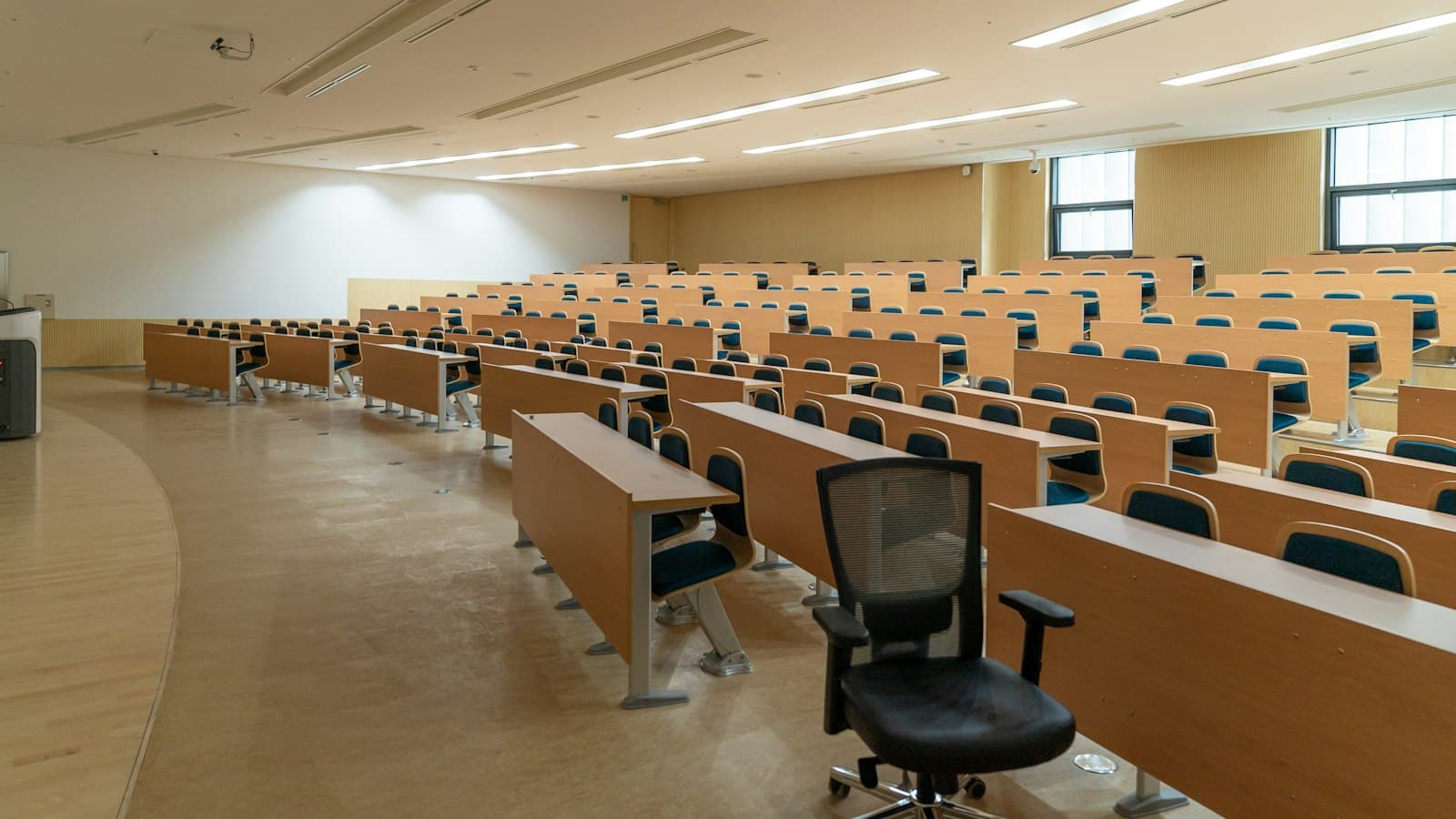
University of Farmington: The Fake University Run by ICE
The University of Farmington was a fake university in Farmington Hills, Michigan, set up and run by US Homeland Security Investigations (HSI), part of ICE, as an undercover sting. It had no teachers and no classes. When the operation was revealed on 30 January 2019, prosecutors said at least 600 foreign nationals had enrolled (NPR, 31 January 2019). By November 2019 ICE had arrested about 250 of them, and nearly 80% of those arrested left the United States under voluntary departure (Anadolu Agency, 28 November 2019). Eight recruiters went to prison. A lawsuit by students who want their tuition back was still open in October 2026.
That is the short answer. The longer one matters to anyone being offered a US school with "day-one CPT", because the trap that caught these students still exists.
Imagine you are a software graduate from Hyderabad on an F-1 visa in Texas. Your master's is nearly done, but your work permit has not come through, or your school has just lost its approval. You need a new school, fast, or you lose your status. A friend of a friend, a recruiter, knows one. It is on the government's own list of approved schools. The fees are lower than your old college. Best of all, you can work full time from your first day, through curricular practical training (CPT). Classes? "Don't worry about it."
You pay. You get your I-20. You keep working.
Then, one morning, immigration agents knock.
This page sets out what the public record shows: how the fake school worked, what the government says, what the students say, and the checks that tell a real US school from a paper one.
Key facts about the University of Farmington
| What it was | A fake university created by Homeland Security Investigations as an undercover operation, called Operation Paper Chase (Federal Circuit, 25 June 2024) |
| Where | Office space on the second floor of a building in Farmington Hills, Michigan, next to a realty company (NPR) |
| Investigation | Run by HSI Detroit "since 2015" (US Attorney, Eastern District of Michigan, 30 January 2019). Website registered in 2016 (NPR) |
| Claimed credentials | Endorsement by the Accrediting Commission of Career Schools and Colleges, and approval by the DHS Student and Exchange Visitor Program (SEVP) to enrol international students (NPR) |
| Tuition advertised | $8,500 a year for undergraduates and $11,000 a year for graduate students (BBC News, 3 February 2019) |
| Classes | None. "The school had no instructors or actual classes" (US Attorney, 30 January 2019) |
| Enrolment | "At least 600" foreign citizens, according to the indictment (NPR) |
| Arrests | 130 on the first day, 129 of them Indian (BBC). About 250 by November 2019 (Anadolu Agency) |
| Recruiters | Eight charged and sentenced to between 6 and 24 months (US Attorney, 29 January 2020) |
| Tuition lawsuit | Ravi v. United States. Revived on appeal on 25 June 2024. No ruling on the merits found as of October 2026 |
Was the University of Farmington real?
No. It looked real, and that was the point.
According to NPR (31 January 2019), the school had an office along a leafy parkway with a sign in the parking lot, a website naming a "Dr. Ned Roberts" as its contact, and a contact page that said: "We'd love to hear from you." The BBC (3 February 2019) reported that the website used stock photos of students in classes and libraries and that the school had a Facebook page with a calendar of events.
The Federal Circuit, describing the students' allegations in its 2024 ruling, said the school "presented itself to prospective and enrolled students as if it were a genuine university". It had "a physical presence in Farmington Hills", "a professional website and active social media accounts", and advertised "a state accreditation from the state of Michigan, a national accreditation, and a listing on the DHS list of certified schools."
Read that last part again. The school was on the government's own list of approved schools, because the government put it there.
The staff were undercover HSI agents. There were no professors, no timetable and no lectures. The school's real product was paperwork: the I-20 that keeps a student's F-1 status alive, and CPT authorisation that lets the student work.
How did the Farmington scheme work?
The indictment, as reported by NPR, describes a "pay to stay" arrangement:
- The students were already in the US. They had entered on F-1 student visas to attend other schools.
- Recruiters steered them to Farmington. Eight recruiters "assisted at least 600 other foreign citizens to illegally remain, re-enter and work in the United States, and actively recruited them to enroll" between early 2017 and January 2019.
- The school kept their status alive. Students used it to "fraudulently maintain their student visa status and to obtain work authorization" under CPT.
- Paper replaced study. Recruiters helped create false student records, including transcripts, "for the purpose of deceiving immigration authorities" (US Attorney, 30 January 2019).
- Everyone got paid. The school collected tuition. Recruiters visited the office to collect payments of $5,000 to $20,000 per trip, according to the indictment, and together made more than a quarter of a million dollars (NPR).
The Detroit Free Press, as reported by Anadolu Agency, said many of the 600 enrolled through CPT, while others transferred in after their original school lost accreditation and their status was at risk.
Ask yourself one question. If a school lets you work full time from your first day and never asks you to attend, what exactly are you paying it for?
What does the government say?
The government's position has been firm from the start: the students knew.
- "All participants in the scheme knew that the school had no instructors or actual classes" (US Attorney, Eastern District of Michigan, 30 January 2019).
- US Attorney Matthew Schneider said the foreign "students" "weren't students at all", calling them "scam artists trying to stay in our country illegally", and said "they all fully knew there were no classes to attend" (29 January 2020).
- "Since the school did not offer courses or confer degrees, the enrollees were simply using the F-1 program as a pay-to-stay scheme," said ICE spokeswoman Carissa Cutrell (Anadolu Agency, 28 November 2019).
On the question of entrapment, Peter Henning, a former prosecutor and law professor at Wayne State University, told The Detroit News: "It's creative and it's not entrapment. The government can put out the bait, but it's up to the defendants to fall for it" (quoted by NPR).
What do the students say?
The students' side is different, and some of it is now being tested in court.
- Their lawyers argued they were trapped because both DHS and an accrediting body working with it listed the school as legitimate on their websites (Detroit Free Press, reported by Anadolu Agency).
- Rahul Reddy, a Texas attorney who advised some of the students, said the US "trapped the vulnerable people who just wanted to maintain (legal immigration) status. They preyed upon on them" (Anadolu Agency).
- Ravi Mannam, an immigration attorney in Atlanta, told the Detroit Free Press the sting "kind of hooked these students by promising them credits for their previous master's programmes" (quoted by the BBC).
- India's Ministry of External Affairs protested to the US embassy in Delhi on 2 February 2019: "Our concern over the dignity and wellbeing of the detained students and the need for immediate consular access for Indian officials to the detainees was reiterated" (BBC). India also urged the US "not to resort to deportation against their will".
One student's account is set out in the tuition lawsuit. The allegations, which the court accepted as true only for the purpose of the appeal, say that he enrolled in March 2018 "expecting to take classes", asked administrators about classes and assignments, "never received a course schedule", and paid $12,500 in tuition (Federal Circuit, 25 June 2024). The government disputes that students did not know.
The honest summary: the government says every student knew there were no classes. Some students say they did not, or that they were misled by recruiters. No court ruling we found has decided that question for the group as a whole.
Free eligibility check · 2 minutes
Which country would you qualify for?
6 quick questions on your age, skills and English. You get a score out of 100 and a read on each country you pick, on screen. No sign-up.
1 of 6 · When are you planning to move?
What happened to the students?
The arrests came in waves.
- 30 January 2019. 130 students were arrested on the day the sting was revealed, 129 of them from India (BBC, 3 February 2019).
- March 2019. ICE reported 161 arrests (Anadolu Agency, citing the Detroit Free Press).
- November 2019. About 250 arrests. ICE said "nearly 80% were granted voluntary departure and departed the United States". Of the rest, roughly half were ordered removed by a judge or by Customs and Border Protection, and the others "have either filed for some sort of relief or are contesting their removals" (Anadolu Agency, 28 November 2019).
The students were not charged with crimes in the criminal case. The consequences were immigration ones: lost status, detention, removal proceedings, and a record that can follow them into future visa applications.
What happened to the recruiters?
All eight were sentenced on or before 29 January 2020 (US Attorney, Eastern District of Michigan):
| Recruiter | Sentence |
|---|---|
| Santosh Sama | 24 months |
| Barath Kakireddy | 18 months |
| Suresh Kandala | 18 months |
| Avinash Thakkallapally | 15 months |
| Prem Rampeesa | 12 months and one day |
| Aswanth Nune | 12 months and one day |
| Naveen Prathipati | 12 months and one day |
| Phanideep Karnati | 6 months |
They were charged with conspiracy to commit visa fraud and harbouring aliens for profit. HSI Detroit's Vance Callender said the sentences made it "unequivocally clear that every individual who participated in this scheme knew it was an illegal pay-to-stay scam."
The tuition lawsuit: can students get their money back?
Some students sued the United States to recover their tuition. The case, Ravi v. United States, was filed in the Court of Federal Claims in 2020. That court dismissed it in 2022 for lack of jurisdiction.
On 25 June 2024 the Federal Circuit reversed that dismissal. Taking the student's allegations as true, it said the government "engaged in the sale of services such as private parties could also engage in among themselves". It also rejected, at this stage, the idea that there was no contract "as long as the offeror had its fingers crossed behind its back when making the offer and accepting the money."
The ruling came with a warning for the students. "Illegal contracts are unenforceable," the court said, so on remand "the issue of Mr. Ravi's intent when he entered into the contract will be a matter for the Claims Court to decide." In plain words: a student who knew there were no classes may not get the money back.
As of October 2026, the court docket shows the case still in pre-trial stages. We found no settlement and no ruling on the merits.
Farmington was not the first fake university
The University of Northern New Jersey (2013 to 2016). HSI created this school in Cranford, New Jersey, in September 2013. It "was not staffed with instructors or educators, had no curriculum, and conducted no actual classes," prosecutors said. On 5 April 2016, 21 brokers, recruiters and employers were arrested, accused of helping about 1,076 foreign nationals, "all of whom were willing participants", keep their student status (US Attorney, District of New Jersey, 5 April 2016). The students were not criminally charged, but their status was terminated.
Students then sued. The government settled in 2022, denying "all allegations of wrongdoing". It agreed to dismiss pending deportation cases, give students 180 days to change status, transfer or leave, not count that period as unlawful presence, and remove references to fraud from their records. Students received no money (Inside Higher Ed, 27 January 2022). The government had told an appeals court in 2019 that students "were the victims of fraud", then clarified in a letter that it was not conceding that all, or even most, of the enrollees were innocent victims.
Tri-Valley University (California). This one was not a sting. It was a real, privately run school in Pleasanton that sold immigration documents. Employees testified that it "had no requirements for admission or graduation". Its founder, Susan Xiao-Ping Su, was sentenced to 198 months in prison and ordered to forfeit $5.6 million (US Attorney, Northern District of California, 3 November 2014).
Two lessons sit side by side here. A school can be fake because criminals run it, or because the government built it to catch you. Either way, if it sells status instead of teaching, the student carries the risk.
Why "day-one CPT" is the warning sign
CPT is real and legal. Under US regulations, an F-1 student can usually get practical training only after being "lawfully enrolled on a full-time basis ... for one full academic year", and the training must be "an integral part of an established curriculum" (8 CFR 214.2(f)(10)). There is an exception for "graduate studies that require immediate participation in curricular practical training". "Day-one CPT" schools rely on that exception.
Some day-one CPT programmes are genuine. But Farmington and UNNJ show how the exception gets abused: a school that sells the right to work and treats study as optional. A lawyer for UNNJ students described the fake school's I-20s as "saying that they could start their CPT ... and they didn't have to attend classes" (Inside Higher Ed, 2022).
The government is looking harder at this now. On 12 August 2026, SEVP told schools it "has observed a rise in CPT authorizations that do not meet regulatory requirements". It said school officials should "only authorize CPT if its absence would make the attainment of a degree an impossibility", and warned of "potential withdrawal of the school's SEVP certification" (SEVP Broadcast Message 2608-01, 12 August 2026).
So when a recruiter pitches a school mainly as a way to keep working, picture where that pitch leads. Is it a degree, or a place in the next round of arrests?
Red flags you can check yourself
| What happened at Farmington | Your test |
|---|---|
| No classes, no timetable | Ask for this term's class schedule, room numbers and teacher names. Then ask a current student |
| Sold mainly as a way to work | Does the recruiter talk more about CPT than about the course? |
| Full-time work from the first day | Does CPT start in your first term, and is it required for every student in the programme? |
| Recruiters paid per student | Ask the recruiter, in writing, who pays them and how much |
| On the government list | Being SEVP-certified is necessary, but it did not protect Farmington students. Check accreditation too |
| Tuition cheaper than real schools | Compare with two accredited schools offering the same degree in the same state |
How to check a US school is real
- Find it on the SEVP list. Use the SEVP-certified school search. If it is not there, it cannot issue you an I-20.
- Check accreditation separately. Search the US Department of Education's DAPIP database and the CHEA directory. Then look up the accreditor itself on the same sites, because diploma mills invent their own.
- Look for teaching, not paperwork. Real schools publish faculty names, course catalogues and timetables. Ask for them. Ask to sit in a class.
- Talk to graduates. Find alumni on LinkedIn who now work in the field the degree claims to prepare them for.
- Read the CPT rules for your programme. Ask the school's designated school official (DSO) in writing why CPT is "integral" to your degree, and whether every student in the programme does it.
- Report a suspicious school. SEVP takes tips at SEVPFraud@hsi.dhs.gov (SEVP, 12 August 2026).
Want a quick reading of a school or offer before you pay? The free checker below flags the warning signs in this case, such as an agent selling a "guaranteed" visa or a school that cannot be found on an official list.
For the full list of official registers in other countries, read how to check if a college or university is real. For how bogus colleges work outside the US, see bogus colleges and student visa mills.
The honest lesson
The Farmington students were not all the same. Some, by the government's account, knew exactly what they were buying. Others say they were frightened, short of time and told by someone they trusted that this was normal. The law treated them much the same way.
The part you control is the question you ask before you pay. A real school will happily show you its classrooms, its teachers and its graduates. A paper school will talk about your work permit.
If your status is already at risk, speak to a US immigration attorney before you transfer anywhere. A transfer made in a hurry, to the wrong school, can cost far more than the time you were trying to save. Our guide to what happens if you overstay explains the bans that follow.
Frequently asked questions
Was the University of Farmington real?
No. It was a fake university created by US Homeland Security Investigations as an undercover sting called Operation Paper Chase. It had an office in Farmington Hills, Michigan, a website and social media, but no teachers and no classes. The operation was revealed on 30 January 2019.
Is the University of Farmington a scam?
It was a government sting, not a criminal scam. HSI agents ran it to catch students and recruiters who used student visas to stay and work in the US without studying. Students paid real tuition, $8,500 a year for undergraduates and $11,000 for graduates according to the BBC, and some have sued to get it back.
How many students were arrested at the University of Farmington?
About 250 by November 2019, according to ICE. 130 were arrested on the first day, 129 of them from India. ICE said nearly 80% of those arrested took voluntary departure and left the US, and about half of the rest were ordered removed.
What happened to the University of Farmington lawsuit?
In Ravi v. United States, students are trying to recover their tuition. The Court of Federal Claims dismissed the case in 2022, but the Federal Circuit reversed that on 25 June 2024 and sent it back. The court warned that a student who knowingly entered an illegal contract cannot recover. As of October 2026 we found no settlement or final ruling.
Did the University of Farmington students know it was fake?
The government says they all knew there were no classes. Some students say they were misled by recruiters and believed the school was real because it was on the DHS list of certified schools. No court ruling we found has decided this for all students; in the tuition case, each student's intent is a question for the trial court.
What is the University of Northern New Jersey?
Another fake university created by HSI, in Cranford, New Jersey, in 2013 and revealed on 5 April 2016. Prosecutors charged 21 brokers, recruiters and employers and said about 1,076 foreign nationals had used it. In a 2022 settlement the government, without admitting wrongdoing, dismissed deportation cases and removed fraud references from students' records.
Is day-one CPT legal?
It can be. US rules allow immediate CPT for graduate programmes that require it, but the training must be an integral part of the curriculum. In August 2026 SEVP warned schools about a rise in CPT that does not meet the rules and said it could withdraw a school's certification. Treat any school sold mainly as a way to work as a red flag.
How do I check if a US university is real?
Find it on the SEVP-certified school search, then check its accreditation on the US Department of Education's DAPIP database or the CHEA directory, and check that the accreditor is recognised. Ask for class schedules and faculty names, and talk to graduates. Farmington was on the SEVP list, so the list alone is not enough.
