Updated · NextMigrate Team
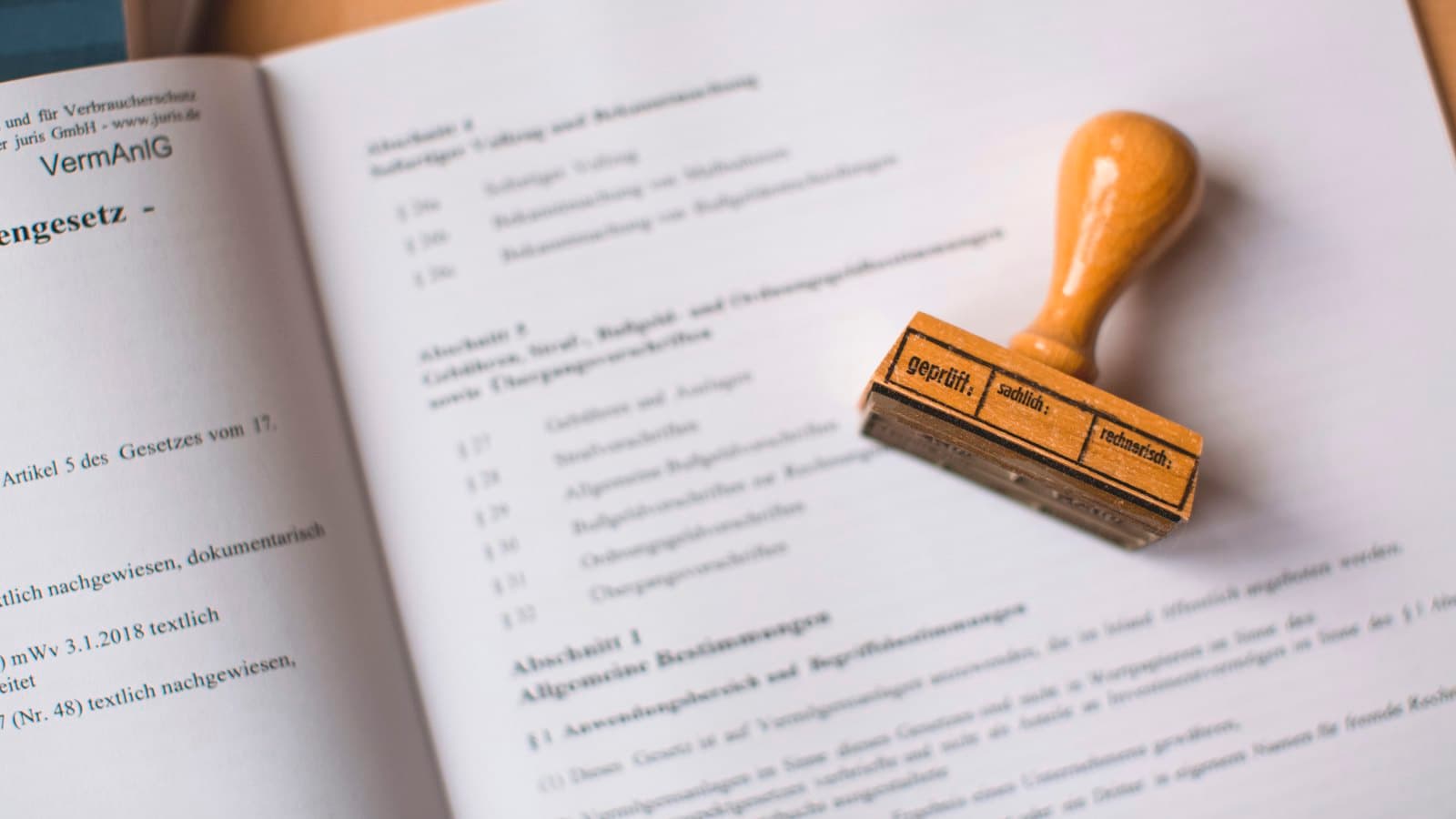
Apostille or Certified Translation: Which One Your Documents Actually Need
Imagine you are a nurse in Lagos. A hospital in Germany wants you. After years of night shifts and power cuts, this is the door you have been waiting for.
Now there is a plastic folder on your kitchen table. Birth certificate. Degree. Transcripts. Police clearance. The checklist uses words like "apostille", "legalisation" and "sworn translation". A man outside the ministry says he can "do everything" for a fee.
You do not want to pay twice. You do not want a stamp in the wrong place to cost you a month.
The short answer: An apostille and a certified translation solve two different problems. An apostille proves the signature and seal on a public document are genuine. It says nothing about the content. A certified translation makes the content readable, with a translator's statement that it is accurate. It says nothing about whether the original is genuine. Most files need a separate decision on each, for each document. The safe default is to authenticate first and translate second.
Three questions decide what you need, in this order:
- Are both countries in the Hague Apostille Convention? If yes, an apostille replaces the old embassy chain. If not, you need consular legalisation, which is slower.
- Does the receiving body keep its own translator list? Germany, Spain and several civil-law systems do. Canada, Australia and the UK generally do not, though each names the credential it wants.
- Must the translation include the apostille? If yes, the apostille must exist before the translation is made.
Get the third one wrong and you pay twice. Costs and timings below are planning ranges checked in August 2026. Reconfirm each with the authority named beside it, and have a licensed or registered immigration adviser confirm what your own documents need before you spend money.
Who this is for
The folder usually holds birth and marriage certificates, degrees and transcripts, police certificates from every country you have lived in, and job references, sometimes also a divorce decree, a death certificate for a previous spouse, or a change of name deed. People who most often get this wrong:
- Applicants whose language differs from the destination's, sending documents to Germany, Ireland, Canada (for Quebec-bound files) or a Gulf employer.
- Anyone in a spouse or dependant application, because marriage, birth and divorce documents need legalisation far more often than job documents.
- Nurses, doctors, engineers and teachers, who submit to a professional regulator and an immigration department. The two often want different things from the same certificate.
- Anyone moving to or from a country outside the apostille system, where the embassy chain still applies and takes weeks longer.
If you do not yet know which documents you need, start with our complete document checklist for migrating abroad.
What an apostille actually does
An apostille is a certificate issued under the 1961 Hague Convention Abolishing the Requirement of Legalisation for Foreign Public Documents. The Hague Conference on Private International Law (HCCH) runs it. Each member country names one or more authorities to issue it. When both countries are members, that one certificate is the whole authentication step. No embassy is needed.
Think of an apostille as a guard checking the ID badge of the official who signed your document. He confirms the signature, the signer's role and the seal are real. He does not read the letter or vouch for what it says.
Issuing authorities differ by country. Confirm each on the authority's own page:
- United Kingdom: the FCDO Legalisation Office.
- Australia: the Department of Foreign Affairs and Trade (DFAT).
- New Zealand: the Department of Internal Affairs Authentication Unit.
- Ireland: the Department of Foreign Affairs.
- Germany: varies by document type and issuing state, with district courts, regional authorities and federal offices each handling different categories.
- India: the Ministry of External Affairs, generally after state level authentication.
- Philippines: the Department of Foreign Affairs.
Nigeria is outside the apostille system, so no apostille is issued there. Nigerian public documents go through the consular chain: authentication by the Federal Ministry of Foreign Affairs in Abuja, then legalisation at the destination country's mission. Nigeria has publicly discussed joining, so confirm the current position with the Ministry and the receiving mission.
The HCCH keeps the official list of member countries and their authorities. The list has changed a lot recently. As published by the HCCH, the Convention entered into force for Canada in January 2024 and for China in November 2023, and several South Asian and African states have joined since 2022. Qatar and Egypt were still outside at the time of writing, so files touching them use the consular chain. Check the HCCH status table before you file, because a country's status can change.
What a certified translation actually does
A certified translation is a full rendering of the document into the target language, plus proof of who translated it and a statement that it is accurate. What counts as "proof" is where money gets wasted.
A translator is like an interpreter in a meeting. They repeat exactly what was said in another language. They cannot tell you whether the speaker was honest.
There are three broad systems.
Accreditation systems. The receiving body names a credential and accepts anyone who holds it. Australia's Department of Home Affairs and its professional regulators generally use NAATI certification. Canada's IRCC accepts translators certified by a provincial or territorial regulatory body. If the translator is not certified, IRCC requires an affidavit sworn by the translator before a commissioner of oaths. Both bodies have tightened their instructions before, so check their current pages.
Sworn or court-appointed systems. The receiving body only accepts translators sworn in by a court or ministry, listed on a searchable register. Germany works this way. Official translations are generally expected from a publicly appointed and sworn translator (a beeidigter or ermächtigter Übersetzer), searchable through the joint federal and state interpreter and translator database. Spain, Poland and several other civil-law countries run similar registers. A freelance translator with no appointment cannot be used here, however good.
Declaration systems. The receiving body wants a professional translator or agency to sign a statement of accuracy with their name, credentials, contact details and the date. The UK broadly works this way for the Home Office. Check the current UKVI guidance for the exact wording.
So a "certified translation" bought online can be worthless in Germany and fine in the UK. Buy against the receiving body's definition.
The decision tree
Run this for each document, not once for the whole folder. Documents in the same file often land in different branches.
Step 1. Does the receiving body ask for legalisation at all? Many immigration departments do not. Files for Canada, Australia, New Zealand and the UK often need only certified copies and certified translations. But the same marriage certificate may need an apostille for a city registration, a professional regulator or a Gulf employer. Read each body's checklist. Do not apostille a document just because it feels safer.
Step 2. Are both countries in the apostille system? If yes, one apostille from the issuing country is enough. If not, you run consular legalisation: notarisation or authentication at home, then your foreign ministry, then the destination's embassy or consulate, and sometimes an attestation by the destination's foreign ministry after you arrive.
Step 3. Does the receiving body keep a translator list? If so, use only a translator on that list, usually one appointed in the destination country. A translation sworn in your home country is sometimes rejected in Germany, even when the translator is genuinely sworn elsewhere.
Step 4. Must the translation cover the apostille? This sets the order, and it is the expensive question. If the translation must include the apostille or legalisation stamps, get the apostille first, then translate the fully stamped original. Ask the receiving body directly.
Step 5. Does the translation itself need certifying? In some consular chains, the finished translation is notarised and legalised as its own document. Gulf employer and family sponsorship files often work this way.
Not sure which country you’d qualify for?
6 quick questions about your age, skills and English. Free, 2 minutes, results on screen. No sign-up.
Free eligibility check →The ordering mistake that forces a full redo
The costliest error here is getting the translation before the apostille.
It feels natural: get the certificate, translate it, then authenticate it. But then the translated set does not show the apostille, and any body that wants the whole legalised document translated rejects it. You pay the translator again, and may rejoin the embassy queue.
It is like painting a wall before you fix the crack. You end up painting twice.
There is a second version of this mistake. Some authorities will apostille a notarised translation as a document in its own right. That gives you a stamped translation of an unstamped original. Bodies that asked for a translation of an apostilled original will not accept it.
The safe default, unless the receiving body says otherwise in writing: authenticate first, translate second, and have the translator include the stamps. If unsure, ask the body in exactly those words, in writing, and keep the answer.
A third trap: short-lived documents. Police certificates and some civil registry extracts expire. Six to twelve months is a common planning assumption, but the receiving body sets the window, so ask it in writing. Legalise and translate a police certificate too early, and it may expire before you file. Do short-lived documents late and long-lived ones early. Our guide to nurse registration and visa sequencing order covers this where a regulator and an immigration department both hold part of the calendar.
What it costs
These are planning ranges compiled in August 2026 from published fee schedules and market quotes. None is a current quoted price. Official fees change without much notice, and translation prices vary by language, length and speed.
| Item | Typical planning range per document | Who sets it | Where to verify |
|---|---|---|---|
| Apostille, government fee | Roughly US$15 to US$70 | The designated competent authority in the issuing country | That authority's own fee page (for example the FCDO Legalisation Office for UK documents, DFAT for Australian ones) |
| Apostille, agent or courier handling | Roughly US$20 to US$120 | Private agents | Compare against the authority's own postal service before paying an agent |
| Consular legalisation, full chain | Roughly US$60 to US$300 | Foreign ministry plus destination embassy, each charging separately | Each ministry and embassy fee schedule |
| Certified translation, short civil document (birth, marriage, police certificate) | Roughly US$25 to US$70 per page | Private translator or agency | Get the price per page and confirm page count first |
| Sworn translation in a register country (for example Germany) | Roughly EUR 45 to EUR 90 per page | Court-appointed translator | The official interpreter and translator register for the destination |
| NAATI certified translation (Australia) | Roughly AU$50 to AU$120 per page | NAATI certified practitioner | NAATI's own practitioner directory |
| Notarisation of a copy or translator declaration | Roughly US$10 to US$60 | Notary or commissioner of oaths | Local notarial fee schedules |
| Certified copies from the issuing institution | Often free to US$40 | The issuing school, registry or police authority | The issuing body |
A full folder for one applicant, with six to ten documents needing authentication and translation, usually lands between US$300 and US$1,200. A family file with a spouse and two children commonly doubles that. A redo from the ordering mistake can add several hundred dollars and a month.
How long it takes
The slow step is usually getting the original issued.
| Stage | Typical planning range | Notes |
|---|---|---|
| Obtaining the original or a certified copy | 1 to 12 weeks | Police clearances and older civil registry records are the slow end. Some registries in South Asia and West Africa take longer |
| Pre-authentication (notary, state or regional level) | Days to 3 weeks | Required in countries where the foreign ministry only accepts pre-authenticated documents, India being a common example |
| Apostille by the competent authority | Same day to 3 weeks | In-person counters can be same day. Postal services are typically 5 to 15 working days |
| Consular legalisation, full chain | 3 to 10 weeks | Two or three separate queues, each with its own appointment system |
| Certified or sworn translation | 2 days to 2 weeks | Rare language pairs and long transcripts sit at the slow end |
| Post-arrival attestation (some Gulf destinations) | 1 to 3 weeks | Handled after you land, often by the employer |
Plan backwards from your filing date and assume one avoidable delay. If a document must be issued abroad, apostilled abroad and then translated by a sworn translator in the destination, you are coordinating three organisations in two countries. Count in months.
When correct paperwork still does not work
The document is not a public document. Apostilles attach to documents from a court, an official body or a notary. An employer reference on company letterhead is private. It usually needs a notary first, and the apostille then confirms the notary, not the employer. Some bodies want references verified another way.
The body wants source verification. Several nursing and medical regulators require documents sent directly by your university or registration body through a set channel. A perfect set sent by you does not count. This is one reason credential assessment and the visa file need separate plans, as covered in getting your qualifications recognised abroad.
The record has a mismatch. An apostille makes a mismatch official. If your degree spells your name differently from your passport, the apostille certifies that the different spelling is genuine. Fix it at source first, usually with an affidavit of one and the same person, a registry correction, or both.
The embassy queue is closed. With no working consulate in your country, the chain may run through a third country. Budget time for couriers.
The degree is downgraded. An apostilled, translated degree is still assessed against the destination's system. If it comes back lower, no paperwork changes that. See what to do when your degree does not come back equivalent.
Common mistakes
- Translating before authenticating. The expensive one.
- Buying a translation the body cannot accept. An online certification works in a declaration system and is useless in a sworn-translator country.
- Apostilling a photocopy. Most authorities need an original or a properly certified copy from the issuing body.
- Assuming one apostille covers a bound set. For a multi-page transcript, ask whether each sheet needs its own certificate. Transcripts are priced per page and are often the largest translation cost.
- Authenticating documents nobody asked for. Read the checklist before you spend.
- Letting short-lived documents age. Police certificates and medicals expire. Order them late.
- Handing originals to an unregistered agent. Some hold certificates as leverage or lose them. Use the authority's own postal service where possible, and never hand over originals without a receipt and a return date.
- Forgetting the step after arrival. Several Gulf destinations expect an attestation after you land, often through the employer.
Trust and verification
A provider promising a guaranteed apostille within 24 hours, where the authority publishes a 10 working day service, is selling a courier run or a fiction. Compare the private price with the official government fee and ask what the difference buys.
Never pay for document services into a personal bank account or an individual's mobile wallet. Real agencies invoice from a registered business.
If a "migration agent" bundles document work with a job offer, the job offer is the risk. Charging workers upfront for a job placement is banned or restricted in many places, and it is a common fraud pattern. Check advisers with the regulator: the College of Immigration and Citizenship Consultants for Canada, the Office of the Migration Agents Registration Authority for Australia, the Immigration Advice Authority for the UK, and the Immigration Advisers Authority for New Zealand. Our guide on how to avoid immigration scams covers what to check before handing over money or originals.
Check translators at source too. Register countries publish searchable databases of sworn translators, and NAATI publishes a practitioner directory. A screenshot of a certificate is not proof.
What to do next
Go through your folder one document at a time. Next to each, write:
- Which body will receive it.
- Whether that body asks for legalisation.
- Which translation system applies.
- Whether the translation must include the apostille.
Often half the folder needs only a certified copy. Then confirm whether both countries are on the HCCH list and what the receiving body says about translations. That afternoon often saves several hundred dollars. Run a spouse's and children's documents through the same steps separately.
Before you spend on any of this, check the route itself is realistic. The free eligibility check asks 6 questions (age, education, experience, English, target countries) and gives a quick read on your options in 2 minutes.
Frequently asked questions
Does an apostille replace a certified translation?
No. The apostille confirms the signature and seal are genuine. The translation makes the content readable. A foreign-language document with an apostille is still unreadable, and a translated document with no authentication is still unverified. Where both are required, you need both.
Which comes first, the apostille or the translation?
Usually the apostille, so the translation can include the stamps. Confirm this with the receiving body in writing first, because a few bodies want the translation legalised as a separate document. Getting the order wrong is the most common reason people pay a translator twice.
Do I need an apostille for a Canadian, Australian or UK immigration application?
Often not. Those immigration departments generally use certified copies and certified translations. Apostilles are more often needed for professional registration, civil registration, marriage recognition and Gulf employers. Canada joined the apostille convention with effect from January 2024, so the position for Canadian-issued documents changed recently.
Can I use a freelance translator I found online?
It depends on the receiving body. In a declaration system like the UK's, a signed statement is often enough. Germany expects a publicly appointed and sworn translator on the official register, Australia generally expects NAATI certification, and Canada's IRCC expects a certified translator or, failing that, an affidavit sworn by the translator. Check the register or directory before you pay.
What happens if my country is not in the Hague apostille framework?
You use consular legalisation: authentication at home, then your foreign ministry, then the destination's embassy or consulate. It is slower and dearer, commonly three to ten weeks for the whole chain, with a fee and appointment at each step. Some destinations add an attestation after you arrive.
How long does an apostille stay valid?
The apostille itself generally does not expire. The document under it may. Receiving bodies commonly accept a police certificate for something like six to twelve months, and a medical report for a similar period, but each body sets its own rule. Ask before you start the chain.
This article is general information, not legal advice. Rules differ by document, destination and receiving body, and they change. A licensed or registered immigration adviser, or the receiving body itself, should confirm what your documents need before you spend money.
