· NextMigrate Team
On this page
- Malta nomad permit requirements at a glance
- Who counts as a digital nomad in Malta
- Income requirements: how EUR 42,000 is checked
- How to apply, and the official website
- Do digital nomads pay income tax in Malta?
- Renewing the permit
- Does the nomad permit lead to permanent residence?
- Who this is for, and who it is not for
- Frequently asked questions
- Your next step
Malta Nomad Residence Permit: Requirements, Tax, and What Happens After 4 Years
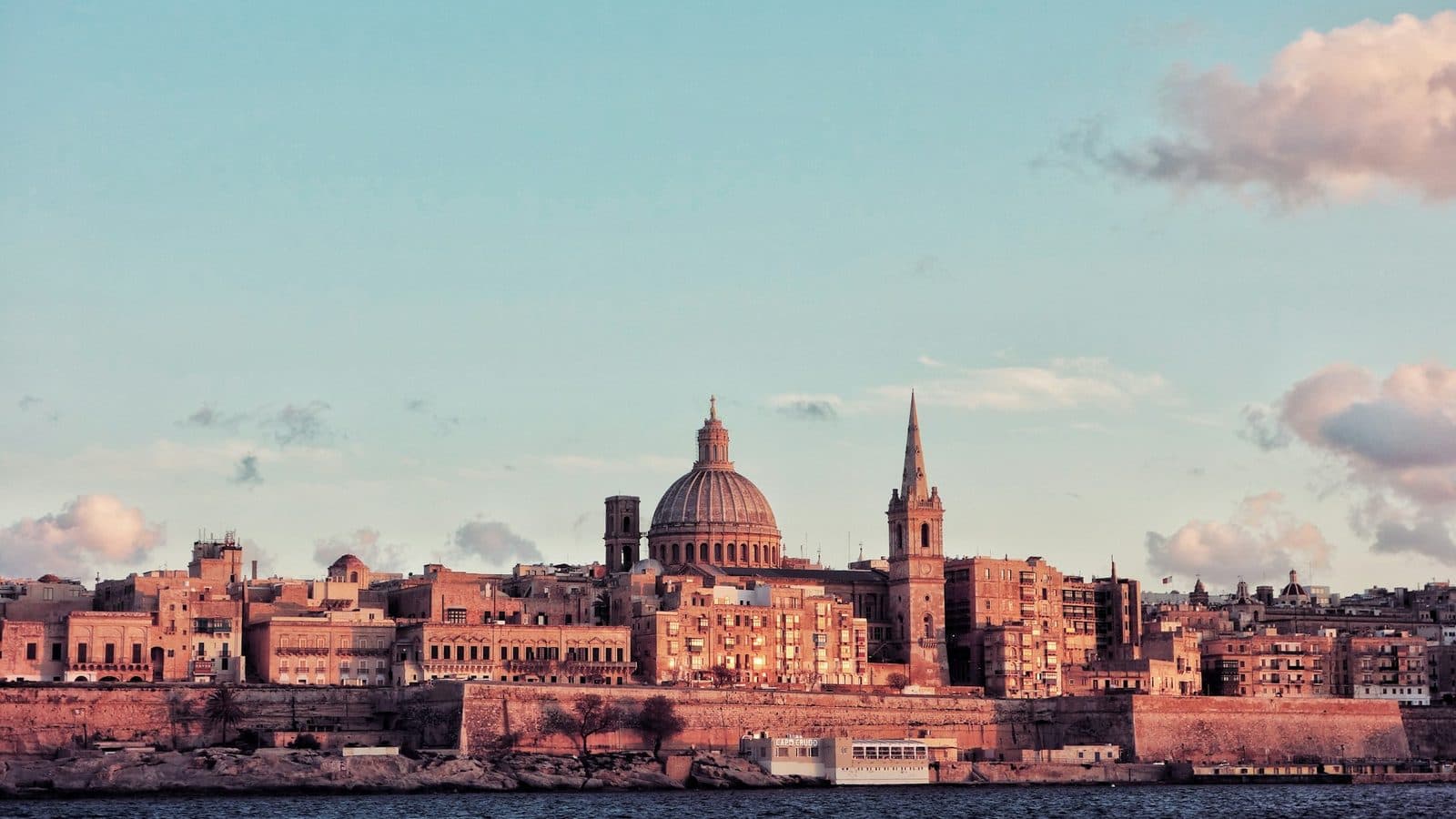
You would not be reading about Malta's nomad permit unless you had pictured working from a limestone flat in Valletta for an employer abroad. This page sets out Malta's real rules, including the parts that end the stay.
Imagine you are a product designer in Lagos. Your employer is in Amsterdam and pays you well. You want sun, English as an official language and a short flight to the rest of Europe. Malta keeps coming up.
Malta does offer a long and legal stay for remote workers, and it renews for up to four years. The tax rules are kind in the first year and modest after that. The permit also has firm edges: no Maltese clients, private health insurance paid a year in advance, and no route to permanent residence.
The short answer: You need a gross income of at least EUR 42,000 a year, from a foreign employer, your own foreign company or foreign clients. The permit lasts one year and can be renewed three times, so four years in total. The application fee is EUR 300 per person, plus EUR 100 per person for the residence card. Nomad income is tax-free in Malta for the first 12 months, then taxed at a flat 10%. Residency Malta says plainly that the permit does not lead to permanent residence or citizenship.
Malta nomad permit requirements at a glance
Residency Malta Agency runs the scheme. Its official site is the place to check before you apply (Residency Malta, nomad eligibility, November 2026).
| Rule | Figure (checked November 2026) | Source |
|---|---|---|
| Who can apply | Non-EU, non-EEA and non-Swiss nationals who work remotely for foreign employers or clients | Residency Malta |
| Income | At least EUR 42,000 a year, gross | Residency Malta |
| Application fee | EUR 300 per person, non-refundable | Residency Malta |
| Residence card | EUR 100 per person, paid to Identità | Residency Malta FAQ |
| Length | 1 year from issue of the card | Residency Malta |
| Renewals | Up to 3, for a maximum of 4 years | Residency Malta FAQ |
| Health insurance | EU and UK cover of at least EUR 100,000, paid for a full year | Residency Malta FAQ |
| Tax on nomad income | None for 12 months, then 10% | S.L. 123.210 |
In US dollars, EUR 42,000 is about US$46,160 a year, or US$3,850 a month. We used the European Central Bank reference rate of 1.0990 dollars per euro on 20 November 2026.
Who counts as a digital nomad in Malta
Residency Malta accepts three kinds of remote worker. You must also show you can do the work remotely, using telecoms (Residency Malta, November 2026):
- Employee: you work for an employer registered in a foreign country, under a contract of work.
- Partner or shareholder: you run business for a company registered abroad that you co-own.
- Freelancer or consultant: you serve clients whose permanent establishments are in a foreign country.
The line you must not cross is Malta itself. The agency says people who "directly or indirectly will be providing services to Malta based companies or individuals are ineligible" (Residency Malta, eligibility, November 2026). A foreign contractor who serves the company's Maltese subsidiary is also shut out. If you take a Maltese job, you must give up the nomad permit and apply for a local work permit.
Income requirements: how EUR 42,000 is checked
The bar is EUR 42,000 a year, gross. It rose from EUR 32,400 for applications made from 1 April 2024. People who applied before that date keep the older figure (Residency Malta, November 2026).
The agency wants more than a payslip. Its checklist asks for (Residency Malta checklist, November 2026):
- three months of official bank statements in your own name, with the income paid straight into those accounts
- proof that the income is guaranteed for at least five more months from the date you apply
- a contract that says the work can be done remotely, or company papers, or freelance service contracts
What a family needs
You can bring a spouse, a de facto partner of more than two years, minor children, and adult children who are unmarried and mainly dependent on you (Residency Malta, eligibility, November 2026). Each family member pays the EUR 300 application fee and the EUR 100 card fee.
Many guides say the income bar rises by 20% for each dependant. We could not find that rule on any Residency Malta page we checked in November 2026, which state only the EUR 42,000 figure. Ask the agency what it expects for your household, and check before applying.
Family members must be named at the start. The agency will not add them after you pay or after approval, except at renewal or for a newborn.
How to apply, and the official website
You apply online through the Residency Malta portal at portal.residencymalta.gov.mt (Residency Malta, November 2026). The steps run like this:
- Submit the file online with Form N4 for each person, a signed letter of intent, a CV, copies of every passport page, bank statements and proof of work.
- Pay EUR 300 per person by bank transfer from your own account.
- Wait for approval in principle. The agency expects to take 30 working days from the receipt of funds. Visa processing comes on top.
- Send the last papers within 30 working days: a lease covering the permit period and your health insurance.
- Enter Malta. If you need an entry visa, the Central Visa Unit at Identità contacts you. If you are already in Malta on a valid visa, you do not need another one.
- Book biometrics by emailing the agency once you are in Malta, then pay EUR 100 per person by card.
- Collect your card in person. It takes three to four weeks.
Refusals come with no reasons, and the agency's decision is final. You can reapply after 12 months.
Which nomad visas can I get on my income? →
Enter your monthly income and family size. See which visas you clear today and how far short you are on the rest. Free, no sign-up.
Documents you need
- a police conduct certificate for everyone aged 18 or over, less than six months old and certified by your national police
- English translations of any document not in English
- marriage or birth certificates for family members, and parental consent forms for minors
- proof of a one-year residential address; a PO box or a temporary address will not do
- health insurance covering the EU, including Malta, and the UK, with cover of at least EUR 100,000
The insurance rule catches many people. Residency Malta wants a policy with a full year's premium paid in advance. Monthly plans and travel insurance are refused, and nomads get no free public healthcare. Our guide to digital nomad health insurance covers what to look for.
What it costs
| Fee | Amount | Who pays |
|---|---|---|
| Application | EUR 300 | Each person |
| Residence card (Identità) | EUR 100 | Each person |
| Entry visa | Check before applying | Visa-required nationals |
Source: Residency Malta, November 2026. By our sum, a single applicant pays EUR 400 in permit fees, and a couple with one child pays EUR 1,200. A year of private insurance, translations and a one-year lease come on top. Use our visa cost calculator to budget the extras.
Do digital nomads pay income tax in Malta?
Malta has a special regime for nomad income. It sits in the Nomad Residence Permits (Income Tax) Rules, Subsidiary Legislation 123.210, in force since 1 January 2024 (S.L. 123.210, November 2026):
- First 12 months: no Maltese tax on income from your authorised remote work, counted from the date your permit is issued. You still have to register for income tax.
- After 12 months: a flat 10% on that income, with relief for tax paid in another country under a double tax treaty.
- Tax already paid abroad: if you can show the income already bore tax of at least 10% abroad, the rules let you leave it out of your Maltese return.
- A second permit: if you get a new nomad permit within two years of losing the old one, you do not get a second tax-free year.
Three limits matter:
- It covers nomad work only. Income your spouse earns, or rent from a flat you own, falls under the normal Income Tax Act.
- Your home country may still tax you. US citizens are taxed by the United States wherever they live, and many countries keep you tax resident until you prove you left.
- Your employer may still have duties. Payroll and "permanent establishment" rules can follow you. Our guide to the tax trap of working remotely for a foreign company explains why.
The Malta Tax and Customs Administration published updated nomad guidelines in March 2026. We could not open them, so read them on mtca.gov.mt and speak to a Maltese tax adviser before you go. For the wider picture, see do digital nomads pay tax?.
Renewing the permit
You apply to renew between two and three months before the card expires. An overstay leads to refusal (Residency Malta FAQ, November 2026). Renewals are at the agency's discretion.
At renewal, the checklist asks for proof that you lived in Malta for at least five months, added up, in the last twelve. A bank statement with Maltese spending works. For the second and third renewals you also need a tax declaration from a local practitioner (Residency Malta checklist, November 2026).
Earlier nomad stays count toward the four-year cap. After four years the permit cannot be renewed again.
Does the nomad permit lead to permanent residence?
No. Residency Malta answers the question in its own FAQ: "the Nomad Residence Permit does not lead to any sort of permanent/long-term residency or citizenship" (Residency Malta FAQ, November 2026).
It also does not feed into the Malta Permanent Residence Programme. You can apply for that programme separately through a licensed agent, and if you are approved you give up the nomad permit, because you cannot hold two statuses at once (Residency Malta, visas and residence permits, November 2026).
If settling is your real goal, compare countries where nomad time builds toward residence, such as Spain and Portugal. Our guide to turning a digital nomad visa into permanent residency goes deeper, and migrating to Malta covers the long-term routes.
Who this is for, and who it is not for
It suits:
- Remote employees and founders who earn well above EUR 42,000 and want several years in one place
- English speakers who want a European base where English is an official language
- People who value low tax in year one and a predictable 10% after that
It does not suit:
- People who want a new home country. The permit ends after four years at most.
- Freelancers with Maltese clients. The rules shut you out.
- People on a tight budget. Fees are per person, insurance is paid a year ahead, and Maltese rents are high.
- People who plan to fill gaps with tourist stays. Malta is in the Schengen area, so the 90-days-in-180 limit applies. Read our guide to the Schengen 90/180 rule.
Frequently asked questions
What are the Malta Nomad Residence Permit requirements?
You must be a non-EU, non-EEA and non-Swiss national who works remotely for a foreign employer, your own foreign company or foreign clients. You need a gross income of at least EUR 42,000 a year, three months of bank statements, a clean police record, a one-year lease and health insurance with at least EUR 100,000 of cover.
How much does the Malta nomad permit cost?
EUR 300 per person to apply and EUR 100 per person for the residence card. Insurance, translations and any entry visa are extra.
How long can I stay in Malta as a digital nomad?
The permit lasts one year and can be renewed three times, for a total of four years. Renewals are at the agency's discretion.
Do digital nomads pay tax in Malta?
Income from authorised nomad work is not taxed in Malta for the first 12 months after your permit is issued. After that it is taxed at a flat 10%, with relief for tax paid abroad under a treaty.
Can I work for Maltese clients on the nomad permit?
No. Anyone who provides services to Malta-based companies or individuals, directly or indirectly, is not eligible. You would need a local work permit.
Does the Malta nomad permit lead to permanent residence?
No. Residency Malta says it does not lead to permanent residence, long-term residence or citizenship, and it does not feed into the Malta Permanent Residence Programme.
Your next step
Malta gives remote workers up to four legal years in an English-speaking country, with a tax-free first year and a 10% rate after it. The trade is a firm end date and a high cost of living. Is Malta the place for those four years, or a stop on the way to somewhere you can settle?
Compare Malta with other countries in our pillar guide to the best digital nomad visas, or use the free digital nomad visa finder to see which programmes fit your income and passport. Our digital nomad hub gathers every guide in one place, including Croatia, Greece and Cyprus.
This article is general information, not legal, immigration or tax advice. Rules and figures change. Always confirm with the official source and a regulated adviser before you act.
