Updated · NextMigrate Team
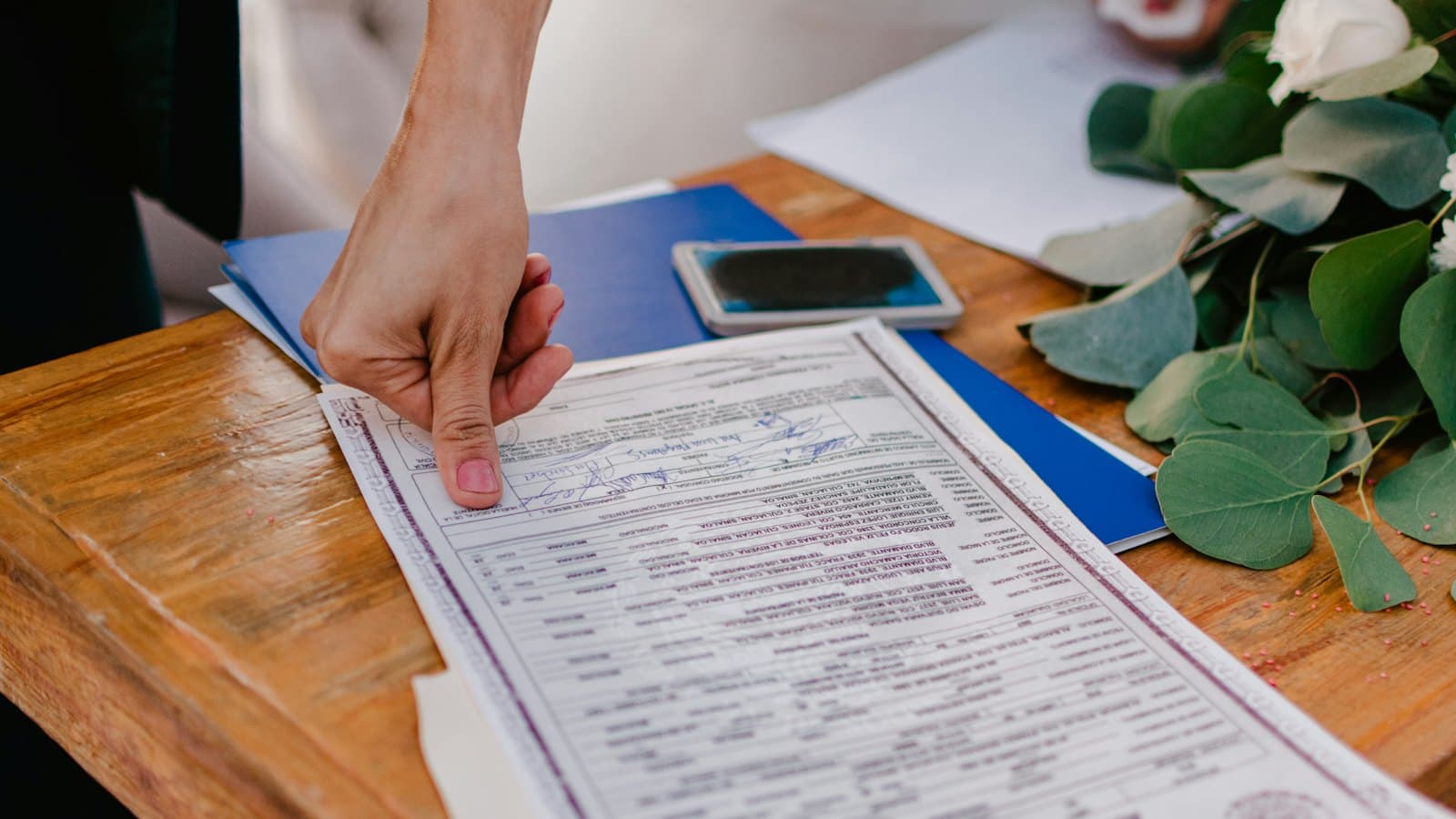
PSA Birth Certificate Problems: Late Registration, Annotations and Blurred Copies
Imagine you are a nurse in Cebu. After years of twelve-hour shifts on a salary that never stretches to the end of the month, a hospital in England offers you a job. Your family celebrates. Your mother cries.
Then you order your PSA birth certificate. It says you were registered when you were nine years old. Your middle name is spelled differently from your passport. Part of the page is so dark you cannot read your father's name.
You were born. You exist. You have a nursing licence and a passport. So why does one piece of paper suddenly feel like it could take all of this away?
The short answer: A PSA birth certificate causes visa problems in four ways, and each has its own fix. It was registered late, so an officer sees a record made from memory. It carries an annotation after a legitimation, correction or court order, so the officer must work out which name is current. The PSA has no record, so it issues a negative certification. Or the copy is unreadable. None of these is a refusal of your skills. They are problems with the paper underneath. Fixing them can take longer than the visa itself, so start the civil registry work first, before the language test, the credential assessment or any visa fee.
Check every procedure, fee and timeline below with the PSA and your Local Civil Registrar. This is general information, not advice on your case.
Who this is for
You need this if you, your spouse or your children were born in the Philippines, and any of these is true:
- Your PSA birth certificate shows a registration date well after your birth, or says "delayed" or "late registration".
- The margin mentions a court order, a petition number, Republic Act 9048 or 10172, a legitimation, or an acknowledgement of paternity.
- You received a Certificate of No Record (a "negative certification"), or your copy is grey, faded or partly unreadable.
- Your name, your parents' names or your date of birth differ across your PSA record, passport, school records and professional licence.
- You need a PSA marriage certificate or a CENOMAR (Certificate of No Marriage Record).
- You married or had a child abroad, so the record reaches the PSA through an embassy or consulate and the Department of Foreign Affairs.
Late registration: genuine, but it needs back-up
A birth registered after the short legal window is a delayed or late registration. Confirm the current period with your registrar or the PSA. Registering late is completely lawful. Many Filipinos born in rural areas, at home, or far from a registrar hold valid late records.
The issue is evidence. A birth registered days later was recorded by people who saw it. One registered twenty years later was recorded from an affidavit of memory. Officers are trained to see late registration as one way a wrong identity enters a registry, so your record gets a question others do not.
Think of it like a witness in court. One witness is good. Four witnesses who never met each other, all telling the same story, are much better.
So officers ask: do independent records, made closer to your birth, agree? The best ones were created by an institution for its own reasons, long before you needed a visa:
- Baptismal or other religious record, showing your date of birth, parents' names and when the entry was made.
- Earliest school records: Form 137 (the school's permanent record), elementary enrolment, and the school's certification of the date of birth on file. The earlier the school, the better.
- Hospital or midwife records, if the birth was attended.
- Government records and their first registration dates: PhilSys national ID, PhilHealth, SSS, GSIS, voter registration, and any earlier passport.
- The affidavits and documents filed with the late registration itself, which your registrar holds and can certify.
Build the set once and reuse it, as credential bodies and regulators ask the same questions. And if the late record is correct, do not change anything. Build evidence around it.
Annotated records: legitimation, corrections and court orders
An annotation is printed text in the margin showing the entry changed after registration. Annotated records are correct, but they confuse officers, because the page now describes two versions of you.
Legitimation by subsequent marriage. A child of unmarried parents who later marry can be legitimated, treated as legitimate from birth, with the surname and status changed. A separate law covers some children whose parents were below marrying age. Ask the registrar or a Philippine lawyer which fits. Your surname today may differ from the one first registered, and the annotation is the bridge.
Acknowledgement of paternity. When a father acknowledges a child, the record can be annotated and the child may use his surname.
Clerical errors and first name changes. Republic Act 9048, as amended by Republic Act 10172, lets the Local Civil Registrar fix certain clerical or typing errors and change a first name or nickname without going to court. The amendment also added certain corrections to the day and month of birth and to the entry for sex. Check the current scope and fees, as a petition filed in the wrong place is refused.
Court-ordered correction. Big changes, such as nationality, filiation, legitimacy, year of birth, or a surname outside the administrative categories, generally need a court petition. The final decision is registered with the registrar and annotated onto the record.
Adoption, annulment and declarations of nullity also create annotated records, and each changes what a visa file needs.
How to present an annotated record so it does not stall your file
- Submit the annotated PSA copy. Order a fresh copy after the annotation reaches the PSA, and check the margin prints clearly.
- Attach the order behind it. The court decision and its certificate of finality, or the registrar's decision on the petition.
- Add a one-page dated statement: what was registered, what changed, when, under which order, and your name now.
- Fix every other document. A corrected birth record with an uncorrected passport, licence, degree and work history creates a new mismatch. See our guide to name mismatches and missing birth certificates.
- Think about your children. A legitimation annotation can prove your link to a child whose surname differs from yours.
CENOMAR, marriage certificates and spouse cases
Spouse and dependant applications fail on civil documents more often than main applications. They must prove a relationship, not only an identity.
The PSA marriage certificate is the main document. For a marriage in the Philippines, the officiant sends the record to the Local Civil Registrar, which forwards it to the PSA. If it never got sent, you get a negative certification (see endorsement below).
The Report of Marriage is for a marriage abroad involving a Filipino. It goes to the embassy or consulate and reaches the PSA through the Department of Foreign Affairs. Couples who never filed it find out when a visa office asks for a PSA certificate that does not exist. Late reporting is generally possible. A Report of Birth does the same for children born abroad.
The CENOMAR is a PSA statement that no marriage is recorded in your name. It describes the database, not your life. A recent marriage not yet sent from the registrar produces a CENOMAR that is technically accurate and practically wrong. A namesake's record wrongly linked to you is the opposite problem.
A CENOMAR, an affidavit of single status and a legal capacity to marry certificate are different documents. Check which one the receiving authority wants. See our spouse and family visa guide.
If your spouse was married before, you need the full chain: the earlier marriage certificate and the PSA-annotated annulment, nullity declaration or former spouse's death certificate. A gap stops the application.
"No record found": the negative certification
A Certificate of No Record means the national database found nothing matching the details searched. There are three usual causes, each with a different response.
The birth was never registered. Nothing was filed with any registrar. The route is a delayed registration at the registrar of the place of birth, backed by the supporting records above, then transmission to the PSA.
The record exists locally but never reached the PSA. This is common, and it is what people mistake for "my birth certificate is missing". Picture a letter written and signed, but never posted. The registrar holds it. The PSA never received it. The fix is endorsement: the registrar sends a certified copy to the PSA. Start it at the registrar, and ask in writing for the transmission date and any reference number.
The search used the wrong details. A misspelling, a maiden or pre-legitimation surname, or a wrong place of birth all produce "no record" for a record that exists. Ask the PSA to search again using the details exactly as they would have been written at registration.
While endorsement is pending, get a certified true copy of the local entry. Some authorities accept that with proof of endorsement in progress. Many do not, so ask.
Before you spend months on civil registry work, check the route it is for is one you can use. The free eligibility check asks 6 questions (age, education, experience, English, target countries) and gives you a quick read on your options in 2 minutes.
Want a person to check your route?
A 60-minute plan check and a written roadmap in 48 hours, for up to 3 countries. $99 books it, $499 in total. Full refund if you cancel 24 hours before.
See what you get →The unreadable copy
PSA certificates are printed from scans of the original register pages, and some scans are poor: grey wash, dark background, cut-off edges.
Do not photocopy, brighten, retype or clean up the image. An altered civil document is a far bigger problem in a visa file than an unreadable one.
Instead, ask the PSA for a certified transcription from the register (ask what the remedy is currently called). At the same time, get a certified true copy from your Local Civil Registrar, whose page is often clearer. If the local page is damaged, you have a records problem, not a printing problem.
Two related traps:
- Recency. Some authorities want a PSA copy issued recently, commonly within three to six months of submission. Check the authority's page and order fresh copies close to filing.
- Authentication. Most destinations need the document authenticated for use abroad, which for the Philippines runs through the Department of Foreign Affairs. See apostille or certified translation to learn whether you need an apostille, a legalisation or a certified translation too.
How long it takes
These are planning estimates, not official service standards. Ask the office for its estimate in writing.
| Problem | Where the fix happens | What you file | Planning window to budget | Where to verify |
|---|---|---|---|---|
| Birth never registered | Local Civil Registrar, then PSA | Delayed registration with affidavits and corroborating records | Around 1 to 4 months, plus transmission to the PSA | The Local Civil Registrar and the PSA |
| Record exists locally, missing at the PSA | Local Civil Registrar, endorsed to the PSA | Endorsement request | Around 1 to 3 months before a PSA copy prints | The registrar's endorsement desk and the PSA |
| Clerical error, or change of first name | Local Civil Registrar, administrative petition | Petition under the RA 9048 process | Around 3 to 6 months to an annotated PSA copy | The Local Civil Registrar and the PSA |
| Day or month of birth, or the entry for sex | Local Civil Registrar, administrative petition | Petition under the RA 10172 amendments, with supporting evidence | Around 4 to 9 months to an annotated PSA copy | The Local Civil Registrar and the PSA |
| Substantial correction, filiation, year of birth | Court, then registrar and PSA | Judicial petition, decision, certificate of finality, registration, annotation | Around 8 months to 2 years or longer | A Philippine lawyer and the court |
| Legitimation by subsequent marriage | Local Civil Registrar, then PSA | Affidavit and supporting documents, then annotation | Around 2 to 6 months to an annotated PSA copy | The Local Civil Registrar |
| Marriage or birth abroad not on PSA file | Embassy or consulate, then DFA and PSA | Report of Marriage or Report of Birth | Around 2 to 6 months to a PSA copy | The specific embassy or consulate page |
| Unreadable PSA image | PSA, plus the Local Civil Registrar | Transcription from the register, plus a local certified copy | Around 2 weeks to 2 months | The PSA |
| Authentication for use abroad | Department of Foreign Affairs | Apostille or legalisation of the PSA document | Around 1 to 4 weeks once you hold the PSA copy | The DFA and the destination authority |
Two lessons. The court route is many times slower, so finding out which route you need is the most valuable hour you will spend. And every fix ends at the PSA. A good decision only helps once you hold a clean PSA printout.
What it costs
Costs vary by office and by route.
| Cost item | Who sets it | How to find the real number |
|---|---|---|
| PSA certificate copies and CENOMAR | Philippine Statistics Authority | The PSA's published fees, per copy, plus delivery |
| Delayed registration or endorsement | Local Civil Registrar | The city or municipal registrar's schedule of fees |
| Administrative petition under RA 9048 or RA 10172 | Local Civil Registrar, with separate rates for petitions filed from abroad | The Local Civil Registrar, or the consulate if filing overseas |
| Judicial petition | The court, plus your lawyer | A Philippine lawyer's quote, plus any publication costs the court requires |
| DFA apostille or authentication | Department of Foreign Affairs | The DFA's published fees and appointment system |
| Certified translation | The translator or agency | Quoted against the destination's format requirements |
Budget for several PSA copies of the same certificate: one to diagnose the problem, one after the fix, and one near filing to meet a recency rule.
When this will not work in time
- You need a court and your deadline is short. A court case can outlast a test result, an invitation or a job offer. Plan for the next cycle, or a route that does not depend on the corrected entry.
- The fix you want is not available. Outside the administrative categories, only a court will do.
- The record cannot be rebuilt. Ask the registrar in writing what it can still produce, then ask the receiving authority if that is enough.
- The route was not open anyway. A perfect birth certificate does not create points or a registration. Filiation questions affecting another person's rights belong with a Philippine lawyer.
A word on fixers. Anyone offering guaranteed timelines, "express" PSA records or a corrected certificate for money sent to a personal account is selling something they do not control, or a document that will fail checks. Civil registry fees are paid at the office, with a receipt. If a consultant also handles your visa, check them on the destination regulator's register. See checking a migration agent is licensed and avoiding immigration scams.
Common mistakes
- Leaving civil registry work until last. It takes longest.
- Submitting a pre-annotation copy, or the annotation without the order.
- Brightening an unreadable copy.
- Reading "no record" as "does not exist".
- Forgetting the Report of Marriage or Report of Birth.
- Fixing the birth certificate and stopping there. Passport, licence, degree and your children's records must all agree.
- Ordering copies too early, or skipping authentication.
- Treating a lawful late registration as a defect.
Frequently asked questions
Will a late-registered PSA birth certificate cause a refusal on its own?
Late registration is lawful in the Philippines, and a late-registered record is a valid civil document. It gets extra attention, so officers look for independent records that agree. Submit early school, baptismal, medical and government records up front. The rule for your application is set by the receiving immigration authority, so confirm it on that authority's page.
The PSA gave me a Certificate of No Record. What do I do first?
Ask the Local Civil Registrar of your place of birth whether the record exists locally. Often it does and was never sent, and endorsement to the PSA fixes it. If the registrar has nothing either, you need a delayed registration with supporting documents. Also ask the PSA to search again using the details exactly as they would have been registered.
Does an annotated birth certificate look suspicious?
No. An annotation records a lawful change, and annotated records are submitted all the time. Trouble comes from sending the annotated copy with no explanation and no order. Send the annotated PSA copy, the court decision with its certificate of finality or the registrar's decision, and a short dated statement of what happened.
We married overseas and there is no PSA marriage certificate. Is our marriage valid?
A marriage validly held abroad is generally reported to the embassy or consulate with jurisdiction, so it can be recorded through the Department of Foreign Affairs. Until then, the PSA has nothing to print, and that is what the visa office wants. Late reporting is generally possible. Check with the specific post, and have a Philippine lawyer confirm anything about the marriage's validity.
How long does a court correction take?
Plan for several months to well over a year, and get a written estimate from a Philippine lawyer. The decision must then become final, be registered locally and be annotated onto the PSA record.
My PSA copy is too dark to read. Can I submit a brightened scan?
No. Never alter a civil document. Ask the PSA for a transcription from the register, and get a certified true copy from your Local Civil Registrar at the same time. Ask the PSA what its current remedy is called before you queue.
What to do next
Order fresh PSA copies of your birth certificate, marriage certificate, CENOMAR if asked, and your children's birth certificates. Check every field against your passport, qualifications and licence, and write down every difference. That list tells you whether you face weeks at a registrar's desk or a year in court.
Then start the fix straight away, and run the language test, credential assessment and police certificates alongside it. Doing them one after another turns a nine-month project into a two-year one. If you are moving for work, also plan for the Philippine departure side: the OEC and DMW exit clearance you need before you can board depends on the same clean PSA records.
Your paper should tell the same story as your life. Getting it there takes patience, but it is fixable. If you are not yet sure which route the documents are for, take the free eligibility check.
This article is general information, not legal or immigration advice. Philippine civil registry procedures and fees change, and the destination authority sets the visa rules. Confirm every requirement with the PSA, your Local Civil Registrar and the immigration authority, and have a Philippine lawyer and a registered immigration adviser review your case before you file.
