Country guide
How to Migrate to Japan
Japan has quietly become one of Asia's most accessible destinations for skilled foreign workers, driven by a shrinking workforce and an ageing population.
1 to 10 years
To permanent residence
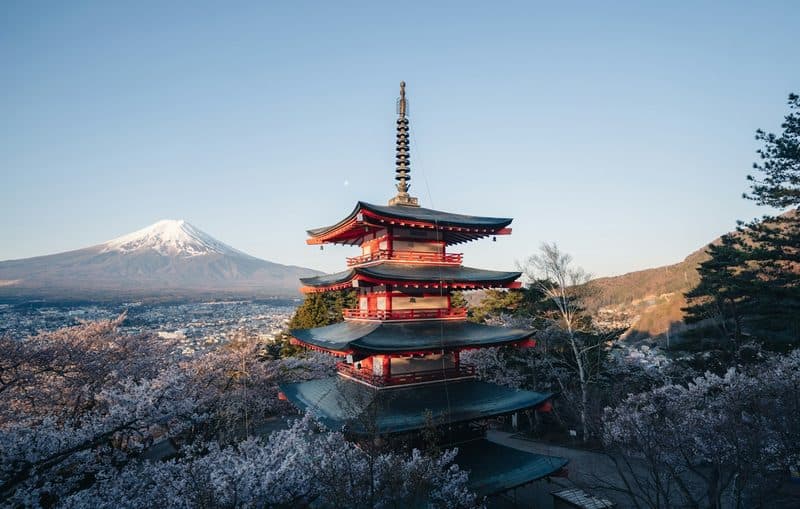
Why Japan?
- Main language
- Japanese
- Avg. salary
- ¥4.5M to ¥7M/year
- PR timeline
- 1 to 10 years
- Currency
- Japanese Yen (JPY)
- Japan pairs high safety, excellent healthcare and world-class infrastructure with a labour shortage so acute that the government has repeatedly widened its visa categories.
- Salaries are moderate by Western standards but so is crime, and the cost of living outside central Tokyo is very manageable.
- For engineers, IT specialists, healthcare and care workers, and skilled trades, demand is real and employer sponsorship is common.
- The trade-off is a demanding language barrier and a work culture that rewards patience over speed.
Visa routes
Highly Skilled Professional (HSP)
- Best for
- High earners and advanced degree holders
- Timeline
- 1 to 3 months
A points-based visa scoring education, income, age and experience. 70+ points fast-tracks PR to 3 years; 80+ points to just 1 year.
Engineer/Specialist in Humanities
- Best for
- IT, engineering, business and language professionals
- Timeline
- 1 to 3 months
The workhorse work visa. Requires a relevant degree or 10 years' experience and a matching job offer from a sponsoring employer.
Specified Skilled Worker (SSW)
- Best for
- Care, hospitality, construction, agriculture, food service
- Timeline
- 2 to 4 months
Created to fill hands-on shortages. Requires passing a skills test and basic Japanese (JLPT N4). SSW type 2 can lead to long-term residence.
Business Manager visa
- Best for
- Founders and investors
- Timeline
- 3 to 6 months
Since October 2025, requires ¥30M in capital, at least one full-time employee, relevant management experience or a degree, Japanese ability (JLPT N2 level for you or an employee), a viable business plan and an office in Japan.
Step by step
- 1
Secure a job offer with a sponsoring employer
Almost every Japanese work visa is employer-sponsored. Target companies hiring internationally (IT, manufacturing, care, English teaching) via sites like Japan Dev, GaijinPot and LinkedIn.
- 2
Employer applies for your Certificate of Eligibility
Your employer files the CoE with immigration in Japan on your behalf. This is the real gatekeeping step and takes roughly 1 to 3 months.
- 3
Apply for the visa at your local Japanese embassy
Once the CoE is issued, submit it with your passport and application to the Japanese embassy or consulate in your country. The visa is usually stamped within a week.
- 4
Arrive and collect your Residence Card
Your Residence Card (Zairyu Card) is printed at the airport on arrival at major international airports. It is your primary ID from day one.
- 5
Register your address within 14 days
Register at your local ward office to activate your address, enrol in National Health Insurance and start your My Number. See our Japan arrival guide for the full first-week checklist.
What you need
Requirements
- A job offer from a Japanese employer who will sponsor your Certificate of Eligibility (CoE)
- A relevant university degree or equivalent professional experience
- A valid passport and clean background
- For SSW roles: a passed skills test and JLPT N4-level Japanese
- Proof of funds to support your initial move
Language and tests
There is no single points test like Canada's, but Japanese ability shapes everything. Professional visas can be obtained with English-only roles, but the SSW route requires JLPT N4 plus a skills test. Learning Japanese dramatically widens your options and is effectively required for permanent residency and daily life outside international companies.
Jobs in demand
- Software Engineers
- IT Specialists
- Care Workers
- English Teachers
- Construction Workers
- Hospitality Staff
- Manufacturing Engineers
What it costs
Japan is relatively cheap to enter. The visa itself is inexpensive and employers usually cover the Certificate of Eligibility. Your real upfront cost is relocation and the notoriously high move-in cost for an apartment.
| Item | Cost |
|---|---|
| Work visa fee (single entry) | ¥15,000 (since July 2026; varies by nationality) |
| Certificate of Eligibility | Usually employer-covered |
| Flight (one way) | ¥60,000 to ¥150,000 |
| Apartment move-in (deposit, key money, agency) | 4 to 6 months' rent |
| First month living costs | ¥150,000 to ¥250,000 |
Path to PR and citizenship
- Permanent residency normally requires 10 years of residence (with at least 5 on a work visa), but the Highly Skilled Professional points system slashes this to 1 to 3 years for high scorers.
- PR removes the need for employer sponsorship and lets you change jobs freely.
- Naturalisation (citizenship) legally requires 5 years' residence, but since April 2026 the Ministry of Justice generally expects 10 or more years in practice, and it requires renouncing your original nationality, as Japan does not permit dual citizenship for adults.
FAQs
Can I migrate to Japan without speaking Japanese?
Yes, for many professional roles, particularly in IT and English teaching, English-only positions exist and can sponsor a work visa. However, hands-on Specified Skilled Worker roles require JLPT N4 Japanese, and any long-term life or permanent residency effectively requires the language.
How long does it take to get permanent residency in Japan?
The standard route is 10 years of residence. But under the Highly Skilled Professional points system, high scorers can qualify in as little as 1 year (80+ points) or 3 years (70+ points).
Do I need a job offer to move to Japan?
For almost all work visas, yes. Japanese work visas are employer-sponsored and your company files your Certificate of Eligibility. Exceptions are the Business Manager visa (for founders, now requiring ¥30M capital) and dependent or spouse visas.
Does Japan allow dual citizenship?
No. Japan does not permit dual citizenship for adults, so naturalising as a Japanese citizen generally requires renouncing your original nationality. Permanent residency, however, lets you stay indefinitely while keeping your current passport.
This guide is general information, not legal advice, and rules change often. Always confirm the current requirements on the official government website for your destination. How we research & source our guides.
What is changing in Japan, and when
- New route
Employment for Skill Development replaces Technical Intern Training
New entry-level foreign workers come in under the new ESD system, which is built to lead into Specified Skilled Worker status. Source (Immigration Services Agency)
- Deadline
Specified Skilled Worker (ii) needs B1-level Japanese
Certificate of Eligibility applications for SSW (ii) made on or after 1 April 2027 must show Japanese at CEFR B1 level or above. Source (Immigration Services Agency)
- Cost up
Visa renewal fees up to ¥75,000; permanent residence now ¥200,000
Renewing or changing status now costs ¥10,000 to ¥75,000 at the counter depending on the length of stay (was ¥6,000), and permanent residence costs ¥200,000 (was ¥10,000). Source (Immigration Services Agency)
Could Japan work for you?
Most refusals come from the wrong route or a weak document. Check yours before you spend.
Free eligibility check →
2 minutes. Results on screen, no sign-up.
Talk it through with a person →
60-minute plan check. $99 to book, $499 in total.
Already there? Read the arrival guide for Japan →
