· NextMigrate Team
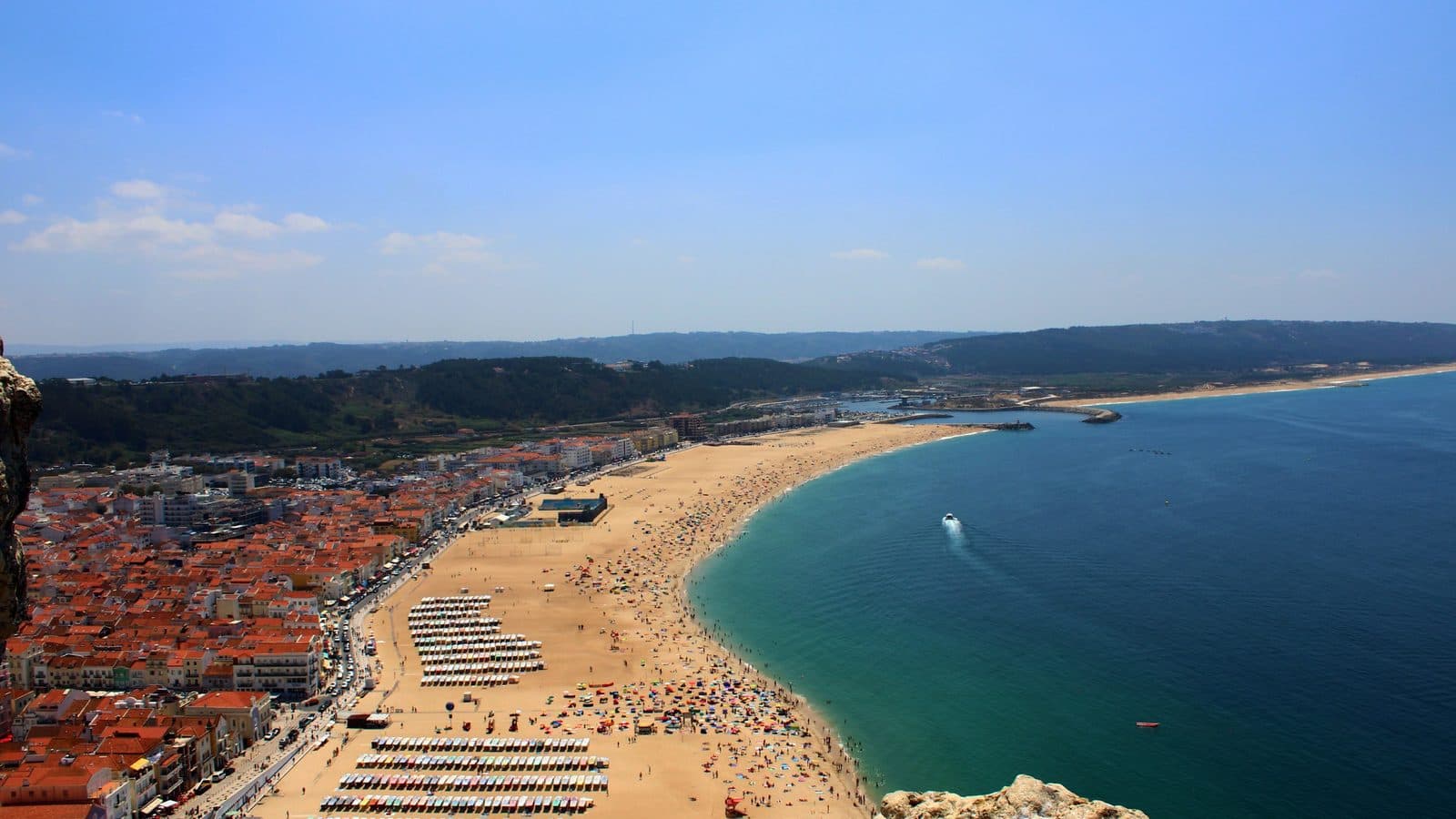
We're American Retirees: What Two Years in Portugal on a D7 Taught Us
You did not land on a page about another couple's retirement in Portugal by accident. You are probably counting pensions at the kitchen table already, and this story is for American couples who want the slow, honest version first.
Imagine you are 66, sitting in a kitchen in suburban Ohio. It is February. The sky has been grey for three weeks. Your knees ache when you shovel the driveway. Your property tax bill just went up again, and so did the health insurance quote for next year.
On YouTube, a couple your age walks along a beach in Portugal in a light sweater. They say they spend half of what they spent in the States. You watch three more videos. Your husband says, "Could we actually do that?"
That was Linda and Mark's life, until they tried.
The short answer: For Linda and Mark, Portugal was worth it, with clear eyes. They moved from Ohio to Caldas da Rainha on the Silver Coast on the D7 visa. In 2026 a couple needs at least 1,380 euros a month of passive income for the D7, and their pensions were far above that. Living costs were higher than the videos promised. The NHR tax break had already closed. AIMA, the migration agency, was slow with their residence cards. A night in the emergency room showed them both the strength and the limits of public healthcare. They are staying, and they tell friends to rent for a year first.
This is Linda and Mark's story: a retired teacher and a retired manufacturing engineer from central Ohio who moved to the Silver Coast of Portugal in 2024. It is based on accounts shared publicly by American retirees in Portugal, with names and details changed. Every figure is checked against 2026 rules.
Why we left Ohio
Linda taught middle school English for 31 years. Mark spent his career as a manufacturing engineer at an auto parts plant near Marysville. We raised two children in a split-level house outside Columbus. We are not rich. We are careful.
When we both retired, the numbers worked but felt tight. Health insurance before Mark reached 65 was the scariest line. Then the house needed a new roof. We started asking: where could our pensions go further, somewhere safe, with good food and a slower pace?
We looked at Spain, Mexico and Portugal. Portugal won on safety, the climate on the coast and the D7 visa, which is built for people living on pensions. Our guide to Portugal versus Spain for retirees compares the two side by side.
Our daughter cried when we told her. Our son asked if we had lost our minds. Linda said, "We are 66 and healthy. If not now, when?"
How would your children react? It helps to have that talk early, and more than once.
Ohio versus the Silver Coast: what we compared
These are our own numbers. Portugal costs are from our 2026 budget.
| Factor | Central Ohio (2023) | Caldas da Rainha (2026) |
|---|---|---|
| Housing | Mortgage paid off; property tax and insurance about $650 a month | Rent 950 euros a month, 2-bedroom flat |
| Health cover | Marketplace plan for Mark until 65, then Medicare | SNS (public) plus private insurance |
| Groceries for two | About $900 a month | About 450 euros a month |
| Car | Two cars | One small used car |
| Eating out | $70 for two at a casual restaurant | 25-35 euros for two with wine |
| Winter | Snow, ice, -10 °C nights | Rain, wind, 8-15 °C, damp indoors |
| Grandchildren | 20 minutes away | A 7-hour flight plus the drive to Lisbon |
The last line costs the most. No table can price it.
The D7: what it asks for
The D7 is Portugal's visa for people with steady passive income, such as pensions. As of 2026, the main applicant needs at least 920 euros a month, which is Portugal's minimum wage. A spouse adds 50%, or 460 euros. So a couple needs 1,380 euros a month, and you must show this income is secure for at least 12 months.
Mark's Social Security and Linda's teacher pension from the Ohio retirement system together came to well above that. The minimum was never our problem. Our problem was everything around it.
Here is one Ohio detail that may matter to you. Many Ohio public teachers did not pay into Social Security. For years, Linda's spousal benefit was cut by the old Government Pension Offset. The Social Security Fairness Act, signed in January 2025, ended that offset and the Windfall Elimination Provision. Linda's benefit rose. If you or your spouse had a public pension, check your own record with the Social Security Administration.
Our full guide to retiring in Portugal on the D7 visa has every rule and source. This post is about how it felt.
The paperwork: about eleven months
Step 1: NIF (tax number). You need a Portuguese tax number before almost anything else. We were not residents yet, so we used a Lisbon law firm's online service to get our NIFs and act as our contact with the tax office. They charged us about 150 euros each. Some people do it themselves at a tax office in Portugal on a scouting trip.
Step 2: A Portuguese bank account. Many consulates expect one. Opening it from Ohio took six weeks, two video calls and a stack of scanned documents. We moved one year of the D7 minimum into it, plus a buffer. Some banks are much easier than others for Americans, because of US reporting rules. Ask before you start.
Step 3: An address in Portugal. We signed a 12-month lease for a flat in Caldas da Rainha, after a scouting trip in the spring. We had never lived there in winter. More on that below.
Step 4: The visa application. In the US, Portuguese visa applications go through a visa centre for each consulate area. We sent our forms, passports, FBI background checks with apostilles, proof of income, bank statements, the lease, and travel health insurance. The consulate fee is 110 euros per person, plus the centre's own service charge. Our visas came in about seven weeks. The legal deadline for a decision is 60 days, but plan for more.
Step 5: AIMA in Portugal. The D7 visa is valid for 4 months, with two entries. In that time you must apply for your residence permit with AIMA. Our consulate had booked our AIMA appointment for us. It was three months after we landed, in Leiria.
Step 6: The residence cards. Approval came at the appointment. The plastic cards did not. Ours arrived in the post more than four months later. In those months we could not register fully with the SNS, and Linda could not visit our new grandson in Ohio without worrying about coming back in.
What we spent to get here
Our costs, with official fees at 2026 rates where they apply:
| Item | Cost | Notes |
|---|---|---|
| D7 visa fees | 220 euros | 110 euros each |
| Visa centre service fees | About $120 | For both of us |
| FBI background checks and apostilles | About $120 | Two checks, two apostilles |
| NIF and tax contact service | About 300 euros | 150 euros each |
| Scouting trip (10 days) | About $4,500 | Flights, car, rooms |
| Lease deposit and first month | 2,850 euros | Two months' deposit plus the first month |
| AIMA residence permit fees | Varies | AIMA updated its fee table on 1 March 2026; check aima.gov.pt |
| Shipping 12 boxes | About $1,400 | Sea freight, door to door |
| Furniture and appliances | About 3,500 euros | The flat came part furnished |
| Translations and copies | About 200 euros | |
| Total | About $13,000-14,000 | Plus the travel insurance for the visa |
We sold one car and most of our furniture in Ohio. We kept the house for the first year and rented it out. That gave us a way back if Portugal failed.
The first winter: nobody warned us about the damp
We arrived in September 2024. The light was gold. The fruit market in the Praça da Fruta opened every morning. Mark bought pears and the famous local cheese tart, and we said, "We did it."
Then came December.
Portuguese houses on the coast are built for summer. Our flat had no central heating, single-glazed windows in one bedroom, and tile floors. Outside it was 12 °C. Inside it felt colder. Mould grew behind the wardrobe. Our electricity bill reached 160 euros in January, running a dehumidifier and two oil heaters.
Many Americans in Portugal say the same thing: the coldest winter of their lives was spent indoors in Portugal. Ask any landlord about heating, insulation and damp. Look at the corners of the ceilings. Visit once in winter if you can.
The language was the other shock. On the Silver Coast, fewer people speak English than in Lisbon or the Algarve. At the town hall, the clerk spoke only Portuguese. Linda had studied with an app for a year and could order coffee. She could not explain a missing document. We started a weekly class at a local language school. Two years later, we can handle a pharmacy, a plumber and small talk. We are still slow.
Have you priced in a year of feeling like a child at every counter?
The money: what Portugal really costs us
The YouTube couple said they spent 1,500 euros a month. We spend about twice that. We do not regret it, but you should know.
Our monthly budget in 2026
| Item | Monthly amount | Notes |
|---|---|---|
| Rent | 950 euros | 2-bedroom flat, renewed with a small rise |
| Electricity and gas | 70-160 euros | Low in summer, high in winter |
| Water | About 20 euros | |
| Internet and two phones | 55 euros | |
| Groceries | About 450 euros | Pingo Doce, Continente, the weekly market |
| Eating out | About 250 euros | Two lunches a week, the cheap prato do dia |
| Car (insurance, fuel, tolls, upkeep) | About 230 euros | A car is close to essential on the Silver Coast |
| Private health insurance | About 330 euros | For both of us, rising every year with age |
| Medicare Part B (Mark) | $202.90 | Kept for when we go home |
| Pharmacy and copays | About 60 euros | |
| Portuguese lessons | 80 euros | |
| Trips to the US and travel | About 400 euros | Averaged over the year |
| Total | About 3,000-3,100 euros |
Rents in Portugal have risen fast. In the second quarter of 2026, the median rent on new contracts across the country was 10.17 euros per square metre, up 10.2% in a year, according to Statistics Portugal. Our flat would cost more today than when we signed.
Compare your own numbers with our cost of living tool. Then add 20%.
Taxes: two countries now want to hear from us
NHR was gone before we arrived
Friends who moved in 2021 had the old Non-Habitual Resident regime, which gave many retirees low or zero tax on foreign pensions. The 2024 State Budget revoked it from 1 January 2024. We moved in 2024 and were not covered.
The replacement, called IFICI, gives a 20% rate for 10 years. It applies only to work and business income in qualifying fields, such as research, university teaching or certified start-ups. Being retired does not qualify. Many online videos still mix up the two. The ones we watched did.
Portugal taxes residents on worldwide income
We spend more than 183 days a year in Portugal and live in a rented home there, so we are Portuguese tax residents. In 2026, the Portuguese rates go from 12.5% on the first 8,342 euros of taxable income up to 48% above 86,634 euros. We file a Portuguese return each spring, in the window from April to June.
The US and Portugal have a tax treaty. Our adviser explained that it treats different pensions differently. Under the treaty, the US keeps the main right to tax Social Security paid to an American living in Portugal, and Portugal gives relief for the US tax. Linda's public teacher pension falls under another article. We will not pretend to explain it better. We paid a cross-border tax adviser who knows both systems, and it was worth every euro.
The US still wants to hear from us too
The United States taxes its citizens wherever they live. So we still file a US return every year.
- Deadline. Americans living abroad get an automatic extension to June 15 to file. Interest still runs on any tax owed after April 15.
- FBAR. If your foreign bank accounts total more than $10,000 at any time in the year, you file an FBAR (FinCEN Form 114) online. Our Portuguese account crossed that in the first week.
- Form 8938. A married couple filing jointly and living abroad files it if foreign financial assets are above $400,000 at year end or $600,000 at any time. We are below that. Many retirees with savings abroad are not.
- Foreign tax credit. Tax paid to Portugal can reduce US tax on the same income, within limits.
Our guides on US Social Security and Medicare when you retire abroad and taxes when you migrate abroad go deeper. Neither replaces an adviser. Neither does this story.
Free eligibility check · 2 minutes
Which country would you qualify for?
6 quick questions on your age, skills and English. You get a score out of 100 and a read on each country you pick, on screen. No sign-up.
1 of 6 · When are you planning to move?
The night in Caldas da Rainha hospital
In March 2026, Mark woke at 3 AM with his heart racing and fluttering. He was dizzy. Linda was terrified.
We had been told to call SNS 24, the national health line, before going to an emergency department. A nurse answered in Portuguese, then switched to English. She asked questions for four minutes and told us to go to the emergency department of the hospital in Caldas. Because SNS 24 referred us, there was no emergency fee.
The triage nurse put a colour band on Mark's wrist: yellow. We waited about two hours in a crowded room. Then things moved fast. An ECG, blood tests, a doctor who spoke good English. Diagnosis: atrial fibrillation. They slowed his heart with medicine and kept him under watch until the afternoon. The bill: nothing.
The follow-up was the hard part. The hospital asked his family doctor to arrange a cardiology review. Mark did not have an SNS family doctor yet. Many people in Portugal do not. In August 2026, about 1.36 million registered users were waiting for one. So we used our private insurance and saw a cardiologist in Leiria within ten days, for a 25-euro copay.
That night taught us how healthcare in Portugal works for many foreigners. The SNS is there for the emergency, and it is good. Private insurance gets you fast specialists and follow-up. You need both.
One more lesson. Our private insurer had excluded Mark's existing high blood pressure. The cardiology visits were covered. Some related tests were not. Read the exclusions. And get quotes before you turn 70, because some insurers stop taking new clients at a certain age. Our guide to health insurance for retirees over 75 abroad explains what happens as you age.
AIMA, renewals and the long view
Our first residence permits lasted two years. In 2026 we had to renew. AIMA opened an online renewal portal, and we applied there. We got a certificate showing the renewal was pending. AIMA has said these certificates stay valid while it decides. We still carry printouts of everything when we fly, because airline staff do not always know the rules.
AIMA has cleared a large backlog. In mid-2026, government figures reported more than 525,000 files decided in its special task force. But residence cards and renewals are still slow for many people. Plan for months, and keep copies of everything.
Permanent residence comes after 5 years, with A2 Portuguese. That is why Linda takes her lessons seriously.
Citizenship is now a longer road. A new nationality law took effect on 19 May 2026. Most non-EU applicants now need 10 years of legal residence, and the time spent waiting for your first permit no longer counts. We may never apply. That is fine with us.
What our friends back in Ohio ask us
Everyone asks, "Are you happy?" Yes. We walk to the market. Mark plays chess with two retired Portuguese men in the park on Thursdays, with about 200 words in common. Linda volunteers at a charity shop run by English and Dutch retirees. We go to Óbidos and Nazaré on Sunday afternoons. Our blood pressure, Mark's heart aside, is better.
Everyone also asks, "Is it cheap?" It is cheaper than our Ohio life with private insurance before Medicare. Prices have risen a lot in the last ten years.
The hardest part is the grandchildren. Linda flew home for the birth of our grandson and stayed six weeks. Mark joined for Thanksgiving. Each goodbye at Lisbon airport is worse than the last. Watch the permit rules on long absences: a temporary permit can be cancelled after 6 months away in a row, or 8 months in total during its validity, without a good reason.
We also made a plan for the worst day. We wrote Portuguese wills and told the children where every document is. Our guide on dying abroad as a retiree is a hard read. It helped.
What we would do differently
- Rent through one winter before you sign a long lease. Or ask hard questions about heating and damp.
- Start Portuguese a full year before you go. Add a weekly class with a real teacher to the app.
- Get private health insurance quotes before 65. Find out what each insurer will exclude for you.
- Talk to a cross-border tax adviser before the move. Your first tax year in two countries is the one that bites.
- Keep a way home. For us, it was keeping the Ohio house for a year. For you, it might be keeping Medicare Part B.
- Choose a town for its hospital and pharmacy. The view comes second.
Traps we wish we had known about
- Old NHR videos. Many still online describe a tax break that closed for new arrivals in 2024.
- The gap before your card arrives. Without the card, SNS registration may be incomplete. Keep private or travel insurance until it is.
- Medicare does not cover you in Portugal. Dropping Part B can mean a lifetime late penalty if you go back.
- FBAR is easy to forget. It is filed separately from your tax return, online with FinCEN.
- Long trips home. Too many months away can put your permit at risk.
- Bank account friction. Some Portuguese banks are wary of American clients because of US reporting rules. Ask first.
- Summer scouting trips. A town in June and the same town in January are two different places.
For the order of things after you land (NIF, bank, utente number, driving licence), see our Portugal arrival guide. The migrate to Portugal page covers the other visa routes.
A letter to the couple at the kitchen table
We know where you are. You have a spreadsheet open. One of you is excited. One of you is scared. Maybe both of you are both.
Here is what we wish someone had told us. Your worries and your family ties will move with you. What Portugal adds is light, a slower day, good bread and a kind of quiet that is hard to find in an American suburb.
If you go, go with your eyes open and your papers in order. Rent first. Learn the language. Keep a way back. Then let yourself enjoy it.
Start by reading the income rule for the D7. Then sit down with your spouse and write down what you would miss. Both lists matter.
Frequently asked questions
How much income do you need for the Portugal D7 visa in 2026?
At least 920 euros a month for the main applicant, the 2026 Portuguese minimum wage. A spouse adds 50% (460 euros), so a couple needs 1,380 euros a month. You must show this income is secure for at least 12 months. Real living costs on the coast are well above this.
Can Americans still get the NHR tax regime in Portugal?
Not as new residents. NHR was revoked from 1 January 2024, with only limited transition cases. The new IFICI regime applies to work and business income in qualifying fields, so most retirees do not qualify.
Do Americans living in Portugal still pay US taxes?
They still file a US return every year, because the US taxes citizens wherever they live. People abroad get an automatic extension to June 15. You may also need an FBAR if foreign accounts total more than $10,000 at any time in the year. The tax treaty and the foreign tax credit reduce double tax, but the rules are complex, so use a cross-border adviser.
How long does AIMA take to issue a residence card?
It varies. Linda and Mark's cards came more than four months after approval, and renewals are often slow. AIMA issues certificates while a renewal is pending. Plan for months, and keep copies of every document.
Can retirees use Portugal's public health service?
Yes, once you hold a residence permit and complete your SNS registration, you are covered on the same basis as Portuguese citizens. Emergency care is good, but many people wait for a family doctor, so many retirees also keep private insurance.
Is the Silver Coast cheaper than the Algarve for retirees?
Usually, yes, for rent. Statistics Portugal data put the Algarve above the national median rent, while the Oeste region around Caldas da Rainha was below it. You will likely need a car, and fewer people speak English.
