· NextMigrate Team
I'm an Indian Software Engineer. Here's What Really Happened After Express Entry
Asking about another developer's first year in Toronto usually means your own CRS calculator tab is still open. This story is for Indian software engineers who want the full picture of Express Entry, the job hunt included, before they file.
Imagine you are a backend developer in Pune, stuck in traffic on the Hinjewadi flyover at 9 PM. Your sprint ended an hour ago. Your manager wants a hotfix before the US team wakes up. Your mother has sent three WhatsApp messages about a girl from a "good family" in Kothrud.
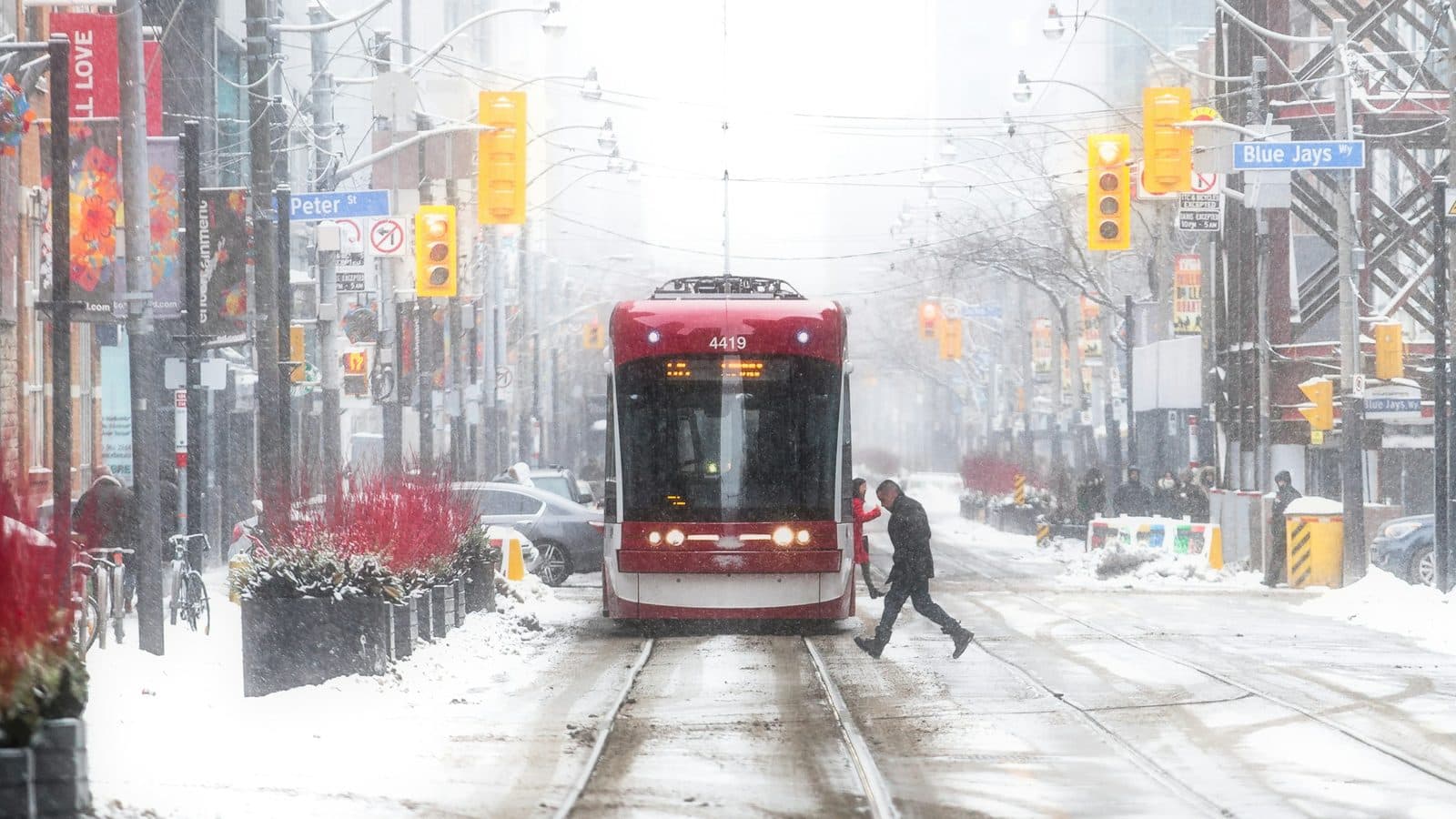
On LinkedIn, a college batchmate posts a photo from Toronto: snow, a red streetcar, a new badge on a lanyard. "Grateful for this new chapter." You look at it for a long time. Could that be you?
That was Arjun's life, until he filed his Express Entry profile.
The short answer: For Arjun, it worked out, slowly and with a lot of pain in the middle. He earned INR 24 lakh a year in Pune. His first year in Canada brought 7 months without a tech job, night shifts in a warehouse and a basement room in Brampton. Today he earns CAD 95,000 a year in Toronto and takes home about CAD 5,800 a month. After rent and costs, he saves about the same amount he saved in Pune. What changed is his long-term future: permanent residence, a path to citizenship, and a career on a bigger market. Whether that trade is worth it depends on what you want in ten years.
This is Arjun's story: a backend developer from Pune who landed in Toronto as a permanent resident in February 2024. It is based on accounts shared publicly by Indian tech workers in Canada, with names and details changed. Every figure is checked against 2026 rules.
Why I left a good job in Pune
I want to be fair to Pune. My life there was comfortable. I had six years of Java and Spring Boot work, first at a big IT services company in Hinjewadi, then at a product company in Baner. My CTC was INR 24 lakh. My in-hand pay was about INR 1.55 lakh a month. I lived with my parents, so my costs were low.
But I could see my ceiling. The senior people above me were 38 and 40, doing the same work with a bigger title. Every good role seemed to need either an MBA or a move to Bengaluru. And the air in winter made my father cough all night.
My older brother Rohan had gone to Calgary as a student in 2019. He got his permanent residence in 2022. On our video calls he talked about weekend hikes and a manager who said "take the afternoon off" and meant it. I wanted to know if that life could be mine.
If you are where I was, ask yourself one honest question: are you running toward something, or only away from traffic and office politics?
I looked at Germany and the US too. The H-1B lottery felt like a coin toss, and Canada offered permanent residence from day one. That decided it for me.
Pune versus Toronto: the numbers I compared
These are my real numbers, with Toronto figures updated to late 2026. At about INR 66 to one Canadian dollar (November 2026):
| Factor | Pune (product company) | Toronto (fintech, 2026) |
|---|---|---|
| Annual gross salary | INR 24 lakh (about CAD 36,000) | CAD 95,000 (about INR 63 lakh) |
| Monthly take-home | INR 1.55 lakh (about CAD 2,350) | About CAD 5,800 (about INR 3.8 lakh) |
| Rent, one-bedroom | INR 25,000 in Baner (about CAD 380) | About CAD 2,000-2,100 |
| Commute | 60-90 minutes each way by car | 40 minutes by GO train and subway |
| Paid leave | 18 days plus holidays | 3 weeks plus 9 Ontario public holidays |
| Healthcare | Company insurance, private hospitals | OHIP public health insurance |
| Status | Citizen | Permanent resident, citizenship after 3 years |
Look at the rent line before you look at the salary line. My salary went up almost three times in rupees. My rent went up more than five times. The Toronto one-bedroom figure comes from October 2026 rent reports, which put the city average at roughly CAD 1,970-2,100.
The paperwork: eighteen months of forms and waiting
Step 1: English test. I booked IELTS General Training in Pune. My first result was CLB 9 in every skill. That gave me good points, but I wanted more. I studied for six more weeks and retook it. The second time I reached CLB 10 in all four. Each test costs INR 19,000 in India in 2026. Many friends now pick CELPIP instead, which is also offered in India. Our comparison of CELPIP and IELTS General for Canada helps you choose.
Step 2: Educational Credential Assessment. I sent my B.E. and M.Tech to World Education Services (WES). My university had to send transcripts in a sealed envelope. That took two visits to the university office and one very polite uncle who knew a clerk. The WES fee is C$264 plus delivery, about INR 17,500. My report came back in five weeks after all documents arrived.
Step 3: Express Entry profile and my CRS score. My score came to 496:
| CRS factor | My situation | Points |
|---|---|---|
| Age | 28, single | 110 |
| Education | Master's degree | 135 |
| First official language | CLB 10 in all four skills | 136 |
| Skill transferability | Education plus strong English, foreign work plus strong English | 100 |
| Sibling in Canada | Brother is a permanent resident | 15 |
| Total | 496 |
Without my brother's 15 points I would have been at 481. My cousin in Brampton did not count. Only a brother or sister who is a Canadian citizen or permanent resident gives you sibling points.
Step 4: Invitation. In 2023, software developers were still eligible for the STEM category, and I was invited in mid-2023. In 2026, software developers are no longer on the STEM category list, and IRCC held no general all-program rounds in 2026 up to late October. A profile like mine today would wait a long time. Read our guide to the 2026 Express Entry categories and our piece on what to do when a software engineer's CRS is below the cutoff before you plan around my path.
Step 5: The full application. After the invitation you get 60 days. I uploaded my passport, ECA, IELTS, police certificate, medical exam results, reference letters from both employers with duties and hours, and bank statements.
The reference letters were the worst part. My first employer's HR team would only issue a standard experience letter with dates. IRCC wants duties, hours per week and salary. I had to ask my old team lead to sign a separate letter and attach his business card and payslips as support.
Step 6: Proof of funds. For the Federal Skilled Worker program, a single person must show CAD 15,263 today, about INR 10 lakh. The money must be yours, available, and not borrowed. I had it in a fixed deposit and a savings account. I gave six months of statements and a letter from the bank. Our guide to how much money you need to migrate explains what counts.
Step 7: Medical, biometrics and approval. The medical exam with an IRCC panel physician in Mumbai cost me about INR 6,000. Biometrics at the VFS centre cost CAD 85. My Confirmation of Permanent Residence arrived about six months after I submitted.
Every rupee I spent (at 2026 prices)
| Item | Cost (INR) | Cost (CAD) | Notes |
|---|---|---|---|
| IELTS General Training, 1st attempt | 19,000 | 288 | CLB 9 |
| IELTS General Training, 2nd attempt | 19,000 | 288 | CLB 10 |
| WES ECA with delivery | 19,500 | 295 | Two degrees, one report |
| University transcript fees and courier | 4,000 | 61 | Two visits to the office |
| Police clearance certificate | 500 | 8 | Through Passport Seva |
| Medical exam (panel physician) | 6,000 | 91 | About, prices vary by clinic |
| Biometrics | 5,600 | 85 | At VFS |
| PR processing fee | 65,300 | 990 | Principal applicant, 2026 fee |
| Right of permanent residence fee | 39,600 | 600 | Raised from CAD 575 on 30 April 2026 |
| One-way flight Mumbai to Toronto | 70,000 | 1,060 | Booked 5 weeks ahead |
| Total out-of-pocket | ~2.48 lakh | ~3,766 | Before proof of funds |
On top of this, I carried my proof of funds money with me. That was my survival money for the first months, and I used almost all of it.
Landing: minus 15 and a basement in Brampton
I landed at Pearson on a February night. It was minus 15 with wind. I had a jacket from Decathlon in Pune that felt strong in the shop. In Toronto, the wind went straight through it.
At the airport, the officer stamped my Confirmation of Permanent Residence and said "Welcome to Canada." I nearly cried at the counter. Then I stood outside for 40 minutes waiting for an Uber because my Indian phone had no data.
I rented a room in a basement in Springdale, Brampton, for CAD 900 a month, from a family from Ludhiana. The landlord uncle was kind. The aunty sent down parathas on Sundays. But the room had one small window at ground level. In February, it was dark when I left and dark when I came back.
In the first two weeks I did the basics: Social Insurance Number at Service Canada, a bank account, a Freedom Mobile plan, a PRESTO card, and OHIP registration at ServiceOntario. Our arrival guide for Canada gives you the order to do these in.
Seven months of "no Canadian experience"
I thought my six years of experience would carry me. I was wrong.
I applied to more than 400 jobs between February and September. I got 11 first-round calls. Most recruiters asked the same question in a polite voice: "Do you have Canadian experience?" One told me honestly that her client only interviewed people who had worked in Canada, because "it reduces risk."
The tech market in 2024 was also hard for everyone. Many Canadian developers had been laid off. I was competing with people who had local references, local degrees and a Canadian accent on the phone.
My mistakes in the first three months:
- My resume was an Indian resume. Two pages, a photo, my date of birth, "Objective" at the top and a list of every technology I had touched. A mentor at a settlement agency told me to cut it to one page, remove personal details, and write every bullet as a result with a number.
- I only applied online. In Toronto, many jobs are filled through referrals. I started going to tech meetups downtown and sending short LinkedIn messages to Indian engineers already working at companies I liked.
- I sounded too humble. In India, I was trained to say "we did this." In Canadian interviews, they want to hear what you did yourself.
How long could you survive without a salary in a new country? Do that sum before you book your flight.
The survival job
By month four my savings were falling fast. Rent, groceries, transit and phone cost me about CAD 1,800 a month even in a basement. I took night shifts at a warehouse near the airport through a staffing agency, at minimum wage. Ontario's minimum wage is CAD 17.95 an hour from October 2026.
I scanned and lifted boxes from 10 PM to 6:30 AM. My back hurt for weeks. Most of the people on my shift were newcomers: a civil engineer from Gujarat, a pharmacist from Nigeria, an accountant from the Philippines. We joked that the warehouse had more master's degrees than the office tower downtown.
I did not tell my parents for two months. When I finally told my mother, she was quiet. Then she said, "Come home, beta. Nobody will think less of you." I told her I would give it until December.
Our first-year guide to settling in Canada describes this stage well. Many newcomers take a stepping-stone job. It is a normal stage, and it says nothing about your skill.
The first tech offer
In September, a referral finally worked. An engineer from Nagpur I met at a meetup passed my resume to his manager at a mid-size company. The role was a six-month contract through an agency, CAD 45 an hour, working on payments APIs.
I took it in one second. It paid less than a permanent role, with no benefits and no paid leave. But it gave me the two words every recruiter wanted: Canadian experience.
Six months later, I moved to a permanent role at a fintech in downtown Toronto. My salary is now CAD 95,000, plus a small bonus and a group benefits plan. For context, Canada's Job Bank lists a median wage of CAD 48.08 an hour for software developers and programmers, about CAD 100,000 a year. I am close to the middle, which feels right for my level here.
What happens to CAD 95,000
These are my rough monthly numbers in 2026. Your exact tax depends on your situation:
| Item | Monthly (CAD) | Notes |
|---|---|---|
| Gross salary | 7,917 | CAD 95,000 a year |
| Federal and Ontario income tax | -1,600 | About, includes Ontario Health Premium |
| CPP contributions | -385 | Canada Pension Plan, about |
| EI premiums | -95 | Employment Insurance, about |
| Group benefits and RRSP match | -40 | Employer matches my RRSP savings |
| Take-home | ~5,800 | About INR 3.8 lakh |
My monthly budget in Toronto
| Category | Monthly (CAD) | Notes |
|---|---|---|
| Rent (one-bedroom, Etobicoke) | 2,050 | Moved from Brampton after the permanent job |
| Hydro and internet | 130 | Higher in winter |
| Tenant insurance | 25 | Required by my landlord |
| Groceries | 450 | No Frills, plus Indian stores in Mississauga |
| Transit | 160 | GO train and TTC |
| Phone | 45 | |
| Eating out and coffee | 200 | Tim Hortons is cheap, restaurants cost a lot |
| Money to parents | 400 | About INR 26,000 by Wise |
| RRSP and TFSA savings | 1,500 | Retirement and emergency fund |
| Personal, clothes, trips | 840 | Includes winter gear |
| Total | ~5,800 |
In Pune, I saved about INR 90,000 a month because I lived with my parents. Here I save about CAD 1,500, which is roughly INR 1 lakh. On paper that is a small rise. Living alone in Toronto costs a lot. If you are moving with a family on one income, the maths gets harder.
What would you need to earn in Canada to live the way you live now?
Free eligibility check · 2 minutes
Could Canada work for you?
6 quick questions on your age, skills and English. You get a score out of 100 and a read on your chances in Canada, on screen. No sign-up.
1 of 6 · When are you planning to move?
Canada is picked for you. You can change that at question 6.
The parts nobody posts on LinkedIn
Loneliness
In Pune, I had my parents, my school friends, my cricket group on Sunday mornings. In Toronto, for the first six months, I knew my landlord, my brother three time zones away, and the people on my warehouse shift.
Diwali in my first year was the lowest night. I lit one diya in a basement window and ate Maggi. My mother video-called with the whole family in the frame. Everyone was smiling and loud. When I hung up, the silence was very heavy.
It got better when I started saying yes to things: a Marathi community group, a badminton club in Mississauga, Friday dinners with two colleagues. It takes about a year to build even a small circle.
Family pressure
My parents are proud of me. They also feel a quiet sadness that they do not say out loud. My father turns 65 next year. Every time he has a small health scare, I check flight prices to Pune at midnight.
Then there is the marriage question. In India, my mother had a plan. In Canada, my weekend plan is laundry and a grocery run. She still sends profiles. I still reply "Later, Aai."
The cold and the dark
Toronto winters are long. From November to March, it is dark by 5 PM. I bought a proper Canada-made parka, waterproof boots and a vitamin D supplement after my doctor's advice. Then July comes. The lake turns blue, the patios fill up, and the whole city is outside.
Was it worth it?
My honest answer is yes, with conditions.
Yes, because I now have permanent residence, and I can apply for citizenship once I have 1,095 days in Canada. My career is on a bigger market. My manager trusts me. I work 40 hours, and evenings are mine.
The conditions are real. My first year cost me most of my savings and a lot of confidence. My take-home pay is higher, but so is everything else. I miss my parents every week. Some friends who came with me went back to India after a year, and they are doing well too. Going back is a normal choice, and nobody should call it a failure.
What I would do differently
- Arrive with at least 8-10 months of costs. The official proof of funds is a minimum. In Toronto, CAD 15,263 lasts about eight months for one person living carefully in a basement room.
- Start networking six months before landing. Message Indian engineers at Canadian companies. Ask for 15 minutes of advice. Many will help.
- Rewrite your resume the Canadian way before you fly. One page, no photo, no date of birth, results with numbers.
- Consider a contract role early. Contract work through an agency gets you Canadian experience faster than waiting for the perfect permanent job.
- Live closer to the downtown job market. Brampton was cheaper, but two hours of daily commuting to meetups cost me time and energy.
- Get a secured credit card in the first week. Canada runs on credit history, and you start with none.
Traps I wish I had known about
- Reference letters without duties and hours. A standard Indian experience letter with only dates is weak evidence. Get detailed letters while you still work there.
- Assuming your category will run. Categories change each year. Software developers lost their STEM category eligibility after my round. Plan for a route that works without a category.
- Counting a cousin as a sibling. Only a brother or sister who is a citizen or permanent resident counts for the 15 sibling points.
- Paying for "guaranteed jobs". Several WhatsApp groups sold "Canadian job offers" and "LMIA jobs" for lakhs of rupees. Paying for a job offer is illegal in Canada. Read why paying for a job offer or LMIA is a crime.
- Rental deposits by e-transfer before viewing. A "landlord" on Facebook Marketplace asked me for first and last month before I saw the flat. Never pay before you see the place and the lease.
- Leaving Canada for too long early on. Your permanent residence needs 730 days in Canada in every five years, and citizenship needs 1,095 days. A long trip home in year one can delay your citizenship.
For more on the routes, see our migrate to Canada page.
For the developer reading this after a late call with the US team
I know you. You are good at your job. You fix production issues at midnight. You have read every Reddit thread about CRS scores, and you still are not sure.
Here is what I wish someone had told me. Canada will probably humble you at first. Your title, your company name and your years of experience will matter less than you think in the first six months. Then, slowly, they will matter again.
Check your CRS honestly against 2026 rules. Book the English test. Save more money than you think you need. And talk to people who are already here, the ones who struggled as well as the ones posting badges on LinkedIn.
One step at a time. It is still possible.
Frequently asked questions
What CRS score does an Indian software engineer need for Express Entry?
There is no fixed score. It depends on each round. Arjun was invited in 2023 with 496 in a STEM category round. In 2026, software developers are not on the STEM category list, and there were no general all-program rounds up to late October, so many developers now need Canadian experience, a provincial nomination or French to be invited.
How much does Express Entry cost from India in 2026?
Arjun's costs at 2026 prices came to about INR 2.5 lakh (about CAD 3,800), including two IELTS attempts, the WES ECA, medical, biometrics, the CAD 990 processing fee, the CAD 600 right of permanent residence fee and a one-way flight. Federal Skilled Worker applicants must also show proof of funds of CAD 15,263 for a single person.
How long does it take to find a tech job in Canada as a newcomer?
It varies a lot. Arjun took 7 months and more than 400 applications. Many newcomers report 3-9 months. Referrals, a Canadian-style resume and short contract roles usually shorten the search.
Is a survival job normal for skilled immigrants in Canada?
Yes. Many skilled newcomers work in warehouses, retail or food service while they look for work in their field. Ontario's minimum wage is CAD 17.95 an hour from October 2026.
How much does a software developer take home in Toronto?
On CAD 95,000 a year, take-home pay is roughly CAD 5,800 a month after federal and Ontario tax, CPP and EI. Job Bank lists a national median of CAD 48.08 an hour for software developers and programmers.
Is moving from India to Canada worth it for a software engineer?
It depends on your goals. In Arjun's case, savings stayed about the same in the first years because Toronto rent is high. The gains were permanent residence, a path to citizenship, better work hours and a larger job market. Some people find the trade worth it. Others return to India and do well there.
