· NextMigrate Team
I'm a Pakistani Engineer: What the EU Blue Card Really Gave My Family
Anyone looking up another engineer's first years in Germany is usually weighing a real offer, or getting close to one. This story is for Pakistani engineers who will bring a husband or wife and children along, and want to see the whole household's side of it.
Imagine you are a mechanical engineer in Lahore. It is June, the power has gone again, and the UPS beeps in the next room. Your son is asleep on the floor because the floor is cooler. Your salary has not kept up with prices for three years. Your manager says, "Next year, inshallah."
On LinkedIn, a classmate from university posts a photo from a car plant near Stuttgart. Snow on the roof, a German team around a test bench. You look at it for a long time. Could you do that? And what would your wife do there all day?
That was Hamza's life, until he applied.
The short answer: For Hamza, Germany worked on paper and was hard at home. He moved from Lahore to a town near Stuttgart on an EU Blue Card, with a salary well above the 2026 threshold of 50,700 euros. It took about 13 months from his first ZAB application to landing at Stuttgart airport. His family's out-of-pocket cost at today's rules was roughly 6,000-7,000 euros, most of it the flat deposit and a kitchen. His career and savings grew. His wife's first year was the loneliest of her life. They are staying for now, and the path to a German passport is five years, with German at B1.
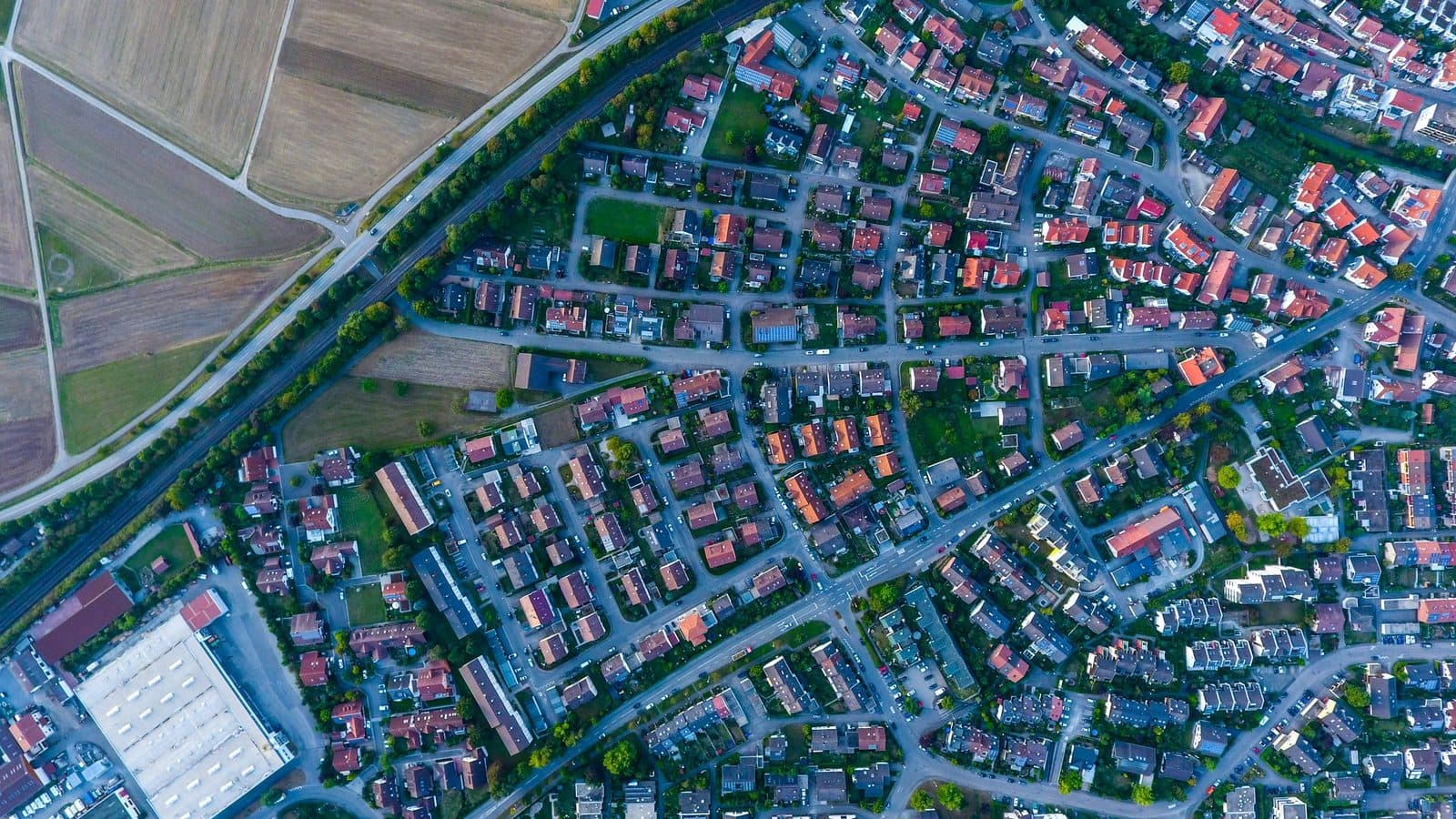
This is Hamza's story: a mechanical engineer from Lahore who moved to the Böblingen area near Stuttgart with his wife and young son in 2024. It is based on accounts shared publicly by Pakistani skilled workers in Germany, with names and details changed. Every figure is checked against 2026 rules.
Why I started looking
I studied mechanical engineering in Lahore and spent eight years in automotive parts. First tooling, then design, then a small team doing CAD and testing for a supplier to the local assembly plants. My salary at the end was PKR 280,000 a month. That sounds good in Pakistan. But school fees, rent in a decent area and the petrol price ate it every month. Savings stayed flat.
My wife, Ayesha, taught English at a private school. Our son, Ibrahim, was one year old. Our parents lived ten minutes away. Life had a shape. It was just not moving forward.
What pushed me was simple. A friend's daughter needed surgery, and the family sold land to pay. I thought: what would we sell?
Germany made sense for an automotive engineer. The industry near Stuttgart is huge, and engineers sit in the shortage group for the Blue Card. Our guide to the best country to migrate from Pakistan compares Germany with Canada, Australia, the UK and the Gulf if you are still choosing.
Ask yourself one question before you start: is this a move for you, or for the whole family? The answer changes how you plan the first year.
Lahore versus Böblingen: the numbers we compared
These are our own figures. The German side uses 2026 rates.
| Factor | Lahore (my old job) | Böblingen area (Blue Card) |
|---|---|---|
| Gross salary | PKR 280,000 a month | 58,000 euros a year (about 4,830 a month) |
| Take-home pay | About PKR 250,000 a month | About 3,000 euros (tax class I), about 3,350 euros (tax class III) |
| Child benefit | None | Kindergeld 259 euros a month per child |
| Health cover | Partial, company panel hospital | Statutory insurance for all three of us |
| Annual leave | 14 days | 30 days in my contract |
| Pension | Small provident fund | German state pension (about 9.3% from me, the same from my employer) |
| Rent | PKR 85,000 for a house portion | 1,400 euros warm for a 72 m² flat |
| Weather | 45 °C in June | Dark by 4:40 PM in December |
Take-home pay in Germany depends on tax class, health insurer, church tax and children. Our numbers are rough. Use the official salary calculators before you accept an offer. Our article on engineer take-home pay in Germany and the Netherlands explains what the payslip deductions mean.
The paperwork: thirteen months of patience
Step 1: Degree recognition (anabin and ZAB). My university showed H+ in anabin, but I could not find my exact degree entry. So I applied to ZAB for a Statement of Comparability. The fee was 200 euros. It took about five months. I also had my degree attested by HEC in Pakistan first, because I knew employers and the embassy would ask. Our guide on anabin and ZAB for mechanical engineers walks through the database screen by screen.
Step 2: German, even though the job was in English. My team works in English. The Blue Card does not need German. But I started evening classes in Lahore anyway and passed A1 before I left. Later, that A1 mattered for my settlement permit. More on that below.
Step 3: The job offer. I sent around 70 applications over five months. Most got no reply. Two interviews came through Teams. The second one became an offer from a Tier 1 supplier near Böblingen: design engineer, 58,000 euros a year.
In 2026, the Blue Card needs a gross salary of at least 50,700 euros, or 45,934.20 euros for shortage jobs like engineering and for recent graduates. The thresholds change every January. My offer cleared even the general figure. If yours only clears the lower one, the Federal Employment Agency usually has to approve the job, which adds time.
Step 4: The fast-track pre-approval. My employer used the fast-track procedure for skilled workers (section 81a of the Residence Act). The local immigration office (Ausländerbehörde) checks your file in Germany before you go to the embassy. The fee is 411 euros. My employer paid it. Not every employer will, so ask.
Step 5: The Islamabad embassy. Applicants from Punjab, Islamabad, KPK, Gilgit-Baltistan and AJK use the German Embassy in Islamabad. Sindh and Balochistan go to the Consulate General in Karachi. Employment visas now go through the online Consular Services Portal. With a pre-approval letter not older than three months, you can join the embassy's priority list. The embassy says this cuts the wait to about three weeks. Mine was close to that.
Friends who applied without pre-approval waited many months. Some said more than a year. This queue is the step most likely to break a start date.
Step 6: Family visas. Ayesha and Ibrahim applied as family members of a Blue Card holder. For Blue Card families, the spouse does not need to show German before arrival, and the spouse may work in Germany. The embassy checked our marriage certificate and Ibrahim's birth certificate. Civil documents from Pakistan can go through extra verification, which takes weeks and can cost extra. Read the current family reunion checklist on the embassy site before you book anything.
National visa fees are 75 euros for each adult and 37.50 euros for a child. For more on dependants, see our spouse and family visa guide.
Every rupee and euro we spent
Our costs, with official fees at 2026 rates:
| Item | Cost | Notes |
|---|---|---|
| ZAB Statement of Comparability | 200 euros | Paid by bank transfer from Pakistan |
| HEC degree attestation and translations | About PKR 60,000 | Sworn translations cost the most |
| German A1 course and exam in Lahore | About PKR 90,000 | Evening classes, three months |
| Fast-track procedure fee | 411 euros | Paid by my employer |
| Visa fees (2 adults, 1 child) | 187.50 euros | 75 + 75 + 37.50 |
| Flights Lahore to Stuttgart (3 people) | About 1,300 euros | Via Doha or Istanbul, one way |
| Temporary furnished room, first 3 months | 2,100 euros | Böblingen, 700 euros a month |
| Rent deposit (Kaution) | 3,450 euros | Three months of cold rent |
| Kitchen for the flat | About 1,800 euros | Many German rentals come with no kitchen |
| Winter clothes for three | About 450 euros | Bought in Germany, after the first shock |
| Total out-of-pocket | About 6,000-7,000 euros at today's rules | Without the employer-paid fee |
The deposit and the kitchen were the shock. Nobody in Lahore told me a flat could come with bare walls and two pipes where the sink should be. We bought a used kitchen on Kleinanzeigen from a family who was moving out.
Thirteen months, step by step
| Phase | Duration | Running total |
|---|---|---|
| ZAB application to statement | 5 months | 5 months |
| Job applications (in parallel with ZAB) | 5 months | 5 months |
| Offer accepted, contract signed | 3 weeks | 6 months |
| Fast-track pre-approval from the Ausländerbehörde | 2.5 months | 8.5 months |
| Priority list and embassy appointment | 4 weeks | 9.5 months |
| Visa decision | 3 weeks | 10 months |
| Notice period in Lahore, packing, goodbyes | 3 weeks | 11 months |
| Flight, temporary room, first payslip | 6 weeks | About 12.5-13 months |
Ayesha and Ibrahim had their visas at the same time. We decided I would go first and find a flat. They followed four months later. I am not sure today that this was the right choice.
The first winter
I landed in February 2024. It was 2 °C and raining. The S-Bahn was late. A man at the station told me something in Swabian dialect and I understood nothing, even with my A1.
The first two weeks were a list of German words I had never needed before.
- Anmeldung. You must register your address at the town office within two weeks of moving in. You need a form signed by your landlord (Wohnungsgeberbestätigung). Without this registration, you cannot get a tax ID, and without the tax ID your first payslip is taxed badly.
- Steuer-ID. It arrived by post about two weeks after the Anmeldung.
- Bank account. I opened one online before I even had my residence card.
- Health insurance. I chose a statutory insurer through HR. Ayesha and Ibrahim joined later on my policy at no extra cost, because she had no income at the time.
- Rundfunkbeitrag. A letter arrived asking for 18.36 euros a month for public TV and radio. Every household pays it, even with no TV.
Our Germany arrival guide shows the order to do these in. Do them in that order. One missing paper stops the next one.
Work was easier than life. My team was polite, precise and quiet. At 12 sharp they ate lunch. At 5 PM the office emptied. Nobody stayed late to look busy. In Lahore I often left at 9 PM. Here my manager told me to go home.
Tax class: the first mistake on my payslip
My first payslips were in tax class I, the class for single people. I was married. Why?
Because Ayesha was still in Pakistan. A spouse living outside the EU usually does not count for the married tax classes. Once she arrived, registered at our address and became tax resident, we could switch. We chose class III for me and class V for her, because she had no income. My monthly net went up by about 350 euros.
In our first tax return, filed online with ELSTER, we got back much of the extra tax from those single months. If your family joins later, keep every payslip. The return can fix part of it.
In 2026, classes III and V still exist. The government has talked about replacing them with a factor system, but nothing has passed. Check the current rules when you arrive.
The part nobody warned Ayesha about
Ayesha arrived in June 2024 with Ibrahim and four suitcases. The flat was ready. I had bought a sofa, a rice cooker and a prayer mat from a Turkish shop in Sindelfingen.
For the first month she loved the green and the quiet. Then I went to work every morning at 7, and the quiet became the problem.
In Lahore she had her mother, her sisters, colleagues, a maid two hours a day, a WhatsApp group of forty women. In our town of about 9,000 people she knew nobody. The neighbours said "Hallo" on the stairs. That was all. The supermarket cashier spoke fast. The pediatrician spoke German. The letters were all in German. She went from a teacher who corrected other people's English to someone who could not buy bread with confidence.
She told me later that she cried in the bathroom so Ibrahim would not see. I did not know for months.
Our autumn was beautiful. Then came November. The sun set before I left the office. Weeks went by with no sun at all. Ayesha stopped going out. She said, "In Lahore I was someone. Here I am only your wife."
If your spouse is coming with you, please hear this. The Blue Card gives you a job, a team and a reason to leave the house. It gives your spouse a permit and an empty day. Talk about that before you sign. Our article on the trailing spouse in dual-career migration helped us name it.
The Kita waitlist
Every child in Germany has a legal right to a Kita (daycare) place from age one. In practice, near Stuttgart, places are short. We registered Ibrahim on the town's Kita list in July 2024. He got a place in September 2025, fourteen months later.
Those fourteen months were the hardest for Ayesha. No childcare meant no full German course, no job and no adult company. The Kita changed everything. Through it she met other mothers, including a Turkish woman and a Syrian woman who became her closest friends here. Our fee was about 280 euros a month for a place until 2 PM. Fees depend on the town and your income.
What I would tell you: register your child on every Kita list the week you do your Anmeldung. Also ask the youth office (Jugendamt) about a childminder (Tagesmutter). It is often faster.
Learning German, for both of us
As the spouse of a Blue Card holder arriving in 2024, Ayesha had a right to an integration course: 600 hours of German and 100 hours of orientation. Participants usually pay 2.29 euros per hour, so the full course costs 1,603 euros unless you get an exemption. She started after the Kita place came through. She passed B1 in 2026.
The rules have shifted since. In February 2026, BAMF stopped admitting many people who had no legal right to a course place, then partly reversed this later in the year. If you arrive now, ask the Ausländerbehörde in writing whether your spouse has a right to a place, and keep the letter.
I studied on the train with an app and a weekly evening class at the Volkshochschule. I passed B1 in late 2025. It was hard with a full-time job and a toddler. It was worth every evening, for reasons I explain below.
The money, after two and a half years
Here is a normal month for us in 2026, in tax class III with one child:
| Item | Monthly amount | Notes |
|---|---|---|
| Net salary | About 3,350 euros | Class III, after tax and social insurance |
| Kindergeld | 259 euros | Paid by the Familienkasse |
| Ayesha's part-time pay | About 520 euros | Teaching assistant job, 2026 |
| Income | About 4,130 euros | |
| Rent, warm | 1,400 euros | 72 m², heating included in the advance |
| Electricity | 85 euros | |
| Internet and two phones | 65 euros | |
| Rundfunkbeitrag | 18.36 euros | One per household |
| Deutschlandticket (Ayesha) | 63 euros | My employer pays mine |
| Car (used, insurance, fuel) | 280 euros | Bought in month 8 |
| Groceries | 620 euros | Lidl and Turkish shops for halal meat |
| Kita | 280 euros | |
| Liability and household insurance | 15 euros | Everyone has Haftpflicht here |
| Money to my parents in Lahore | 300 euros | |
| Savings | About 900 euros | Some months less |
After two and a half years we have more savings than in eight years in Lahore. That is real. But our first year saved almost nothing. The deposit, kitchen, car and four months of single-class tax ate it.
Settlement and citizenship: the long road
This is why I pushed through B1.
Settlement permit (Niederlassungserlaubnis). A Blue Card holder can apply after 27 months with A1 German, or after 21 months with B1, if pension contributions were paid for that time. With my B1 certificate, I applied at 21 months. The Ausländerbehörde was slow. I waited weeks for an appointment and got a temporary certificate (Fiktionsbescheinigung) while my old card ran out. My settlement permit came in spring 2026. It is not tied to one employer.
Citizenship. Germany changed its law twice. Since 27 June 2024, the normal wait is five years of legal residence, and you can keep your old nationality. A three-year fast track for "special integration" existed briefly. Parliament removed it, and that change took effect on 30 October 2025. So five years is the rule.
You also need B1 German, to pass the "Leben in Deutschland" test, to support your family without most benefits, and to commit to Germany's constitutional order. The fee is 255 euros per adult and 51 euros for a child naturalised with a parent.
Germany is on Pakistan's list of dual nationality countries, so we would not need to give up our Pakistani passports. Check the current list with the Directorate General of Immigration and Passports before you apply. My earliest date is early 2029. Ayesha's is later, because her five years started when she arrived.
Our guide to permanent residency versus citizenship explains what each status gives you.
Free eligibility check · 2 minutes
Could Germany work for you?
6 quick questions on your age, skills and English. You get a score out of 100 and a read on your chances in Germany, on screen. No sign-up.
1 of 6 · When are you planning to move?
Germany is picked for you. You can change that at question 6.
Was it worth it?
I want to give you an honest answer, so it is mixed.
For my career, yes. I work on electric drive components with tools and test labs I never touched in Lahore. My manager pays for training. My next role could be a senior engineer at around 70,000 euros.
For our money, mostly yes, after a slow first year.
For Ayesha, it took two years to become yes. She now has friends, B1 German, a part-time job at a primary school, and a reason to leave the house. She still says that the first winter took something from her. She is right.
For our parents, it is hard. My father had heart surgery in 2025. I flew home for ten days. The flights cost 1,100 euros at short notice. I came back feeling guilty in two countries at once. Our piece on the guilt of leaving your home country describes that feeling well.
We are staying. Will we stay forever? We do not know yet. Ibrahim speaks German with a Swabian accent and Urdu at home. That decides a lot.
What I would do differently
- Bring the family together. Going first saved us a little rent and cost us four months of single-class tax and four months apart. Ayesha arrived to a life I had already built without her.
- Start German for both partners in Pakistan. A1 for the spouse is cheap in Lahore and makes the first months far less lonely.
- Register for Kita in week one. Before the sofa. Before the car.
- Budget for a kitchen and a three-month deposit. Together that was over 5,000 euros for us.
- Ask the employer about relocation help in writing. Mine paid the fast-track fee. Colleagues got temporary flats and a relocation agent. I did not ask.
- Plan a role for your spouse. A course, a volunteer job, a mosque or community group, anything with a timetable.
Traps I wish I had known about
- The embassy queue is the real timeline. Without fast-track pre-approval, a start date can slip by months. Ask your employer to use it.
- Last year's salary threshold. The Blue Card figures reset every January. A contract signed in November can fail in January.
- Tax class I while your family is abroad. Expect a lower net until your spouse arrives and registers.
- The kitchen. Ask every landlord, "Mit Einbauküche?" (with a fitted kitchen?).
- Fiktionsbescheinigung gaps. Apply to extend or change your permit early. Immigration offices near Stuttgart are busy.
- Leaving the job in the first period. In the first 12 months, a Blue Card holder generally needs to report a job change to the Ausländerbehörde. Check the rule before you resign.
- Agents selling "guaranteed Blue Cards". No one can guarantee a German visa. Do not pay for a job offer.
Before you do any of this, the free eligibility check gives a quick read on your options, and our migrate to Germany page covers the other routes.
For the engineer reading this after the power cut
I know where you are sitting. The phone light is the only light. You are wondering if you are good enough for a German company.
You probably are. German suppliers need engineers who can design, test and solve problems under pressure. You have done that in conditions they cannot imagine.
But do not plan only your own move. Sit with your wife or husband tonight. Ask what their Tuesday will look like in a German town in November. Plan that Tuesday together.
Then open anabin. Look up your university. Just that. One step.
Frequently asked questions
How long does it take a Pakistani engineer to move to Germany on a Blue Card?
For Hamza, about 13 months from his ZAB application to his first payslip. The embassy queue is the biggest variable. With the fast-track pre-approval and the priority list, the embassy says the wait for an appointment is about three weeks. Without it, applicants report many months.
What salary do I need for a German Blue Card in 2026?
At least 50,700 euros gross a year, or 45,934.20 euros for shortage occupations such as engineering and for recent graduates. The lower figure usually needs Federal Employment Agency approval. Both figures change every January.
Does my spouse need to speak German to join me on a Blue Card?
No. The spouse of a Blue Card holder does not need to show German before arrival and may work in Germany. Learning German early still makes life much easier, especially in a small town.
When can a Blue Card holder get permanent residence in Germany?
After 27 months of Blue Card work with A1 German, or 21 months with B1, if pension contributions were paid for that time. Ask your local Ausländerbehörde about current waiting times for appointments.
How long until I can apply for German citizenship?
Five years of legal residence, with B1 German, the citizenship test and the ability to support your family. The three-year fast track was removed from 30 October 2025. Since June 2024, Germany allows dual citizenship, and Germany is on Pakistan's dual nationality list.
How long is the wait for a Kita place near Stuttgart?
It varies by town. Every child has a legal right to a place from age one, but places are short in the Stuttgart region. Hamza's son waited fourteen months. Register on every list as soon as you have your Anmeldung, and ask the Jugendamt about childminders.
