· NextMigrate Team
The Darién Gap: What Happens to Migrants in the Jungle
The fact that you searched for the Darién Gap suggests the jungle has come up close to home, in a family chat or your own plans. This page is for people who want documented facts, not a route guide.
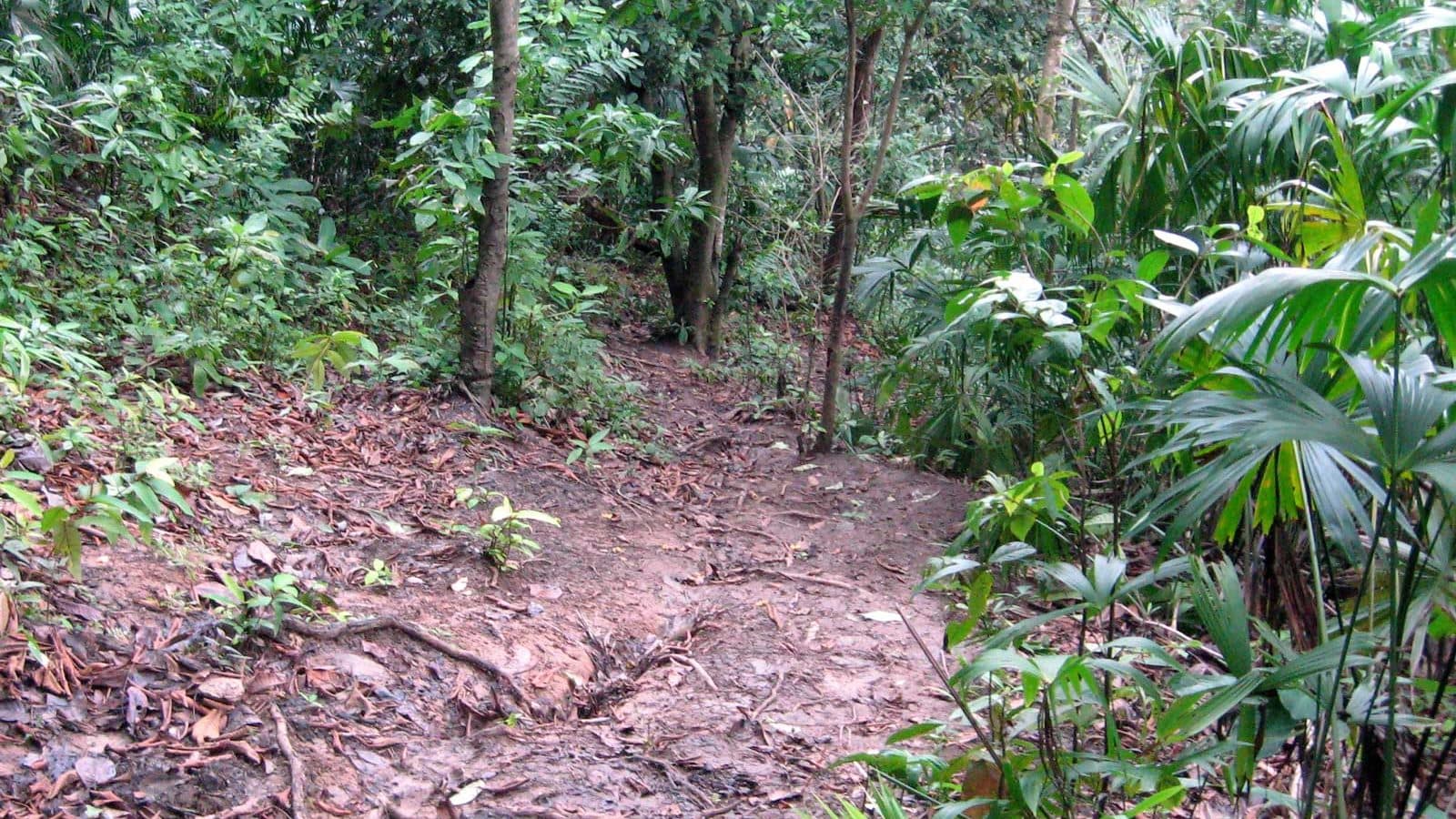
The Darién Gap is a roadless stretch of rainforest, mountains and rivers on the border between Colombia and Panama. Until 2025 it was the main overland route north for migrants from South America. A record 520,085 people crossed it in 2023, according to Panama's government (EFE via CNN, 1 January 2026). The UN's migration agency counted "a record 174 deaths" of migrants crossing the Darién in 2024 (IOM, 21 March 2025), and Doctors Without Borders (MSF) treated 676 survivors of sexual violence from the Darién in 2023 alone. Then, in 2025, crossings collapsed by 99%, to 3,091 for the whole year (EFE via CNN). Many people are now travelling the other way.
That is the short answer. Below is what UN agencies, MSF, Human Rights Watch and journalists documented, what changed in 2025 and 2026, and where to find real help.
Imagine you are a mother from Venezuela, living in Colombia with two small children. Work is hard to find. Friends post videos from Texas. Someone tells you the jungle takes "only a few days", and that the children can be carried. You are told the price is small compared with what you will earn on the other side.
This picture is hypothetical. What the agencies below recorded is not.
Key facts about the Darién Gap
| Where | The border region between Colombia and Panama, with no road through it |
| Crossings recorded by Panama | 133,726 in 2021; 248,283 in 2022; 520,085 in 2023; 302,203 in 2024; 3,091 in 2025 (Panama's Security Ministry, via EFE and CNN) |
| 2026 so far | 539 people from January to September, including 62 minors (Panama's migration service, via Infobae, 12 November 2026) |
| Children | 113,180 children in 2023, 22% of all crossers (UNICEF, January 2024) |
| Deaths | 174 in 2024, a record (IOM). At least 546 deaths and disappearances recorded from 2014 to 2025, "only minimum estimates" (IOM Missing Migrants Project, 8 April 2026) |
| Sexual violence | MSF treated 676 people for sexual violence after crossing in 2023 (MSF, 29 February 2024) |
| Armed group control | The Gulf Clan collected about $125 per person on average, possibly $57 million in ten months of 2023 (Colombian military estimate, via Human Rights Watch, 9 November 2023) |
| Reverse migration | 19,361 people went south by sea from Panama to Colombia between February and 4 November 2025, a quarter of them children (IOM) |
Why so many people crossed
For years, the Darién was seen as the only overland way north for people who could not get a visa. Numbers rose fast: from 133,726 in 2021 to 520,085 in 2023, nearly four times as many in two years.
The people crossing changed too. UNICEF reported that the number of children "tripled" from 40,438 in 2022 to 113,180 in 2023. In the same year, 3,300 children crossed alone or separated from their families, up from 1,067 the year before (UNICEF, January 2024). In 2024, from January to November, 4,476 unaccompanied or separated children crossed, and 59% of them were aged 13 to 17. UNICEF called them "the fastest-growing population in this humanitarian context" (UNICEF, December 2024).
What happens in the jungle
Deaths and disappearances
The jungle itself kills people: rivers flood in the rainy season, and the terrain is steep and remote. In July 2024, Panama's border police found 10 migrants who had drowned in rivers in the area during the wet season (Reuters via US News, 24 July 2024).
IOM's Missing Migrants Project has recorded at least 546 deaths and disappearances in the Darién from 2014 to 2025: 80 women, 108 men, 76 children and 282 people who could not be identified. IOM is clear about the limits: "These are only minimum estimates as the total number of people who died or disappeared inside the jungle can never be counted" (IOM, 8 April 2026).
Panama's own government count is lower: 84 deaths in 2023 and 55 in 2024 (AP, 19 December 2024). The gap between the counts tells its own story. Many people who die in the jungle are never found.
Sexual violence
MSF ran clinics where migrants came out of the jungle in Panama. What its teams heard was among the worst it had documented anywhere.
- In October 2023, MSF treated 107 survivors of sexual violence. In one week, the rate was equal to "one event of sexual violence occurring every three hours". 95% of the victims were women and girls (MSF, 17 November 2023).
- Over all of 2023, MSF treated 676 people. In January 2024 alone it treated 120, and in one week of February 2024, 113, including nine children (MSF, 29 February 2024).
- MSF's head of mission, Luis Eguiluz, described "a dozen armed men" detaining groups of 100 to 400 migrants and "systematically sexually abusing women, in front of other migrants and even in front of their families and children". He said "those who refused to cooperate were shot dead", and called the level of violence "unheard of" in his experience of humanitarian crises (MSF, 29 February 2024).
One survivor told MSF: "A snake does not end your life; your life is ended by the men inside the jungle who rape and kill" (MSF, 17 November 2023).
Who controls the Colombian side
Human Rights Watch reported in November 2023 that the Gulf Clan, an armed group, "regulates the routes" on the Colombian side and "decides who can assist" migrants, "at times enforcing these rules through violence". The Colombian military estimated that the group collected an average of $125 per person and may have made $57 million between January and October 2023 (HRW, 9 November 2023).
In April 2024, HRW said the limited presence of both governments "effectively leaves them unprotected" from the group that "controls the flow" (HRW, 3 April 2024).
Ask yourself one question. If an armed group charges every person who enters, who do you think it answers to when something goes wrong?
When the clinics were shut
In March 2024, Panama refused to renew MSF's permit to work in the Darién. Human Rights Watch warned that the decision "could send a message" that "they should not make the situation in the Darién visible" (The New Humanitarian, 11 March 2024). MSF returned in October 2024 on short permits, then left Panama in September 2025 because so few people were crossing (MSF, 7 October 2025). From April 2021 to August 2025, it treated 1,955 survivors of sexual violence.
Free eligibility check · 2 minutes
Which country would you qualify for?
6 quick questions on your age, skills and English. You get a score out of 100 and a read on each country you pick, on screen. No sign-up.
1 of 6 · When are you planning to move?
What changed in 2025 and 2026
Deportation flights. On 1 July 2024, the US and Panama signed an agreement under which the US would pay for flights to return migrants from Panama (AP via US News, 1 July 2024). By May 2025, the US embassy said about $14 million had paid for 48 flights carrying 1,969 people (US Embassy in Panama, 6 May 2025).
The route closed. Panama's government took measures that included closing trails, and MSF says Panama declared the Darién route closed in March 2025. Combined with the end of asylum access at the US border in January 2025, the effect was dramatic. Crossings fell from 302,203 in 2024 to 3,091 in 2025, a 99% drop (EFE via CNN).
No real rebound in 2026. There was a small rise in mid-2026: June 2026 had 102 crossings, "the highest monthly figure since January 2025" (Infobae, 21 July 2026). But the total for January to September 2026 was only 539. January 2025 on its own had more than four times that many.
The reverse flow. Thousands of people who had travelled north are now going back south, many of them Venezuelans. IOM counted 19,361 people who went by sea from Panama to Colombia between February and 4 November 2025, and 25% were children. In 2026, 6,385 people had travelled south through Panama by 20 September, 91.6% of them Venezuelan (Infobae, 27 September 2026).
New deaths on the way back. The reverse route is dangerous too.
- In February 2025, a boat carrying 21 people capsized in rough seas off Panama's Caribbean coast, and an 8-year-old Venezuelan child died (AP, February 2025).
- In November 2025, a 3-year-old Colombian child died in the second known case of a child drowning on the reverse route. The boat "did not meet the conditions for the transport of passengers" (Straits Times, from the New York Times, November 2025).
- On 10 February 2026, two boats capsized; two Venezuelan women and a Colombian man died (AP, February 2026).
- On the Pacific side, The New Humanitarian reported in April 2026 on people who went missing after smugglers took them by sea. A researcher with the Mixed Migration Centre said of some of them: "They were left to die" (The New Humanitarian, 28 April 2026).
The lesson is the same in both directions. Whenever people are desperate, someone sells them a dangerous trip.
Where to find real help
We will not give any advice on how to cross the Darién. If you are thinking about it, the safest step is to talk to someone who can help you find another way.
- UNHCR (the UN Refugee Agency) works in Colombia, Panama and across the region. It can tell you if you might qualify for protection where you are now, or for resettlement. Its help is free.
- IOM (the UN migration agency) gives information, and in some places helps with safe, voluntary return home. Its help is also free.
- The Red Cross helps families search for relatives who went missing while migrating, through its Restoring Family Links service. The ICRC also takes reports from families of people missing in the Darién (ICRC, 25 July 2023).
- Your consulate can help if you or a family member is detained in Panama or Colombia.
Help on the ground in 2024 included the Panamanian Red Cross, IOM, UNHCR and UNICEF at the reception stations in Panama, according to Refugees International (11 October 2024). With the route closed and aid budgets cut, much less help is there now.
Legal options instead of the jungle
- Stay protected where you are. Several countries in the region have run protection and residence programmes for Venezuelans and others. UNHCR or a local legal aid group can tell you what applies now.
- Ask about resettlement. If you are a refugee, UNHCR can sometimes refer you to a country that will take you in legally. Our guide to refugee resettlement vs asylum explains how it works.
- Look at legal work routes. The US H-2A and H-2B seasonal visas let US employers hire workers from abroad legally, and other countries run their own work programmes. Our USA migration guide and the free check below can help you see what fits.
- Understand the whole route first. Our guide to how people get into the US illegally explains the stages after the jungle, and why the overland route rarely ends in a new life in 2026.
Frequently asked questions
What is the Darién Gap?
The Darién Gap is a roadless area of rainforest, mountains and rivers on the border between Colombia and Panama. For years it was the main overland route north for migrants from South America. Panama recorded a record 520,085 people crossing it in 2023.
How many people have died in the Darién Gap?
IOM recorded a record 174 deaths in the Darién in 2024, and at least 546 deaths and disappearances from 2014 to 2025. IOM says these are minimum estimates, because the number of people who died inside the jungle can never be fully counted.
Is the Darién Gap still open in 2026?
Crossings have almost stopped. Panama recorded 3,091 crossings in 2025, down 99% from 302,203 in 2024, and only 539 from January to September 2026. Panama has closed trails and runs deportation flights paid for by the US.
What happens to women in the Darién Gap?
MSF treated 676 people for sexual violence after crossing the Darién in 2023, and in one week of October 2023 recorded the equivalent of one attack every three hours. 95% of the victims it treated were women and girls. MSF described armed men abusing women in front of their families.
Who controls the Darién Gap?
Human Rights Watch reported in 2023 that an armed group, the Gulf Clan, regulates the routes on the Colombian side and decides who can help migrants. The Colombian military estimated the group charged about $125 per person on average.
Why are migrants going back through Panama?
Since 2025, US border enforcement and the end of asylum access at the US border have left many people stuck. IOM counted 19,361 people who travelled south by sea from Panama to Colombia between February and November 2025. Several boats have capsized on this route, and children have died.
Related guides
- How People Get Into the US Illegally, and How It Ends
- Coyote Fees and Cartel Taxes: What Smuggling Really Costs
- Ciudad Juárez Fire: 40 Migrants Died Locked in a Cell
- Human Smuggling vs Legal Migration: Costs, Penalties, Risks
- Refugee Resettlement vs Asylum: Which One Applies to You
- Human Trafficking Warning Signs Every Migrant Should Know
