· NextMigrate Team
Ciudad Juárez Fire: 40 Migrants Died Locked in a Cell
You have clearly decided to look past the headlines about the border and into what actually happens to people on the way. This page is for migrants and families who want the documented facts of the Ciudad Juárez fire.
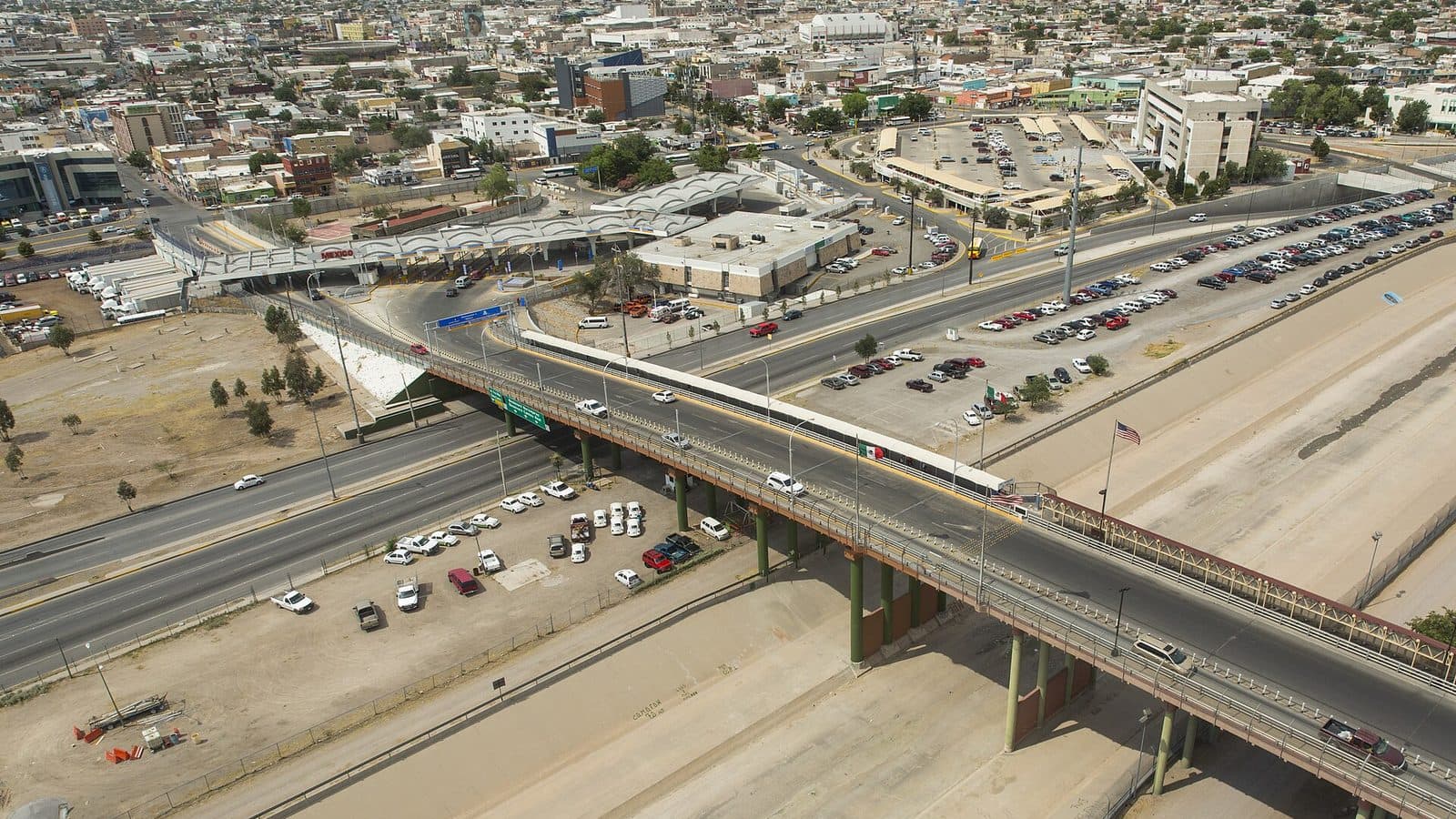
On the night of 27 March 2023, a fire broke out in a locked cell at a detention centre run by Mexico's National Migration Institute (INM) in Ciudad Juárez, across the border from El Paso, Texas. Forty men died. Security video showed that "guards quickly walked away and made no apparent attempt to release the men before smoke filled the room" (AP, 28 March 2023). Mexico's human rights commission later found serious rights violations against all 67 men held in the cell. As of November 2026, no one has been convicted, and in October 2026 a judge closed the case against the former head of the INM (AP via Al Jazeera, 15 October 2026).
That is the short answer. Below is what happened, who the men were, and what the case teaches anyone thinking about the journey north.
Imagine you are a young father from Guatemala or Venezuela. You have reached Ciudad Juárez. You are waiting, like thousands of others, for a chance to ask for asylum in the US. You have no money left, so you stand at a traffic light with a piece of cardboard. A van stops. Officers take you to a building across the street from city hall. They lock you in a cell with dozens of other men.
This picture is hypothetical. But AP spoke to people who described almost exactly this, on the day of the fire.
Key facts about the Ciudad Juárez fire
| Date | Night of 27 March 2023 |
| Place | INM migration detention centre, Ciudad Juárez, Chihuahua, across the street from city hall (AP, 28 March 2023) |
| Men held in the cell | 68, according to the INM on the day (AP). Mexico's human rights commission (CNDH) later counted 67 |
| Dead | 40 men |
| Injured | 29 in serious condition on the first day (INM, via AP). Later reports give 27 or 30 |
| Nationalities of the dead | 19 from Guatemala, 7 from El Salvador, 7 from Venezuela, 6 from Honduras, 1 from Colombia (Telemundo, with AP and EFE, 12 April 2023) |
| What the video showed | Guards walking away without opening the cell (AP, 28 March 2023) |
| People charged | 11 in total, including officials, guards and two migrants accused of starting the fire |
| Convictions | None as of November 2026 |
| Former INM head | Case closed by a judge on 13 October 2026; victims are appealing (AP via Al Jazeera, 15 October 2026) |
What happened that night
Earlier that day, police and migration officers had rounded up people in the street. AP spoke to a Venezuelan woman, Katiuska Márquez, who said she was begging at a traffic light for food for her children when "suddenly agents came and detained everyone". Her group "had been in Juarez waiting for an appointment from U.S. authorities to request asylum", AP reported. The women and children were released after about three hours. The men were locked in a cell (AP, 28 March 2023).
AP later summed up the scene: some 70 men were "crammed into a locked dormitory with no ventilation and barely any water". As night fell, "a small group set fire to some mattresses in protest, and within seconds, smoke engulfed the entire area" (AP via Al Jazeera, 15 October 2026). Mexico's president at the time, Andrés Manuel López Obrador, said the men started the fire to protest after learning they would be deported.
Then the guards left. In the security video, two people dressed as guards rush into view, and at least one man appears at the metal gate. "The guards did not appear to make any effort to open the cell doors and instead ran away as billowing clouds of smoke filled the structure within seconds," AP reported. Mexico's interior secretary confirmed the video was real.
A Venezuelan woman waiting outside for her husband told AP: "The ones they let out were the women, and those (employees) with immigration. The men, they never took them out until the firefighters arrived."
Mexico's National Human Rights Commission (CNDH) later found that none of the seven officials on site knew where the keys were, and that some detainees had gone without water for hours. In Recommendation 111VG/2023, dated 30 June 2023, it found grave rights violations against all 67 men in the cell and named the INM's head, Francisco Garduño, as responsible in his role as the senior official (El Economista, 2 July 2023).
Ask yourself one question. If the people paid to guard you will not open a door in a fire, who on the route will?
Who the men were
Most of the dead came from Guatemala, El Salvador, Venezuela and Honduras, with one from Colombia. The early count from Guatemala's foreign minister was higher than the final figure, which is common in the first days after a disaster. The count published on 12 April 2023 was 19 Guatemalans, 7 Salvadorans, 7 Venezuelans, 6 Hondurans and 1 Colombian (Telemundo, with AP and EFE).
They came from five countries. Some, AP reported, had been waiting in the city for a US asylum appointment. Many people from these countries reach the Mexican border only after weeks or months on the road, some through the Darién Gap. None of the men in that cell expected to die in a building run by a government.
Who was charged
Mexico's federal prosecutors charged 11 people. According to AP, "six immigration agents, including a military officer and a private security guard, and the two migrants accused of starting the fire are charged with homicide and assault. Most of the officials remain free pending trial" (AP via Al Jazeera, 15 October 2026).
Two senior officials faced lesser charges. Prosecutors accused Francisco Garduño, then head of the INM, and another former INM director of crimes linked to abuse of public office and failing in their duty, not homicide.
What happened to Garduño's case. In January 2025, a judge suspended the case against him on conditions, including compensation for the families, a public apology and human rights training for migration staff. Garduño stayed in charge of the INM until 2025 and later became an official at Mexico's education ministry. On 13 October 2026, Judge Víctor Manlio Hernández Calderón ruled he had met the conditions and closed the case (AP via Al Jazeera; Infobae, 14 October 2026).
The victims' lawyers disagree. One lawyer, Miguel Zenteno, said the compensation came from the INM, not from Garduño, that families were not told how to reach the free medical care, and that the apology "was a mere formality, not substantive". The Foundation for Justice, which represents some victims, wrote: "Yesterday, corruption and the impunity of politicians protected by power won again." The victims are appealing (AP via Al Jazeera, 15 October 2026).
Timeline
- 9 March 2023. More than 30 shelters and advocacy groups publish an open letter about the "criminalization" of migrants in Ciudad Juárez (AP, 28 March 2023).
- 27 March 2023. Men are rounded up in the street and locked in the INM cell. The fire kills 40.
- 28 March 2023. AP publishes the security video showing guards walking away.
- April 2023. Prosecutors announce charges, including against INM head Francisco Garduño (Telemundo, 12 April 2023).
- 30 June 2023. The CNDH issues Recommendation 111VG/2023.
- January 2025. A judge suspends the case against Garduño on conditions.
- 13 October 2026. The judge closes Garduño's case. Victims announce an appeal.
- November 2026. No one has been convicted. Most charged officials remain free pending trial (AP via Al Jazeera).
Free eligibility check · 2 minutes
Which country would you qualify for?
6 quick questions on your age, skills and English. You get a score out of 100 and a read on each country you pick, on screen. No sign-up.
1 of 6 · When are you planning to move?
What the fire shows about the route north
Mexico is not just a road to the US. It is a country with its own migration police and detention centres. People without legal status in Mexico can be detained at any time, and as this case shows, detention can be deadly. The UN special rapporteur on the human rights of migrants said at the time that the "extensive use of immigration detention leads to tragedies like this one" (AP, 28 March 2023).
Waiting at the border is dangerous too. Many of the men were not crossing illegally that night. They were in a border city with no money, waiting for a process. Border cities on the Mexican side are also where kidnappers and extortion gangs look for migrants. Our guide to stash houses and ransom calls explains that risk.
Justice for migrants is slow and uncertain. More than three and a half years later, no one has been convicted. Families are still fighting for full compensation.
The rules at the border keep changing. In 2023, people waited in Ciudad Juárez for a US asylum appointment. That system has since ended. Read what happens if you are caught crossing the US border illegally for the rules that apply now.
Safer choices before you travel
We do not judge anyone who is trying to protect their family. But before you or someone you love sets out:
- If you are in danger at home, speak to UNHCR first. UNHCR can tell you if you might qualify for refugee protection or resettlement, without crossing several borders first. Its help is free. Our guide to refugee resettlement vs asylum explains the difference.
- Mexico has its own asylum system. For some people, asking for protection in Mexico through its refugee agency, COMAR, is a legal option. A legal aid group or UNHCR in Mexico can explain it.
- Look at legal work routes. US employers hire hundreds of thousands of seasonal farm workers each year on H-2A visas: the Labor Department certified 398,258 H-2A positions in fiscal year 2025 (US DOL). Our USA migration guide covers the main work and green card routes.
- Read the whole picture. Our pillar guide, how people get into the US illegally, explains the overland route and how it usually ends.
Frequently asked questions
What happened in the Ciudad Juárez migrant centre fire?
On 27 March 2023, men detained by Mexico's National Migration Institute set mattresses on fire in a locked cell, reportedly in protest. Security video showed guards walking away without opening the cell. Forty men died and dozens more were injured.
How many people died in the Ciudad Juárez fire?
Forty men died. They were from Guatemala, El Salvador, Venezuela, Honduras and Colombia. About 67 or 68 men were in the cell, according to Mexico's human rights commission and the migration institute.
Has anyone been convicted for the Ciudad Juárez fire?
Not as of November 2026. Eleven people were charged, including migration agents, a private security guard and two migrants accused of starting the fire. Most officials remain free pending trial, according to AP.
What happened to Francisco Garduño?
Garduño, head of Mexico's National Migration Institute at the time, faced charges linked to abuse of public office, not homicide. A judge suspended his case on conditions in January 2025 and closed it on 13 October 2026. Victims' groups called it impunity and are appealing.
Why were the migrants detained?
AP reported that people were rounded up in the street, some of them while begging, after the city's mayor promised to remove migrants from busy intersections. Some of those detained were waiting in Ciudad Juárez for an appointment to ask for asylum in the US.
Where can migrants get help in Mexico?
UNHCR and IOM work in Mexico, and their help is free. Mexico's refugee agency, COMAR, handles asylum claims in Mexico. Your country's consulate can also help if you or a relative is detained.
Related guides
- How People Get Into the US Illegally, and How It Ends
- The Darién Gap: What Happens to Migrants in the Jungle
- Stash Houses: Inside the Ransom Business on the US Border
- Caught Crossing the US Border Illegally: What Happens Next
- Refugee Resettlement vs Asylum: Which One Applies to You
- Human Trafficking Warning Signs Every Migrant Should Know
