· NextMigrate Team
Stash Houses: Inside the Ransom Business on the US Border
You did not land on a page about stash houses by accident: maybe a relative is on the route, or a call has already come. This page is for families who want to understand these houses.
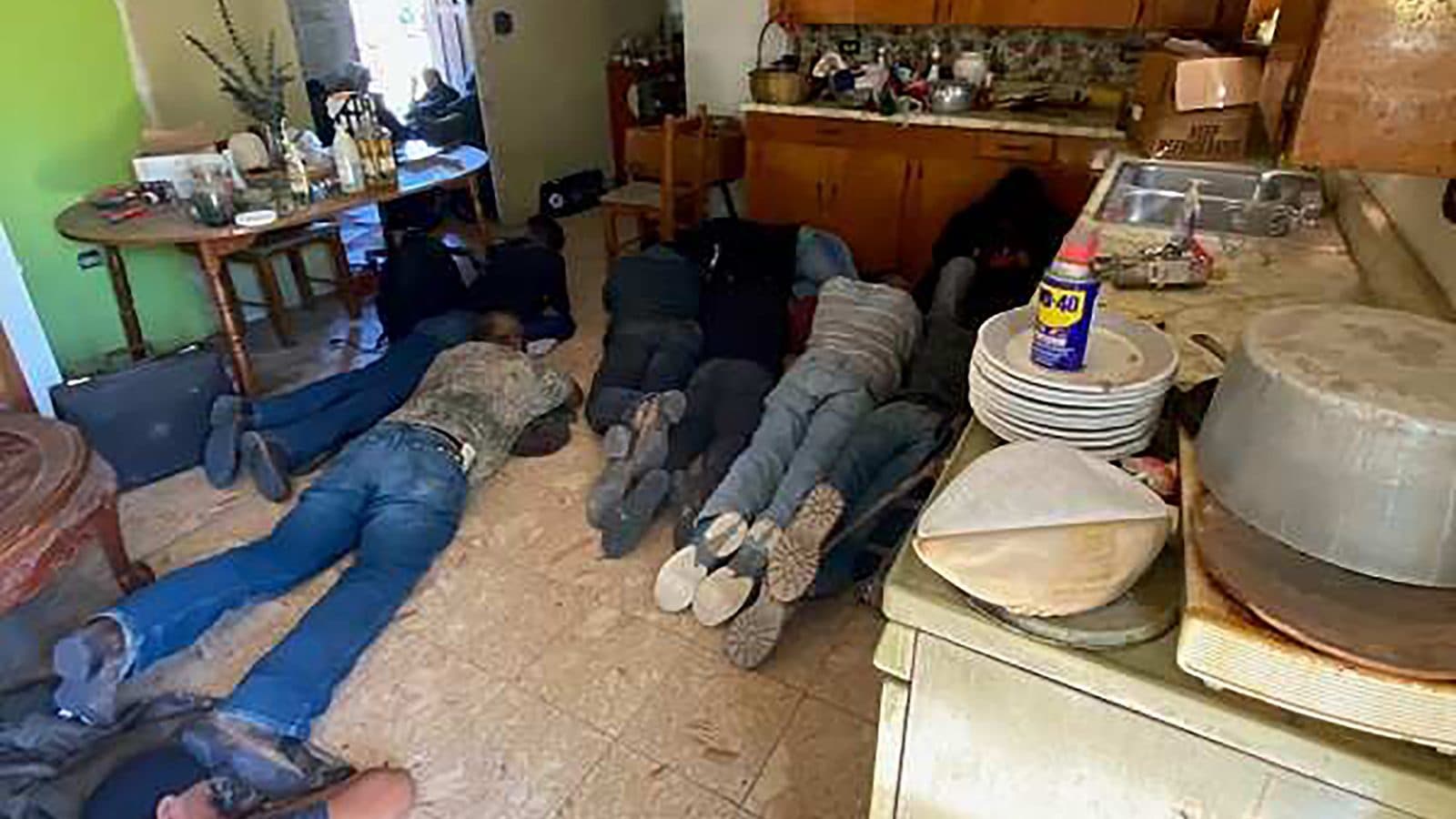
A stash house is a house or apartment where smugglers hold people they are moving, on either side of the US-Mexico border, until they are moved on or until more money is paid. US court records describe people locked in with deadbolts, guarded with guns and threatened with death while their families were called for ransom. In one Houston case, police found "97 illegal aliens held in two rooms" (US DOJ, 2 May 2023). On the Mexican side, Doctors Without Borders (MSF) cared for "129 people who had been kidnapped and later released" in Reynosa and Matamoros in just four months (MSF, 28 February 2024).
That is the short answer. Below are the documented cases, what survivors told doctors, and the FBI's advice for families who get a ransom call.
Imagine your phone rings late at night. It is a number you do not know. A man says he has your brother, who left home three weeks ago. He says your brother owes more for the trip. He says if you do not send $5,000 by tomorrow, you will never see him again. In the background, you think you hear someone crying.
This is a hypothetical call. But families across Central America and Mexico have received calls exactly like it, and US prosecutors have put some of the callers in prison.
Key facts about stash houses
| What they are | Houses where smugglers hold people until they are moved or more money is paid, on both sides of the border |
| Largest US case on this page | 97 people "held in two rooms" with "deadbolts on the doors facing the outside", Houston (US DOJ, 2 May 2023) |
| Extra demand in one case | $32,500 in ransom on top of $25,000 already paid for two people, in a 2025 Houston case (US DOJ, 28 August 2025) |
| Kidnapping in northern Mexico | MSF cared for 129 people kidnapped and later released in Reynosa and Matamoros, October 2023 to January 2024 (MSF, 2024) |
| Victims in Tamaulipas, 2023 | MSF documented 230 cases of violence with 775 victims; 52% were women and 22% were children (MSF report, May 2024) |
| Fake kidnapping calls | The FBI says that, on average, families send "thousands of dollars" to "virtual kidnapping" scammers before contacting police (FBI El Paso, 23 September 2020) |
Inside US stash houses: cases from the court record
All names and sentences below are as given in US Justice Department releases.
Houston: 97 people in two rooms
In 2021, police raided a house on Chessington Drive in Houston. They found "97 illegal aliens held in two rooms", with "deadbolts on the doors facing the outside". "All of the male individuals were in their undergarments." One man was told that if the money was not paid, he would be put in "4 pieces of wood".
The leader, Henry Licona-Larios, was sentenced to 41 months in prison. Four others received 27 to 30 months (US DOJ, 2 May 2023).
Houston: a second ransom on top of the fee
A father "paid $25,000 for their transportation from Guatemala" for two people. When they reached a stash house on Tanager Street in Houston, the operator "demanded an additional $32,500 in ransom" and threatened to "turn them over to the cartel". His associates "used weapons and threats to keep them from leaving". Police found "ledgers detailing human smuggling", and up to 20 other people had been held there at different times. The operator, Junior Morales-Chutan, was sentenced to 48 months (US DOJ, 28 August 2025).
Houston: locked in a closet
In July 2026, Cameron Jake Tucker was convicted of kidnapping and hostage taking. Prosecutors said he "assaulted the illegal alien with a revolver after his family could not pay additional smuggling fees, then confined him in a bedroom closet". The man escaped through a window (US DOJ, 17 July 2026). A local TV station reported that the ransom demand was "40,000 pesos (approximately $2,000)" (KPRC, 16 May 2025). He faced up to life in prison; we could not find a sentencing announcement as of November 2026.
Eagle Pass: held at gunpoint
In June 2026, Edgar Alejandro Elizondo, known as "Flaco", was sentenced to 225 months in prison after pleading guilty to conspiracy to transport people in a way that placed their lives in jeopardy. Prosecutors said he was "personally involved in holding illegal aliens at gun point" at a stash house in Eagle Pass, Texas (US DOJ, 12 June 2026).
Sold to another gang
Sometimes people are not just held. They are sold. In a McAllen, Texas, case, conspirators "contacted the families for additional funds" and then "sold them to members of a third alien smuggling organization". The leader was sentenced to a total of 251 months (US DOJ, 30 November 2023).
What families heard on the phone
The New York Times described a 2014 case in Carrizo Springs, Texas, where hundreds of migrants were held for ransom. One family wired $1,500, then was asked for "an additional $3,500" while they heard a hammer being used on their relative's fingers. The paper reported that families "seldom call the authorities" because they fear deportation (New York Times, 25 July 2022).
Ask yourself one question. If the person holding your relative already took the agreed fee, what stops them asking again after you pay the ransom?
Kidnapping houses on the Mexican side
Much of the documented abuse happens before people reach the US. MSF and human rights groups have recorded kidnapping of migrants in Mexico's northern border cities, where many people wait with little money.
- Reynosa and Matamoros. From October 2023 to January 2024, MSF teams helped 395 victims of violence and "129 people who had been kidnapped and later released". In the last three months of 2023, MSF saw a "70 percent increase in consultations for sexual violence" compared with the three months before. MSF said that during captivity "most of the women are victims of sexual abuse and violence" (MSF, 28 February 2024).
- Tamaulipas, 2023. MSF documented 230 cases of violence with 775 victims. Kidnapping survivors described "deprivation of sleep, food and water", "acid burns, fractures and beatings" (MSF report, May 2024).
- Across Mexico. Human Rights First counted "over 1,300 reports of torture, kidnapping, rape, extortion" against people blocked from asylum in the six months after May 2023, and called it "the tip of the iceberg" (Human Rights First, November 2023).
MSF closed its project in Reynosa and Matamoros on 30 September 2025, after eight years. Over that time, its teams treated 394 survivors of sexual violence (MSF, 7 October 2025). With fewer people on the route and fewer aid groups there, it is harder to know what happens now.
Free eligibility check · 2 minutes
Which country would you qualify for?
6 quick questions on your age, skills and English. You get a score out of 100 and a read on each country you pick, on screen. No sign-up.
1 of 6 · When are you planning to move?
If you get a ransom call: what the FBI says
Some ransom calls are real. Many are not. The FBI warns about "virtual kidnapping", where "a victim is told, over the phone, that his or her family member has been kidnapped", but "no one is physically kidnapped". Callers sometimes claim to be "members of a drug cartel or corrupt law enforcement", and they demand payment "immediately and typically by wire transfer" (FBI El Paso, 23 September 2020).
The FBI lists these warning signs of a fake call:
- The call comes from an outside area code.
- There may be several calls.
- The call does not come from your relative's phone.
- The caller tries hard to keep you on the line.
- The caller stops you from calling or finding your relative.
- Money is only accepted by wire transfer.
The FBI's advice if you get a call:
- Stay calm and try to slow things down.
- Do not share information about yourself or your family.
- Ask to speak to your relative directly. Ask, "How do I know my loved one is okay?"
- Ask questions only your relative would know the answer to.
- While the caller is on the line, try to reach your relative from another phone, by text or on social media.
- Do not argue with the caller. Keep your voice low and steady.
"If you have any question about whether the call is an extortion scheme or a legitimate kidnapping, contact your nearest FBI office or call 911 immediately," the FBI says. Tips can also be sent at tips.fbi.gov, and tipsters can stay anonymous.
If you are outside the US, contact your local police and your country's foreign ministry or consulate. Keep every message, number and payment request.
Why stash houses exist
Stash houses are not an accident. They are part of how the business makes money. A person locked in a room cannot leave, cannot call the police and cannot refuse a new price. As long as smuggling is the only route someone can see, the people running these houses have power over them.
That is why the most important decision is the first one. Our guide to how people get into the US illegally shows the whole route and how it usually ends. Coyote fees and cartel crossing taxes shows where the money goes. And what happens if you are caught crossing illegally explains the bans that can block a legal visa later.
If you are considering migrating, look first at legal routes such as US seasonal work visas or a family petition. Our USA migration guide covers the main options. A legal route will never lock you in a room.
Frequently asked questions
What is a stash house in human smuggling?
A stash house is a house or apartment where smugglers hold people until they are moved on or until more money is paid. US court records describe locked doors, armed guards and ransom demands. They exist on both sides of the US-Mexico border.
What happens inside a stash house?
In documented US cases, people were locked in rooms with deadbolts, guarded with guns, kept in their underwear, threatened with death and held until their families paid more. In one Houston case, 97 people were found in two rooms. In Mexico, MSF has documented kidnapping, beatings and sexual violence.
How do I know if a ransom call is real?
You often cannot tell at first. The FBI warns about "virtual kidnapping" calls where no one has been taken. Warning signs include calls that do not come from your relative's phone, callers who keep you on the line and demands for a wire transfer. Ask to speak to your relative and try to reach them on another phone.
Should I pay a ransom for a relative held by smugglers?
Contact the police first. In the US, the FBI says to contact your nearest FBI office or call 911. Families who pay can get a second demand, as the Carrizo Springs case shows. Your consulate can also help.
Are stash house operators prosecuted?
Yes, in many cases. Recent US sentences include 41 months for the leader of a 97-person Houston stash house, 48 months for a Houston operator who demanded $32,500 in ransom, and 225 months for an Eagle Pass operator who held people at gunpoint.
Can migrants report a stash house without being deported?
Victims of certain crimes in the US, including kidnapping and trafficking, may qualify for special visas, such as the U visa or T visa, if they help law enforcement. A licensed immigration lawyer or legal aid group can explain the options.
Related guides
- How People Get Into the US Illegally, and How It Ends
- Coyote Fees and Cartel Taxes: What Smuggling Really Costs
- San Antonio Trailer Deaths: What Happened to the 53 Migrants
- Ciudad Juárez Fire: 40 Migrants Died Locked in a Cell
- Human Trafficking Warning Signs Every Migrant Should Know
- Human Smuggling vs Legal Migration: Costs, Penalties, Risks
