· NextMigrate Team
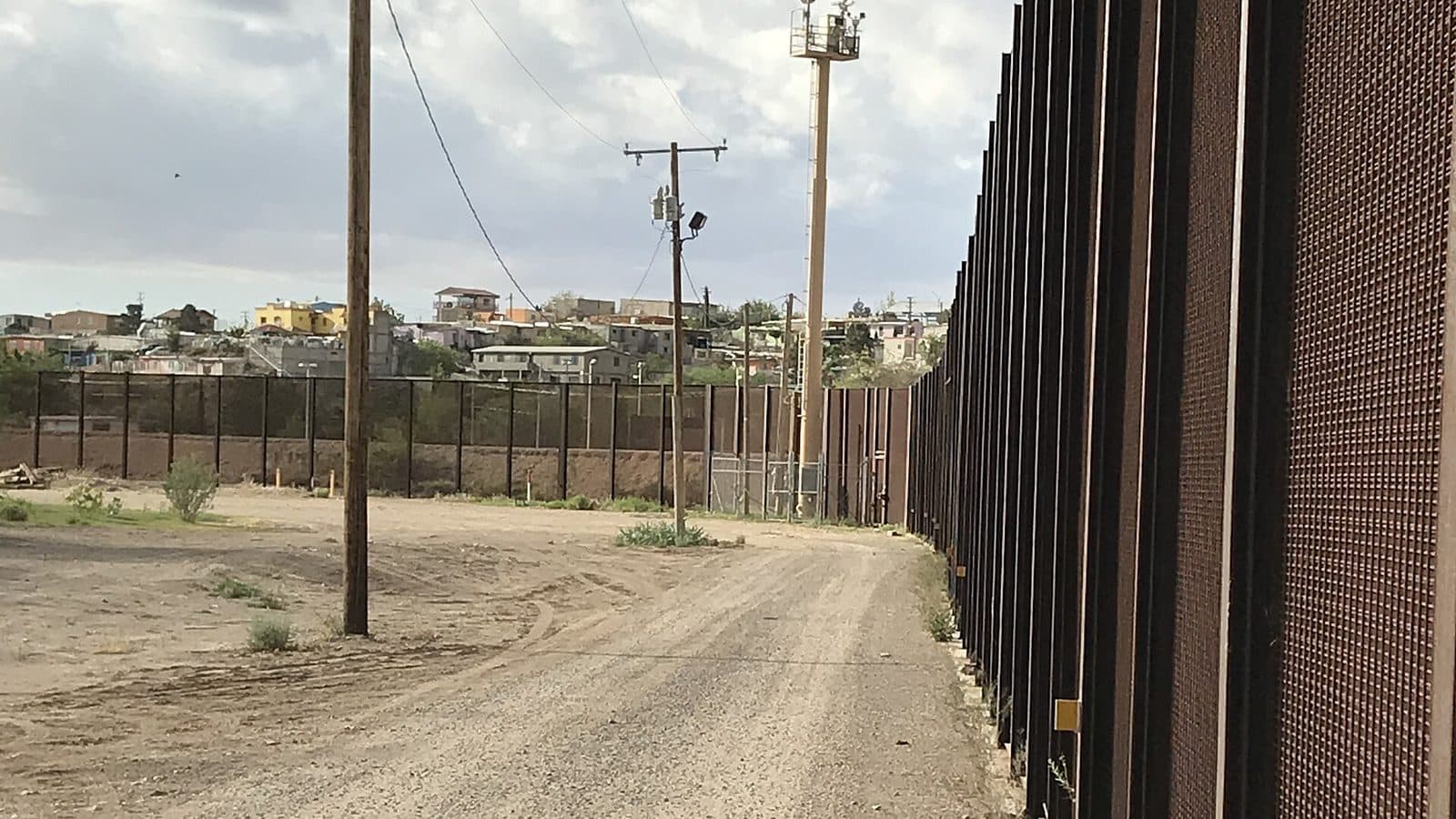
How People Get Into the US Illegally, and How It Ends
Since you are here, you already know that the stories about "getting to the other side" leave a lot out. This page is for people and families who want the documented reality of the overland route before anyone pays anything.
Many people who try to enter the United States illegally travel overland, through Central America and Mexico, paying smugglers along the way. The route is controlled by criminal groups who charge at every stage. It is also deadly: US Customs and Border Protection recorded 895 migrant deaths on the south-west border in fiscal year 2022 alone (CBP), and the UN's migration agency called the US-Mexico border "the deadliest land route for migrants worldwide on record" (IOM, 12 September 2023). Since 2025 the route has also almost stopped working. Border Patrol recorded 98,708 apprehensions on the south-west border in fiscal year 2026, the lowest in its history (DHS, 16 October 2026), and asylum at the border remains blocked while the courts decide.
That is the short answer. This page explains the route as it is documented by courts, UN agencies and journalists, without the sales talk. It does not tell anyone how to cross. It shows what happens to people who do, and what legal options exist instead.
Imagine you are 24, in Honduras or Ecuador or Venezuela. Your town has no work, or it has a gang that wants your little brother. A cousin in Houston sends money home every month. A man in the next village says he can get you there for $10,000, "all included, three tries". Your family can borrow it against the house.
This is a hypothetical picture. Everything else on this page comes from the public record.
Key facts about the overland route
| Typical price | $8,000 per person in one recent DOJ case, with $3,000 paid up front (US DOJ, 17 January 2025). $13,000 to $16,000 each in a Guatemalan network sanctioned by the US Treasury (US Treasury, 18 March 2025) |
| Who profits | Smuggling networks and cartels. Homeland Security Investigations estimated cartel smuggling revenue at about $13 billion a year, up from $500 million in 2018 (New York Times, 25 July 2022) |
| Deaths at the US border | 895 in fiscal year 2022, the highest CBP has recorded; 704 in fiscal year 2023 (CBP) |
| Darién Gap crossings | 520,085 in 2023, then 302,203 in 2024, then just 3,091 in 2025 (Panama's government, via EFE and CNN, 1 January 2026) |
| Border apprehensions | 2,206,436 in fiscal year 2022 (Pew Research Center, using CBP data); 237,565 in fiscal year 2025 (CBP, 7 October 2025); 98,708 in fiscal year 2026 (DHS) |
| Asylum at the border | Blocked under a January 2025 presidential proclamation. The Supreme Court agreed on 13 November 2026 to hear the case (CNN, 13 November 2026) |
| Reverse migration | 19,361 people travelled south by sea from Panama to Colombia between February and early November 2025 (IOM) |
The route, stage by stage
We describe each stage only in terms of what is documented to happen there. We do not name crossing points, paths or methods.
1. South America and the Darién Gap
For many people coming from South America, the route north used to run through the Darién Gap, a roadless jungle on the border between Colombia and Panama. In 2023, 520,085 people crossed it, a record. More than one in five were children: UNICEF counted 113,180 children that year (UNICEF, January 2024).
Human Rights Watch reported that an armed group, the Gulf Clan, "regulates the routes" on the Colombian side. The Colombian military estimated it collected an average of $125 per person, possibly $57 million between January and October 2023 (Human Rights Watch, 9 November 2023). Doctors Without Borders (MSF) treated 676 survivors of sexual violence from the Darién in 2023 (MSF, 29 February 2024).
Read the full story in the Darién Gap: what happens to migrants there.
2. Central America and Mexico
Next comes a long journey by bus, truck and on foot through Central America and Mexico. This is where most of the money is paid. Smuggling networks hand people from one group to the next. In Mexico, criminal groups that control territory charge smugglers a "piso", which InSight Crime describes as "a toll that large criminal organizations charge small or large ones that do not control the territory" (InSight Crime).
People without money or papers are easy targets. In Reynosa and Matamoros, on the Mexican side of the Texas border, MSF teams cared for "129 people who had been kidnapped and later released" in just four months, from October 2023 to January 2024 (MSF, 28 February 2024).
Mexico also has its own migration police and detention centres. In March 2023, 40 men died in a fire in a locked cell at a migration centre in Ciudad Juárez while guards walked away. See the Ciudad Juárez fire case.
For how the fees and cartel taxes work, read coyote fees and cartel crossing taxes.
3. The border itself
The border is where many people die. In fiscal year 2022, CBP recorded 895 deaths on the south-west border, the highest it has ever counted. IOM's own count for 2022 was 686 deaths and disappearances, and it says such figures are minimum estimates because many bodies are never found (IOM, 2023).
4. Inside the United States
Crossing the border is not the end. People are often moved in trucks and held in "stash houses" until the full fee is paid. In June 2022, 53 people died inside a smuggling tractor-trailer in San Antonio, Texas, after the cooling unit failed (US DOJ, 27 June 2025). Read the San Antonio trailer case and what happens inside stash houses.
Who controls the route
Smugglers like to present themselves as helpful guides, "coyotes" who know the way. The court record shows something else.
- Networks, not individuals. In the San Antonio case, the smugglers shared "routes, guides, stash houses, trucks, trailers, and transporters in order to consolidate costs, minimize risks, and maximize profit" (US DOJ, 27 June 2025).
- People treated as goods. In a 2025 DOJ case, members of a smuggling network referred to migrants as "boxes," "packages," or "pieces" (US DOJ, 17 January 2025).
- Cartels on top. The New York Times reported in 2022 that cartels had taken over much of the smuggling business, and that in some Mexican border areas smugglers put coloured wristbands on migrants "to designate that they belong to them and what services they are receiving" (New York Times, 25 July 2022).
- Payments to cartels built into the price. The US Treasury says the Guatemala-based Lopez network would "pay cartel fees to facilitate the movement of illegal aliens through Mexico" (US Treasury, 18 March 2025).
What it really costs
| Item | Documented figure | Source |
|---|---|---|
| Darién armed group fee | About $125 per person on average (Colombian military estimate) | Human Rights Watch, 2023 |
| Smuggling fee, Mexico to the US | About $8,000, with $3,000 up front | US DOJ, 17 January 2025 |
| Smuggling fee, Guatemala to the US | $13,000 to $16,000 per person | US Treasury, 18 March 2025 |
| San Antonio trailer victims | $12,000 to $15,000 each | AP, 27 June 2025, citing the indictment |
| Extra ransom demanded at a Houston stash house | $32,500, on top of $25,000 already paid for two people | US DOJ, 28 August 2025 |
And that is before the hidden costs: the interest on the loan, the money lost if you are caught, and the years of legal options that an illegal entry can close. Our guide to human smuggling vs legal migration compares these costs with legal visa fees.
Ask yourself one question. If the trip really cost what the smuggler says, why do so many families get a second phone call asking for more?
Free eligibility check · 2 minutes
Which country would you qualify for?
6 quick questions on your age, skills and English. You get a score out of 100 and a read on each country you pick, on screen. No sign-up.
1 of 6 · When are you planning to move?
How it ends for most people in 2026
The honest answer is that, in 2026, the overland route rarely ends with a new life in the US.
Most people are caught, and asylum at the border is blocked. On 20 January 2025, a presidential proclamation suspended "the physical entry of any alien engaged in the invasion across the southern border" (Federal Register). A federal appeals court ruled in April 2026 that parts of it were unlawful, but the policy stayed in place during appeals, and on 13 November 2026 the Supreme Court agreed to hear the case, with a decision expected by mid-2027 (CNN, 13 November 2026). The same day the proclamation was signed, CBP ended appointments in the CBP One app, and "all appointments have been cancelled" (CBP, 21 January 2025).
Fast removal and long bans. People caught after crossing illegally can face expedited removal, criminal charges for illegal entry, and bans of 5, 10 or 20 years, or for life, on coming back legally. Our guide to what happens if you are caught crossing the US border illegally explains each one.
The flows have collapsed. Border Patrol apprehensions on the south-west border fell from more than 2.2 million in fiscal year 2022 to 98,708 in fiscal year 2026. Darién crossings fell from 520,085 in 2023 to 3,091 in 2025, and only 539 people crossed between January and September 2026, according to Panama's migration service (Infobae, 12 November 2026).
Many people are now going south. Thousands who were stuck in Mexico or Central America have turned back. IOM counted 19,361 people who travelled south by sea from Panama to Colombia between February and 4 November 2025, a quarter of them children. Boats on this reverse route have capsized, and children have drowned.
The smugglers still get paid. Reuters reported in January 2025 that the price of one smuggling route to the US had "shot up to 140,000 Mexican pesos ($6,900) from roughly 85,000 Mexican pesos ($4,200)", partly because of tighter US enforcement (Reuters via Yahoo News, 24 January 2025). When the route gets harder, the risk stays with you and the money stays with them.
The case studies in this series
Each of these pages looks at one part of the route through documented cases.
- The Darién Gap: what happens to migrants in the jungle
- Coyote fees and cartel crossing taxes
- Stash houses and the ransom business
- The San Antonio trailer deaths, June 2022
- The Ciudad Juárez migration centre fire, March 2023
- What happens if you are caught crossing illegally
Legal routes instead
Legal routes to the US are narrower in 2026 than they were a few years ago, and we will not pretend otherwise. But they exist, and they do not end in a trailer or a cell. Always check the official sources, because rules are changing fast.
- Seasonal farm work (H-2A). A US employer files the petition for you. The US Labor Department certified 398,258 H-2A positions in fiscal year 2025 (US DOL). In fiscal year 2023, 92% of H-2A workers were from Mexico (GAO).
- Seasonal non-farm work (H-2B). A US employer files for you here too. There are 66,000 visas a year, plus a supplemental allocation in some years: up to 64,716 extra visas were made available for fiscal year 2026 (Federal Register, 3 February 2026).
- Family petitions. If you have a parent, spouse, adult child or sibling who is a US citizen, or a parent or spouse who is a permanent resident, they may be able to file a petition for you. Waits depend on the category and your country of birth. The US State Department publishes them every month in the Visa Bulletin.
- The Diversity Visa lottery. It is free to enter, but only for eligible countries. For DV-2026, Mexico, El Salvador, Honduras, Colombia and Venezuela were not eligible, while Guatemala and several other Latin American countries were. As of November 2026, registration for DV-2027 had not opened, and a court case about it was ongoing.
- Protection from where you are. If you are in danger, UNHCR can assess your situation and may refer you for resettlement, which can include countries other than the US. Its help is free. Read refugee resettlement vs asylum and seeking asylum: the honest guide.
- Other countries. The US is not the only option. Our USA migration guide covers US work and green card routes, and the free check below shows which other countries could fit your skills.
None of this is legal advice. Before you apply for anything, check the official government site and speak to a qualified, licensed adviser or a free legal aid service.
If you or someone you love is already on the route
- UNHCR, IOM and the Red Cross work along the route in Central America and Mexico. Their help is free. Anyone who charges you for their services is not them.
- Your consulate can help if you are detained, robbed or kidnapped, and can help your family find you.
- If someone calls your family demanding ransom, read the FBI's advice in our guide to stash houses and ransom calls, and contact the police before paying.
- Learn the signs of trafficking. Smuggling can turn into forced labour when a debt cannot be paid. See human trafficking warning signs.
Frequently asked questions
How do people enter the US illegally?
Many travel overland through Central America and Mexico and try to cross the US-Mexico border between official ports of entry, paying smugglers along the way. Many are caught. In fiscal year 2026, Border Patrol recorded 98,708 apprehensions on the south-west border, the lowest in its history.
How much does it cost to be smuggled into the US?
Documented prices range from about $8,000 per person in a 2025 DOJ case to $13,000 to $16,000 in a Guatemalan network sanctioned by the US Treasury. Victims of the 2022 San Antonio trailer paid $12,000 to $15,000 each. Extra ransom demands on top of these fees are common.
Is it still possible to ask for asylum at the US-Mexico border?
As of November 2026, asylum at the southern border remains blocked under a January 2025 presidential proclamation. An appeals court found parts of it unlawful, but the policy stayed in place during appeals, and the Supreme Court has agreed to hear the case. The CBP One appointment system ended on 20 January 2025.
How many migrants die trying to reach the US?
CBP recorded 895 migrant deaths on the south-west border in fiscal year 2022 and 704 in fiscal year 2023. IOM counted 174 deaths in the Darién Gap in 2024 alone, a record. Both agencies say the real numbers are higher, because many bodies are never found.
Why are migrants going back south?
Since early 2025, US border enforcement and the end of asylum access at the border have left many people stuck in Mexico and Central America. IOM counted more than 19,000 people who travelled south by sea from Panama to Colombia between February and November 2025.
What legal ways are there to work in the US?
The main temporary routes for workers from Mexico and Central America are the H-2A seasonal farm visa and the H-2B seasonal non-farm visa, where a US employer files for you. Family petitions and, for eligible countries, the Diversity Visa lottery lead to green cards. Rules change often, so check official sources and a licensed adviser.
Related guides
- Human Smuggling vs Legal Migration: Costs, Penalties, Risks
- The Darién Gap: What Happens to Migrants in the Jungle
- Coyote Fees and Cartel Taxes: What Smuggling Really Costs
- Caught Crossing the US Border Illegally: What Happens Next
- Human Trafficking Warning Signs Every Migrant Should Know
- Seeking Asylum: How It Works and Where to Get Free Help
