· NextMigrate Team
Praxis and Network States: What Joining One Actually Means for You
You are on this page because the idea of a new kind of country, built online first, made sense to you. This page is for people weighing whether to join Praxis or a similar project, and what that really changes.
Imagine you are a product designer in São Paulo. You spend your days on calls with people in five time zones. Your real community already lives online. Then you read about "network states": online communities that buy land, build cities and one day become countries. You think: this is what my life already looks like. Why not make it official?
That feeling is honest. Many remote workers feel more at home in a chat group than in their own city. But when you "join" a network state, what do you actually get? A passport? A place to live? A right to work? Let us look at what is on the record.
The short answer: Joining Praxis or another network state project makes you a member of a private community. It does not give you citizenship, a passport or a visa that any government recognises. Praxis announced in September 2026 that its first site, "+Colonia" in Uruguay, will operate "fully within Uruguay's constitutional, legal, and democratic framework", with first residents expected in mid 2027. So to live there, you would need normal Uruguayan permission. Network School, a related project, moved from Malaysia to Kazakhstan in 2026 after local authorities in Johor ordered its operator to stop.
What a "network state" is
The idea comes from a book by investor Balaji Srinivasan, The Network State, published in 2022. It defines a network state as "a highly aligned online community with a capacity for collective action that crowdfunds territory around the world and eventually gains diplomatic recognition from pre-existing states" (The Network State, checked November 2026).
The book describes stages (The Network State in 1,000 words, checked November 2026):
- A network union that "coordinates its members for their mutual benefit".
- A network archipelago, "a set of digitally connected physical territories".
- Recognition: it "should eventually be able to negotiate for diplomatic recognition from at least one pre-existing government".
Notice the word "eventually". The book itself treats recognition as a later step, not something members receive when they join. No network state has reached that stage.
What Praxis is
Praxis describes itself as "THE FIRST NEOSTATE" and says it is "Creating new cultural, economic, and governance systems for the future of human civilization" (Praxis, checked November 2026). Its September 2026 announcement calls it "a global community building physical communities for the age of artificial intelligence" (Praxis Uruguay announcement, 22 September 2026).
It was co-founded by Dryden Brown and Charlie Callinan (TechCrunch, 15 November 2024; Architectural Record, 4 March 2024).
Money and investors
In October 2024, Praxis was reported to have secured US$525 million of "milestone-based" financing: US$500 million from GEM Digital in exchange for tokens tied to future real estate, and US$25 million from Arch Lending, paid out as milestones are met (Forklog, 16 October 2024). That is a financing promise, not money in the bank, and not a company valuation.
Reuters reported backers including Joe Lonsdale, a fund launched by Sam Altman and his brothers, and Shervin Pishevar (Reuters via KSL, 11 April 2025).
Where is Praxis? Rumours vs the record
Praxis has been linked to many places. Here is what we could verify.
| Place | What the record shows | Source |
|---|---|---|
| Mediterranean | In 2024 Praxis aimed to build "somewhere in the Mediterranean"; no site was secured | Architectural Record, 4 March 2024 |
| Greenland | The co-founder visited Nuuk in 2024 and posted "I went to Greenland to try to buy it". A Danish MP replied "there is no way we would approve independence so that you could buy Greenland" | TechCrunch, 15 November 2024 |
| Greenland "freedom city" | Reuters reported rich donors pushing a tech hub idea to the Trump administration; it could not determine whether some named backers were lobbying | Reuters via KSL, 11 April 2025 |
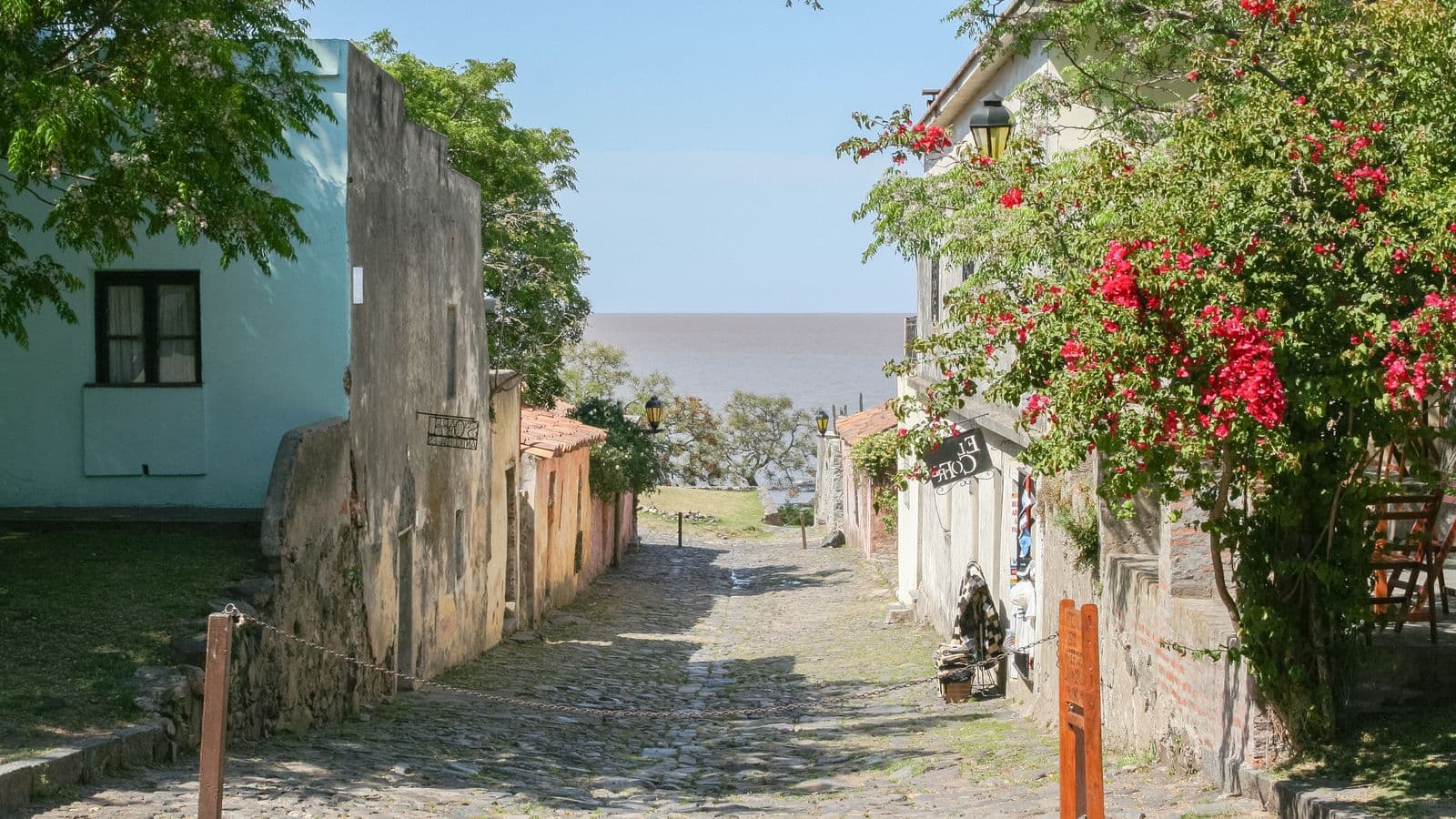
| Uruguay | "+Colonia", next to Colonia del Sacramento. Praxis plans to "mobilize $1 billion in investment over the next three years"; first residents "expected to move in mid 2027" | Praxis, 22 September 2026 |
Other locations have been mentioned in the press. We could not confirm any land deal outside Uruguay. Even the Uruguay plan is an announcement by Praxis, with residents expected, not yet living there.
And note the key line in that Uruguay announcement: the project operates "fully within Uruguay's constitutional, legal, and democratic framework". That is honest, and it matters. It means Uruguayan law, Uruguayan immigration rules and Uruguayan tax apply, as they would to any housing development.
What "joining Praxis" means
Praxis's website has a "Join Praxis" button that leads to an app. It describes a "Praxis Steel Visa" that comes with Steel membership (Praxis, checked November 2026). We could not find a current fee on the public site.
In 2024, Architectural Record reported that the Steel Visa "grants a Praxis proto-citizenship card" in exchange for agreeing to a "future deposit of $5,000" (Architectural Record, 4 March 2024). We could not confirm if that is still the offer.
Here is the important part. A "visa" or "citizenship card" from a private group is a membership card. The words sound official, but no border officer, bank or employer treats it as an immigration document.
Free eligibility check · 2 minutes
Which country would you qualify for?
6 quick questions on your age, skills and English. You get a score out of 100 and a read on each country you pick, on screen. No sign-up.
1 of 6 · When are you planning to move?
Network School: from Malaysia to Kazakhstan
Network School is Balaji Srinivasan's own project (Business Insider via Yahoo Finance, 18 August 2026). It describes itself as "Society-as-a-Service" and says: "We're located in Astana, Kazakhstan", on "the fifth floor of Astana Hub". It says "A memorandum of understanding has been signed between the Republic of Kazakhstan and Network School" and mentions "expedited visas" (Network School, checked November 2026). Its own price line is "For less than $1000/mo" (Network School apply page, checked November 2026).
It did not start there. It began in Forest City, Johor, Malaysia. In July 2026, the Iskandar Puteri City Council ordered its operator to stop operating from 22 July. The council said one unit "had been operating without a business licence" and activities in another "differed from those approved under its office-use licence" (The Star, 21 July 2026).
What does this teach us? Even a well-funded project lives at the mercy of the host country's licences and visas. The members are guests. When the host says stop, the project moves, and every member needs a new visa for the new place.
Pop-up villages: Zuzalu and others
Many network-state experiments are short "pop-up" villages. The best known is Zuzalu, organised by Ethereum co-founder Vitalik Buterin at "a resort in Montenegro" in 2023. In his words, it "houses two hundred people, and lasts for two whole months" (Vitalik Buterin, Why I Built Zuzalu, 6 October 2023).
These events can be valuable for networking and learning. But legally, they are like a long conference. Participants enter the host country on whatever visa their passport allows.
What about US "Freedom Cities"?
Some people expect new charter cities on US federal land. As of its last update on 10 February 2026, PolitiFact rated the promise "Stalled", reporting that the administration had not moved to advance "freedom cities" (PolitiFact, checked November 2026). We found no evidence that Praxis is part of any such plan.
What joining does not give you
- No citizenship or passport that any government recognises.
- No right to live in Uruguay, Kazakhstan or anywhere else. You still need that country's visa or residence permit.
- No right to work. Work permission comes from the host state.
- No tax exit. Your country of residence and citizenship still decide your tax. Read do digital nomads pay tax?.
Who this is not for
Joining a network state is not for you if you need a legal place to live soon, a work permit, or a second passport. It is not for you if a deposit or membership fee is money you cannot afford to lose. And it is not for you if you would feel stuck when the project changes country, as Network School did in 2026.
It may suit you if you want community, ideas and contacts, and you already have a legal way to live where the events happen.
The legal routes that give you real rights
- Digital nomad visas give you legal permission to live in a country while working remotely. Start with our best digital nomad visas guide. If Malaysia appealed to you, see the DE Rantau Nomad Pass.
- Startup and investor routes exist for founders: see startup and entrepreneur visas and the golden visa countries guide.
- Long-term security comes from permanent residence. Read digital nomad visa to permanent residency.
Frequently asked questions
What is Praxis?
Praxis calls itself "THE FIRST NEOSTATE". It is a private community and development company co-founded by Dryden Brown and Charlie Callinan. In September 2026 it announced its first site, "+Colonia", in Uruguay, to be built within Uruguay's legal framework.
Where is Praxis City located?
The only site we could verify is the planned "+Colonia" development next to Colonia del Sacramento, Uruguay, announced on 22 September 2026, with first residents expected in mid 2027. Earlier plans for the Mediterranean and Greenland did not lead to a confirmed land deal.
Who founded Praxis and who invested?
Praxis was co-founded by Dryden Brown and Charlie Callinan. Reuters reported backers including Joe Lonsdale, a fund launched by Sam Altman and his brothers, and Shervin Pishevar. In 2024 it was reported to have secured US$525 million in milestone-based financing.
What is a network state?
In Balaji Srinivasan's book, a network state is an online community that acts together, crowdfunds land around the world and "eventually" gains diplomatic recognition. No network state has been recognised by any government.
Does joining a network state give you citizenship?
No. Membership cards, "visas" or "proto-citizenship" from a private group are not recognised by any government. You still need a real visa or residence permit to live in the country where the community is based.
Where is Network School now?
Network School says it is in Astana, Kazakhstan. It left Forest City, Malaysia, after the Iskandar Puteri City Council ordered its operator to stop operating from 22 July 2026.
Your next step
Wanting to live among people who share your values is a good reason to move. It is one of the oldest reasons there is. But community is not the same as legal status. What would it take to get the legal status first, so the community becomes a choice rather than a gamble?
To see which countries would let you live and work remotely on your passport and income, try our free digital nomad visa finder.
This article is general information, not legal, immigration or tax advice. Rules and figures change. Always confirm with the official source and a regulated adviser before you act.
